
Wolf Spider
Family Lycosidae · also called wolf spiders, ground spider, hunting spider
Quick answer
Wolf spiders (family Lycosidae) are large, hairy, fast-moving hunting spiders that chase prey on the ground instead of spinning webs. Often brown or gray with mottled markings, they wander indoors seeking prey or warmth. They can bite if handled but are not dangerous to people, and they help control other insects.
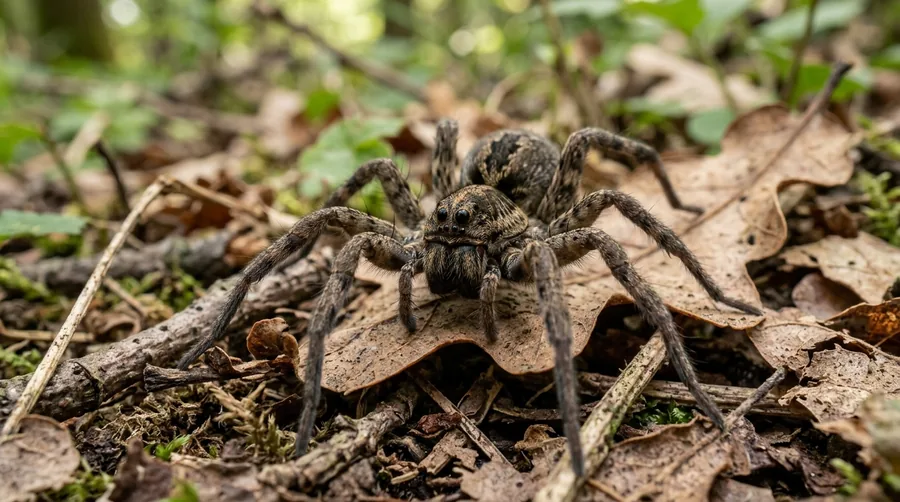
Large hairy brown wolf spider with mottled markings on the ground among leaf litter
Recommended Products
See the full ranking →


What it does
Wolf spiders are solitary, ground-dwelling hunters that run down prey rather than trapping it in webs. They are fast and can look alarming, but they avoid people and bite only when handled or trapped. Females carry their egg sac attached to the spinnerets, then carry newly hatched young on their backs.
Where it lives
Outdoors they live at ground level in grass, leaf litter, gardens, under stones, logs, and debris. They enter homes at floor level through gaps, often in fall as it cools, and are found along baseboards, in basements, garages, and near doors. Wolf spiders occur throughout the US.
How it breeds
After mating, the female produces a rounded egg sac she carries under her abdomen. When the spiderlings hatch, they climb onto her back and ride for a time before dispersing. Most species live about a year, with some larger ones living longer. They are active mainly in warm months.
What it eats
Wolf spiders prey on insects and other small arthropods, including crickets, ants, roaches, and other spiders. As active hunters they are beneficial, helping to reduce nuisance insect populations around homes and gardens. They do not feed on people.
Identification
They are robust and hairy, brown to gray with mottled or striped patterns, with sturdy legs built for running. A key feature is their eye arrangement: two large forward eyes over a row of four small ones, plus two on top, which can reflect light. Unlike many spiders, they build no capture web.
Signs of an infestation
- A large, fast spider running along the floor or wall
- Spiders appearing at ground level with no web nearby
- Sightings near doors, basements, and garages, especially in fall
- Eyeshine when a light hits the spider at night
- A female carrying an egg sac or young on her back
Prevention tips
- Seal gaps under doors and around the foundation and utility lines
- Reduce outdoor clutter, leaf litter, and debris near the house
- Move woodpiles and stones away from exterior walls
- Reduce outdoor lighting that attracts the insects they hunt
- Vacuum indoor spiders and remove them outside
Professional solutions
Wolf spiders rarely require professional treatment because they are harmless and beneficial. For homeowners bothered by frequent indoor sightings, a professional can apply EPA-labeled perimeter treatments and advise on sealing and reducing outdoor harborage. In most cases, exclusion and removing individual spiders is enough.
Health & safety
Wolf spiders are not dangerous. A bite, which is uncommon and only defensive, may cause brief pain and mild local swelling similar to a bee sting, with no medically significant venom. They spread no disease. Their main benefit outweighs the nuisance, as they prey on other household insects.
Relevant Products




Frequently asked questions
Are wolf spiders poisonous or dangerous?
Wolf spiders are venomous to their insect prey but not dangerous to people. A defensive bite may sting and cause mild local swelling, like a bee sting, and they carry no medically significant venom or disease. They are beneficial hunters of other insects.
Why is a wolf spider in my house?
Wolf spiders wander indoors at ground level while hunting insects or seeking shelter, often in fall as temperatures drop. They do not build webs indoors and usually stay near floors, doors, basements, and garages. Sealing gaps and reducing insects reduces sightings.
How do I get rid of wolf spiders?
Vacuum or capture and release individual spiders, then seal gaps under doors and around the foundation, reduce outdoor clutter and lighting, and cut down the insects they feed on. Because they are harmless and helpful, chemical treatment is rarely necessary.
Fact-checked by Morgan Vance, Editorial Director (editorial review, not a professional pest-control or medical sign-off). Last reviewed July 16, 2026. We correct anything a reader shows us is wrong — see our corrections policy.