

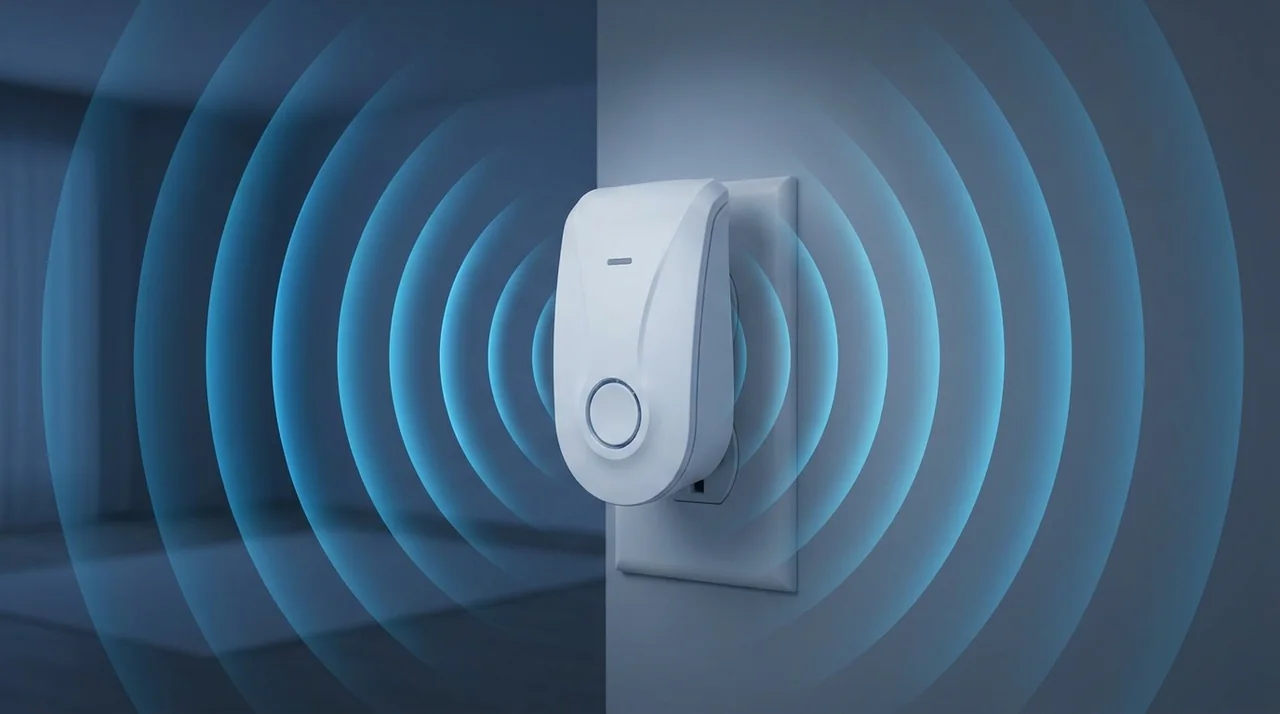



Electronic rodent repellers are marketed specifically at mice and rats, promising to drive them out with ultrasonic sound, and sometimes flashing lights or mild electromagnetic fields. Because rodents can cause real damage by gnawing wiring and contaminating food, it is worth understanding what these devices can and cannot do before you count on one, which is the aim of this companion guide within the electronic-repeller section.
How They Claim to Work
Rodents communicate and navigate using high-frequency sound, so the theory is that a loud ultrasonic tone creates an unpleasant, stressful environment they will flee. Some units add strobing lights or claim to use house wiring to emit electromagnetic pulses. On paper this sounds plausible because rodents do hear in the ultrasonic range.
The Real-World Limitations
In practice, results are disappointing, for reasons rooted in rodent behavior and sound physics:
- Habituation is the big one. Mice and rats are highly adaptable. When a rodent is nesting near food, warmth, and shelter, it quickly learns the sound is harmless and returns to normal activity, often within days. A determined rodent will not abandon a good nest site over noise.
- Ultrasound is blocked by walls, furniture, and clutter. It does not penetrate the very wall voids, cabinets, and behind-appliance spaces where rodents actually travel, so the areas you most need protected get little coverage.
- Short, directional range. Coverage fades quickly with distance and obstacles, leaving protected "shadows" throughout a room.
What Actually Controls Rodents
A rodent problem is solved by removing access, food, and shelter, then removing the rodents already inside. This is the approach detailed across the rodent-proofing content:
- Exclusion: seal every gap larger than a quarter-inch with steel wool packed into caulk, hardware cloth, or metal flashing; mice fit through openings the size of a dime. Focus on utility penetrations, gaps under doors, and foundation cracks.
- Sanitation: store food and pet food in sealed metal or heavy plastic containers, clean up crumbs, and reduce clutter that offers nesting cover.
- Trapping: well-placed snap traps or other traps remove the resident population; place them along walls where rodents travel.
An electronic repeller may, at best, be a minor supplement, but it cannot substitute for sealing and trapping. If you use rodenticides as part of control, follow the EPA-approved label exactly, keep baits secured away from children and pets in tamper-resistant stations, and for any accidental exposure call Poison Control at 1-800-222-1222.


