


Apartments, condos, and small rentals present a specific pest challenge: shared walls, common utility chases, and limited storage mean pests can travel between units and food is often close to where you sleep. The upside is that a small space is quick to keep clean and easy to seal, and consistent habits go a long way. This guide focuses on prevention you control, alongside the renters' rights information in this section.
Deny Food and Water
In a compact home, sanitation is the single most effective defense because pests are never far from a food source.
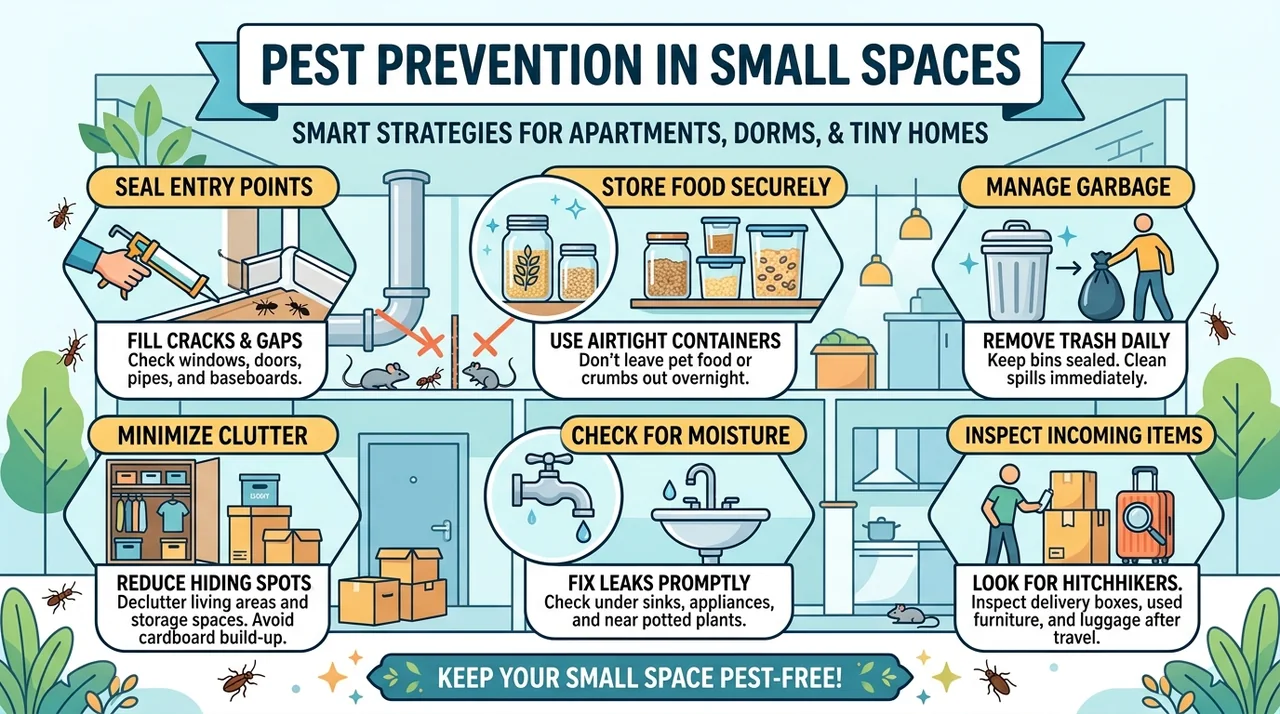
- Store dry goods (flour, cereal, pet food, snacks) in sealed glass or hard-plastic containers rather than original bags and boxes.
- Wipe counters and the stovetop, sweep crumbs, and take out trash and recycling regularly, using a lidded bin.
- Wash dishes promptly instead of leaving them in the sink overnight, and empty pet bowls after meals.
- Fix drips and wipe up condensation; cockroaches and many insects need moisture as much as food.
Seal the Highways Between Units
Because neighboring units and shared voids are common in multifamily buildings, closing the small openings pests use to move around is especially valuable:
- Seal gaps around plumbing and utility lines under sinks and behind appliances, a frequent route between apartments.
- Caulk cracks along baseboards, cabinets, and where countertops meet walls.
- Add or repair door sweeps and weatherstripping, including on the front door.
- Cover or screen floor drains and keep the garbage disposal clean.
Reduce Clutter and Watch What Comes In
Clutter gives pests, and bed bugs in particular, places to hide, and small spaces fill up fast. Keep storage organized and off the floor where you can, and avoid letting cardboard boxes (a roach favorite) pile up. Be cautious with secondhand furniture and mattresses, a common way bed bugs enter an apartment; inspect items carefully before bringing them in. When traveling, checking luggage before unpacking helps keep hitchhikers out.
Choose Low-Risk Controls First
For minor issues, start with non-chemical tools that suit a small, enclosed home where you spend a lot of time: sticky monitors, gel baits placed out of reach of children and pets, and targeted traps. Baits are often a better fit than sprays in an apartment because insects carry them back to the hidden harborage, and they release far less material into the air of a small living space.
If you use any pesticide indoors, choose products labeled for indoor residential use, follow the EPA-approved label exactly, ventilate as directed, and keep products away from food and food-prep surfaces. In a shared building, coordinate with your landlord or property manager before treating, since uncoordinated spraying can push pests into neighboring units rather than eliminating them. Cockroaches in particular tend to be a building-wide problem, so a professional treatment of the whole structure usually works better than each tenant spraying independently. For any accidental exposure to a pesticide, call Poison Control at 1-800-222-1222.