


Pest problems in a rental raise a practical question: who is responsible for fixing them, the landlord or the tenant? The answer depends on your lease and on state and local law, but there are general principles that apply in most U.S. rentals. This guide outlines how responsibility is typically divided and how to document a problem, so you can act effectively; it complements the small-space prevention content in this section.
The Warranty of Habitability
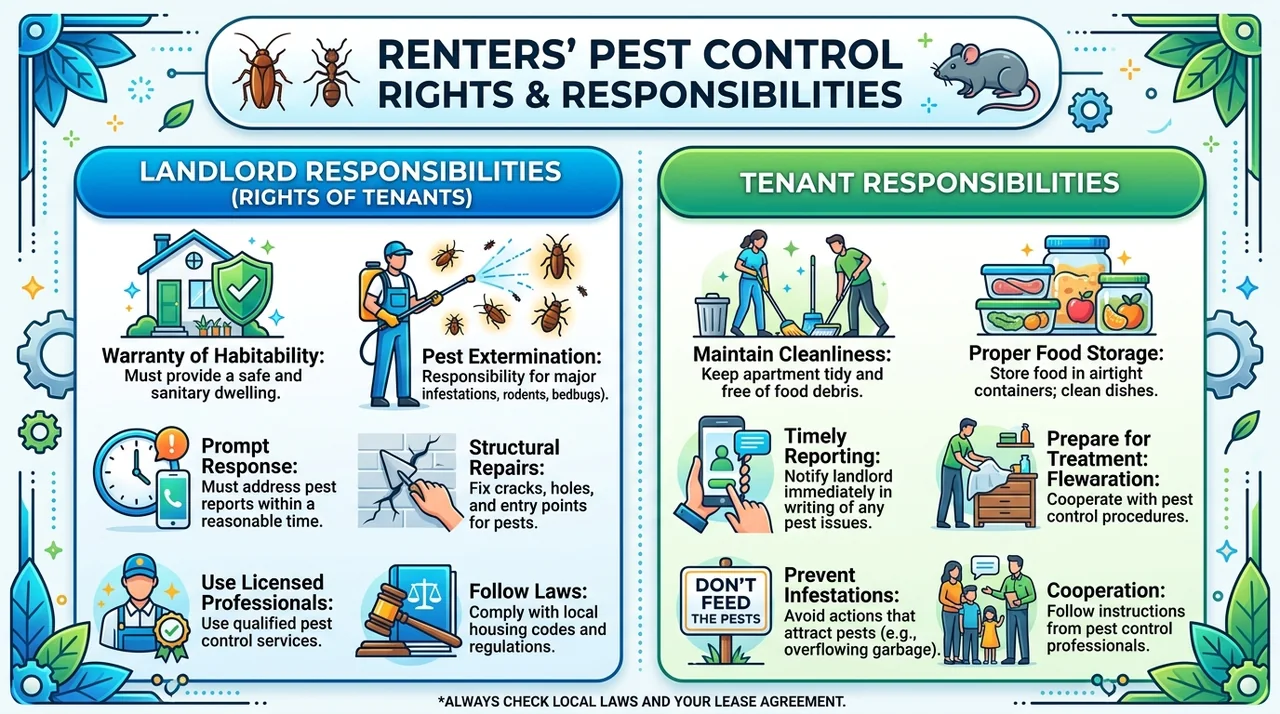
Most states recognize an "implied warranty of habitability," a legal requirement that landlords keep rental units fit to live in. A serious or persistent infestation, especially of pests like cockroaches, rodents, or bed bugs, is widely treated as a habitability issue. Under this principle, landlords are generally responsible for addressing infestations that were present before you moved in, that affect multiple units, or that stem from the building's condition (structural gaps, plumbing leaks, shared walls).
Bed bugs are handled specifically in many jurisdictions, with laws that may require landlords to remediate and sometimes to disclose prior infestations. Because these rules vary widely, the details for your situation come from your lease and your state or city housing code, not from general guidance.
Where Tenant Responsibility Comes In
Tenants typically have duties too, and failing them can shift responsibility:
- Keep the unit reasonably clean, managing food, trash, and clutter that attract pests.
- Report problems promptly and in writing. Delayed reporting can complicate who pays.
- Allow access for treatment and follow preparation instructions (bagging items, emptying cabinets) so the treatment can succeed.
- Avoid introducing pests, for example through infested secondhand furniture.
Document and Communicate Effectively
Whatever the cause, a clear paper trail protects you and speeds resolution:
- Report in writing (email or a dated letter), describing the pest, where and when you have seen it, and keeping a copy.
- Take photos and notes with dates.
- Keep records of every communication and any receipts.
- Know your local resources: many cities have code-enforcement or housing departments that inspect habitability complaints if a landlord does not respond.
Do not simply withhold rent or arrange your own extermination and deduct the cost without first checking what your state law allows, since the rules for "repair and deduct" or rent withholding are strict and vary. For questions about your specific legal rights, consult your local housing authority, health department, or a tenant-rights organization. If you use any pest-control product yourself, follow the EPA-approved label exactly, and for any accidental exposure call Poison Control at 1-800-222-1222.