
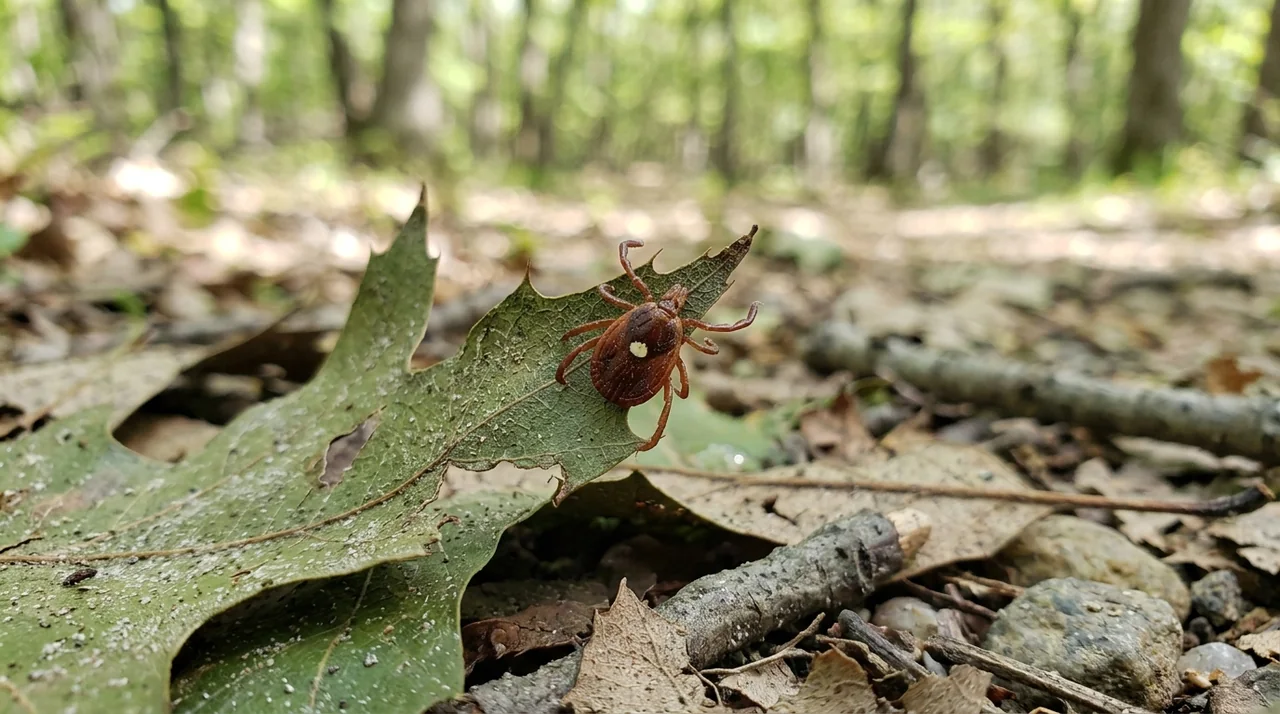


Where are lone star ticks found in the US?
The lone star tick (Amblyomma americanum) takes its name from the single white spot on the back of the adult female. Its historic stronghold is the Southeast. But its range now reaches up much of the eastern United States and into parts of the Midwest. Researchers have documented continued spread in recent years. Warmer conditions and growing deer populations are commonly cited as factors in that expansion.
What habitats do they prefer?
Lone star ticks like warm, wooded habitats with plenty of shade and thick underbrush. You are most likely to run into them in:
- Forests and brushy areas, especially the edges where woods meet lawn or field.
- Tall grass and dense ground cover.
- Yards that back onto woodland or that host plenty of deer.
What time of year are they active?
In most of their range, lone star ticks are active from spring through fall. Activity often peaks in the warmer months. All three life stages, larva, nymph, and adult, will bite people. The tiny larvae, sometimes called "seed ticks," can appear in large numbers in late summer.
How do I recognize a lone star tick?
The adult female is the easiest to identify, thanks to the lone white dot in the center of her reddish-brown back. Males lack the single dot. Instead they have scattered white streaks or spots along the edge of the body. These are aggressive, fast-moving ticks that actively seek out hosts rather than waiting passively.
What are the health concerns from a bite?
Lone star ticks are notable human biters, so bite prevention matters. Public health agencies, including the CDC, link lone star tick bites with alpha-gal syndrome, a potentially serious allergy to red meat. They also link them with illnesses such as ehrlichiosis and a rash illness called STARI. Notably, this species is not considered a primary carrier of Lyme disease. If you feel unwell, develop a rash, or have a new reaction after eating red meat following a bite, contact your doctor.
Are lone star ticks the same as chiggers?
No, though they are sometimes confused. Chiggers are the larval stage of certain mites, not ticks. The mix-up happens because the tiny larval lone star ticks, often called "seed ticks," can swarm onto a person's legs in late summer, much as chiggers do. If you pick up dozens of nearly microscopic specks after walking through brushy areas, they could be either one. Both are best avoided the same way: use repellent, tuck in clothing, and shower and change clothes soon after being outdoors.
How can I reduce lone star ticks around my home?
- Wear long sleeves and pants, and tuck pant legs into socks in tick habitat.
- Use an EPA-registered repellent according to its label; permethrin-treated clothing is another option for gear and outerwear.
- Do thorough tick checks on people and pets after being outdoors, and shower soon after coming inside.
- Keep lawns mowed, clear leaf litter and brush, and create a dry barrier between yard and woods.