
White-Tailed Deer
Odocoileus virginianus · also called whitetail, whitetail deer, deer
Quick answer
The white-tailed deer (Odocoileus virginianus) is a large brown browser named for the white underside of its tail. Abundant across the US, it damages crops, orchards, gardens, and ornamentals by browsing and rubbing, contributes to vehicle collisions, and helps sustain the ticks that spread Lyme disease.
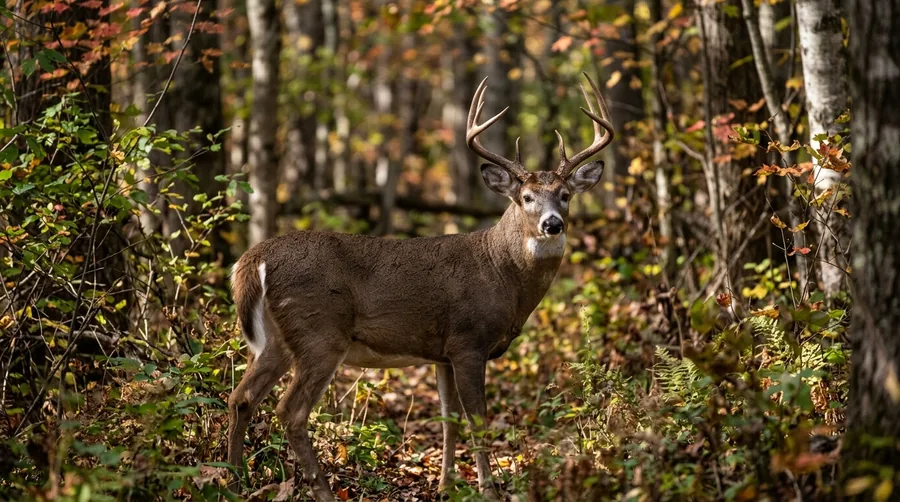
Brown white-tailed deer browsing on garden shrubs at the edge of a yard at dusk
Recommended Products



What it does
White-tailed deer are browsers most active at dawn and dusk, feeding on leaves, buds, shoots, and fruit. They damage gardens, orchards, nurseries, and field crops, and in fall bucks rub their antlers on young tree trunks, scraping bark and breaking saplings. Deer follow regular trails and readily learn to feed in yards and cropland.
Where it lives
Whitetails are found across most of the US in forests, woodland edges, farmland, and increasingly in suburbs, where mild conditions and abundant landscaping support high numbers. They bed in cover during the day and move into fields, gardens, and orchards to feed, favoring edge habitat between woods and open ground.
How it breeds
Deer breed in fall during the rut. After about a 200-day gestation, does give birth in late spring to one to three fawns, commonly twins, that hide in cover for their first weeks. With one breeding season a year, herds grow moderately, but a lack of predators and hunting lets suburban populations climb.
What it eats
White-tailed deer are herbivorous browsers that eat a wide range of leaves, twigs, buds, acorns, fruit, farm crops, and ornamental plants. Their appetite for garden favorites, soybeans, corn, fruit trees, and landscape shrubs is what makes them a significant agricultural and residential pest.
Identification
Look for a large deer, tan to reddish-brown in summer and grayer in winter, standing about 3 to 3.5 feet at the shoulder, with a long tail that is brown above and bright white below and raised like a flag when alarmed. Mature bucks grow branching antlers in late summer and fall.
Signs of an infestation
- Ragged, torn browse damage on shrubs and crop tips
- Bark scraped from young trunks by antler rubbing
- Cloven, heart-shaped hoof prints in soil
- Piles of small, pellet-like droppings
- Well-worn deer trails leading to feeding areas
Prevention tips
- Install woven-wire deer fencing at least 8 feet tall
- Protect individual trees with trunk guards and cages
- Apply deer repellents, rotating and reapplying per the label
- Choose deer-resistant plants for exposed beds
- Remove fallen fruit and reduce edge cover near crops
Professional solutions
Large or ongoing deer damage to crops and orchards often needs professional help with exclusion fencing design, repellent programs, and, where appropriate, regulated population management. Deer are game animals managed by state wildlife agencies, so hunting and any lethal control are tightly regulated. A wildlife professional can advise on legal, effective options.
Health & safety
Deer rarely threaten people directly, though startled or rutting animals can be dangerous and deer-vehicle collisions cause many injuries each year. Their main health link is ecological: deer are important hosts for adult blacklegged ticks, so high deer numbers can amplify local tick populations that spread Lyme disease and other tick-borne illnesses. Overall risk is moderate.
Relevant Products





Frequently asked questions
How do I keep deer out of my garden or orchard?
Tall exclusion fencing is the only fully reliable method; woven-wire deer fence at least 8 feet high keeps deer out, since they can clear shorter barriers. For smaller areas, individual tree cages, deer-resistant plantings, and rotated repellents applied per the label reduce browsing, but determined, hungry deer will test lighter measures.
Do deer really spread Lyme disease?
Deer do not infect people directly, but they are a key host for adult blacklegged (deer) ticks, and high deer numbers help sustain the tick populations that transmit Lyme disease and other illnesses. Reducing deer access and managing ticks in the yard both help lower the risk of tick-borne disease.
Are repellents enough to stop deer damage?
Repellents can reduce browsing on ornamentals, but they wear off, wash away, and lose effect as deer get used to them, so they must be rotated and reapplied per the label. Under heavy deer pressure or for crops and orchards, repellents alone rarely suffice; tall fencing is far more dependable.
Fact-checked by Morgan Vance, Editorial Director (editorial review, not a professional pest-control or medical sign-off). Last reviewed July 8, 2026. We correct anything a reader shows us is wrong — see our corrections policy.