
Canada Goose
Branta canadensis · also called Canadian goose, Canada goose
Quick answer
The Canada goose (Branta canadensis) is a large waterfowl with a black head and neck, a white chinstrap, and a brown body. Resident, non-migratory flocks graze and foul lawns, parks, golf courses, and pond edges with heavy droppings and become aggressive when nesting. These native birds are federally protected.
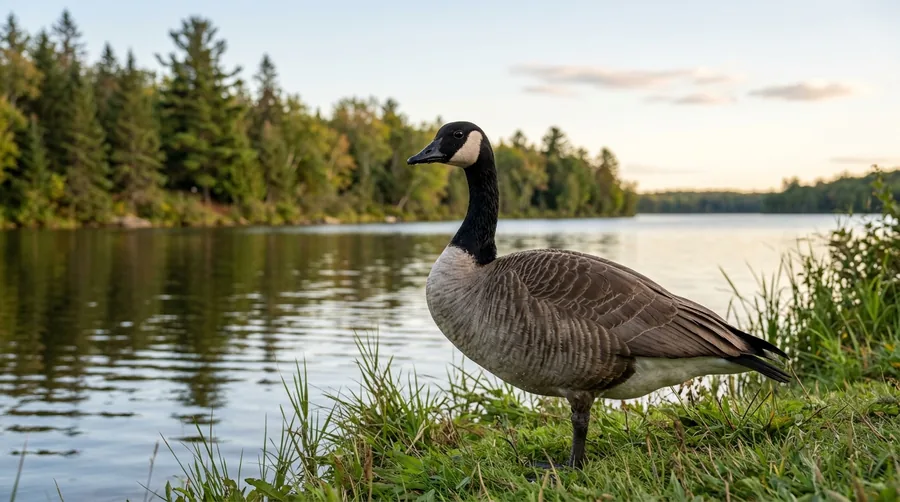
Canada goose with a black head and neck and white chinstrap standing on a green lawn
Recommended Products



What it does
Canada geese graze grass in flocks and are strongly drawn to open, mowed lawns beside water. They produce large amounts of droppings that foul turf, walkways, and swimming areas and can degrade water quality. During spring nesting, adults become territorial and will hiss, charge, bite, and beat with their wings to defend a nest or goslings.
Where it lives
Once mainly migratory, many Canada geese are now year-round residents in the US, thriving on the manicured lawns of parks, golf courses, corporate campuses, schools, retention ponds, and waterfronts. They favor short grass next to open water, which offers both food and a safe loafing and nesting area.
How it breeds
Geese pair for years and nest in spring, with the female laying about four to seven eggs on a ground nest near water. Goslings hatch in roughly a month and follow the parents, which fiercely guard them. They raise one brood a year, but resident flocks can grow large where conditions are ideal.
What it eats
Canada geese are grazing herbivores that feed mainly on grasses, sedges, and aquatic plants, and also on grain and turf. Well-watered, fertilized lawns provide ideal forage, which is a major reason resident flocks concentrate on parks, campuses, and golf courses.
Identification
Look for a large goose 30-43 inches long with a black head and neck, a bright white chinstrap patch, a brown back and sides, a pale breast, and a black bill and feet. Size varies among populations, but the black neck and white chinstrap are unmistakable.
Signs of an infestation
- Flocks grazing on lawns, fields, or pond banks
- Abundant tubular green-and-white droppings on turf and paths
- Overgrazed, worn grass near water
- Aggressive hissing or charging birds in spring
- Ground nests with large eggs near the water's edge
Prevention tips
- Let grass grow tall and add plantings along water edges
- Never feed geese, which anchors flocks in place
- Use fencing or barriers between lawns and ponds
- Deploy trained dogs or approved hazing to make sites unwelcoming
- Add visual and noise deterrents, rotating them to prevent habituation
Professional solutions
Persistent resident-goose problems usually need a wildlife professional who can combine habitat modification, harassment, and, where warranted, permitted egg or nest management. Canada geese are native and federally protected under the Migratory Bird Treaty Act, so nest removal, egg treatment, or lethal control requires the proper federal and state permits, which a licensed operator can obtain.
Health & safety
Nesting geese can be genuinely aggressive, biting and striking with their wings, which can cause falls or injuries, so keep a distance during spring. Their droppings can carry bacteria and parasites such as E. coli, Salmonella, Campylobacter, and Giardia that contaminate water and turf. Wash hands after exposure and keep children and pets clear of fouled areas. Overall risk is moderate.
Relevant Products






Frequently asked questions
How do I keep Canada geese off my lawn or pond?
Make the site less inviting: let grass grow tall, add dense plantings or fencing along the water's edge to block their walk-up access, stop all feeding, and use rotating visual, noise, and trained-dog hazing. Because geese habituate quickly, combining and changing methods works far better than any single deterrent.
Are Canada geese protected? Can I remove a nest?
Canada geese are native and federally protected under the Migratory Bird Treaty Act. Removing or disturbing an active nest, treating eggs, or lethal control requires federal and state permits. Habitat changes, hazing, and exclusion are legal without a permit, but nest and egg management should go through a licensed professional.
Why are nesting geese so aggressive?
In spring, parent geese defend their nest and goslings and will hiss, charge, bite, and beat intruders with their wings, which can knock a person down. It is protective behavior, not random aggression. Give nesting geese a wide berth, keep children and pets away, and address the flock with hazing outside nesting season.
Fact-checked by Morgan Vance, Editorial Director (editorial review, not a professional pest-control or medical sign-off). Last reviewed July 24, 2026. We correct anything a reader shows us is wrong — see our corrections policy.