
European Starling
Sturnus vulgaris · also called starling, common starling
Quick answer
The European starling (Sturnus vulgaris) is a stocky, glossy black bird speckled with white in winter, with a yellow bill when breeding. This non-native species forms huge, noisy flocks that damage crops and feedlots, foul buildings with droppings, and nest in vents and cavities, displacing native birds.
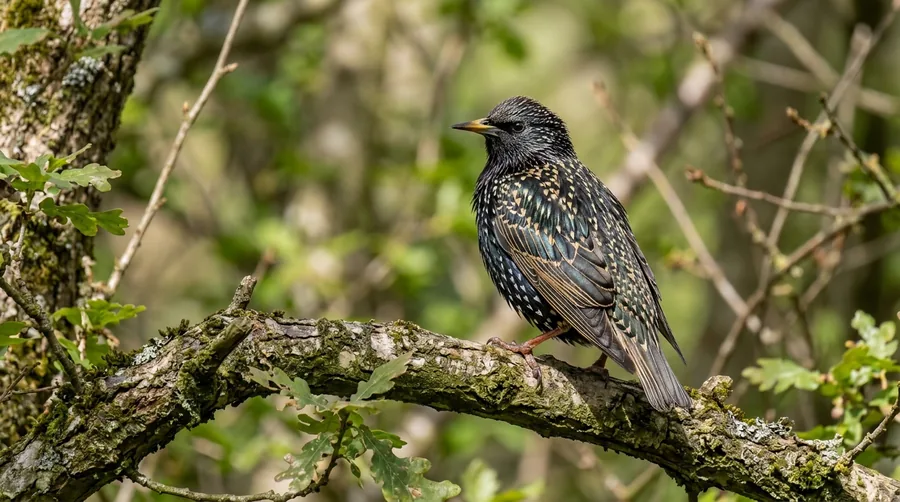
Glossy black European starling with white speckles and a yellow bill on a rooftop
Recommended Products



What it does
Starlings are gregarious and gather in enormous flocks that roost together, sometimes numbering in the thousands, producing heavy droppings, noise, and mess below. They probe lawns and fields for insects, raid fruit and grain crops, and swarm livestock feedlots to eat and contaminate feed. They nest in cavities, vents, and signage around buildings.
Where it lives
Introduced to North America in the 1890s, starlings are now abundant nationwide in cities, suburbs, farms, and feedlots. They roost in trees, on buildings, and on structures, and nest in tree cavities, wall voids, vents, and building openings, aggressively competing with native cavity nesters for these sites.
How it breeds
Starlings breed in spring and summer, usually raising one or two broods a year with clutches of about four to six eggs. Young fledge in roughly three weeks. After breeding, families merge into the large communal flocks that create the biggest roosting and agricultural conflicts through fall and winter.
What it eats
Starlings are omnivores. They eat insects and grubs, fruit and berries, seeds, and grain, and at feedlots and farms they consume and foul large amounts of livestock feed. This broad diet and flocking behavior make them a significant agricultural pest.
Identification
Look for a chunky, short-tailed blackbird 8-9 inches long. Breeding adults are glossy black with green-purple iridescence and a bright yellow bill; in winter the plumage is heavily speckled with white and the bill darkens. Their triangular wings and direct flight in tight flocks are distinctive.
Signs of an infestation
- Large, noisy flocks roosting on trees or buildings
- Heavy droppings accumulating beneath roost sites
- Damaged or contaminated feed at livestock operations
- Pecked or eaten fruit and grain in fields
- Nests packed into vents, cavities, and signage
Prevention tips
- Screen and cap vents, cavities, and openings 1.5 inches or larger
- Install netting, spikes, or wire on roost ledges
- Cover or protect livestock feed and clean up spillage
- Use netting to protect fruit crops
- Remove nests and block the sites, and thin dense roost trees
Professional solutions
Big communal roosts and farm or feedlot infestations often need a bird-control professional, who can deploy netting, ledge products, roost dispersal, and safe droppings cleanup. Starlings are a non-native species not protected under the federal Migratory Bird Treaty Act, but any control should still comply with local rules.
Health & safety
Starling droppings can carry the fungus that causes histoplasmosis and bacteria such as Salmonella, with the main risk from inhaling dust while cleaning large roost accumulations. At farms they can spread pathogens through contaminated feed and water. They do not attack people. Wear protection during cleanup or hire a pro. Overall risk is moderate.
Relevant Products






Frequently asked questions
How do I get rid of a starling roost?
Large roosts are broken up with a mix of exclusion and dispersal: netting and spikes on ledges, screening of nesting cavities and vents, thinning dense roost trees, and removing food sources such as exposed feed. Big commercial or feedlot roosts usually need a bird-control professional and safe droppings cleanup.
Are European starlings protected?
No. Like the house sparrow and feral pigeon, the European starling is a non-native, introduced species and is not protected under the federal Migratory Bird Treaty Act. Control and nest removal are generally permitted, but you should follow local ordinances and avoid harming protected native birds using nearby cavities.
Why are starlings bad for farms?
Starlings flock in huge numbers and descend on feedlots and fields, eating and contaminating livestock feed with droppings, damaging fruit and grain crops, and potentially spreading pathogens through feed and water. Protecting and covering feed, netting crops, and excluding roosts are the core farm control measures.
Fact-checked by Morgan Vance, Editorial Director (editorial review, not a professional pest-control or medical sign-off). Last reviewed July 14, 2026. We correct anything a reader shows us is wrong — see our corrections policy.