
House Sparrow
Passer domesticus · also called English sparrow, sparrow
Quick answer
The house sparrow (Passer domesticus) is a small, stout brown bird; males have a gray crown and black bib. This non-native species nests in vents, signs, gutters, and rafters, packing openings with debris that can block airflow and pose a fire risk. It aggressively displaces native cavity-nesting birds.
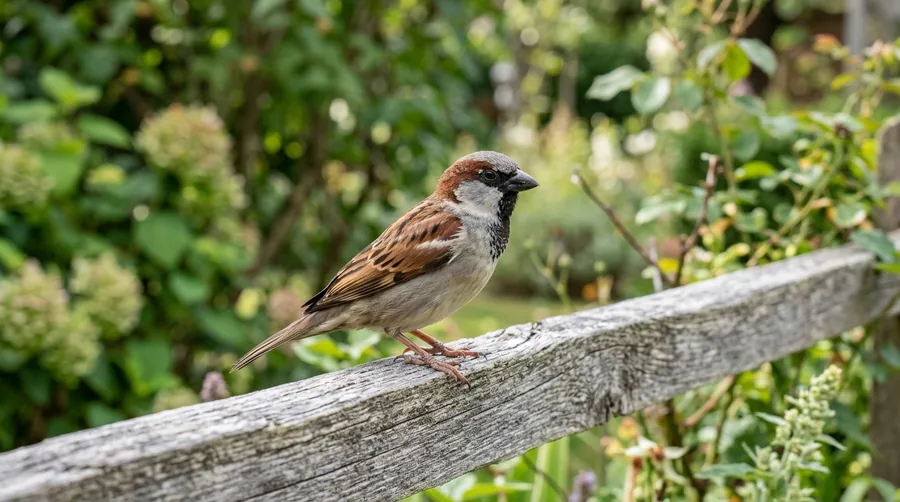
Brown male house sparrow with a gray crown and black throat bib perched on a gutter
Recommended Products



What it does
House sparrows are bold, social birds that live close to people and nest in and on buildings. They stuff bulky nests of grass, trash, and feathers into dryer and bathroom vents, exhaust louvers, signs, gutters, and rafters, which can block airflow and create a fire hazard. They also aggressively evict native birds from nest boxes and cavities.
Where it lives
Introduced to North America in the 1850s, house sparrows are now established nationwide, tied closely to human settlement. They thrive around homes, farms, feedlots, warehouses, storefronts, and grain facilities, nesting in building cavities, vents, signage, and light fixtures, and rarely stray far from structures.
How it breeds
House sparrows breed prolifically from spring into late summer, raising two to four broods a year with clutches of about four to six eggs. Young fledge in about two weeks, and pairs often reuse the same nest site, so a couple of birds can generate a persistent, growing colony in one season.
What it eats
House sparrows are seed and grain eaters that also take insects, especially when feeding chicks, plus human food scraps, spilled feed, and crumbs. Abundant food around farms, feed stores, and outdoor dining sustains large local populations.
Identification
Look for a chunky sparrow 5.5-6.7 inches long. Males have a gray crown, chestnut nape, and a black throat bib; females and juveniles are plainer buff-brown with a pale eyebrow stripe. Their close association with buildings and cavity nesting help separate them from native sparrows.
Signs of an infestation
- Bulky nests jammed into vents, louvers, or signs
- Chirping and activity around building openings
- Droppings and nest debris below rooflines and ledges
- Blocked dryer or exhaust vents with grass and trash
- Flocks feeding around trash, feeders, or spilled grain
Prevention tips
- Cover vents and louvers with proper guards or screening
- Seal gaps in eaves, signs, and rafters where they nest
- Remove old nests and block the opening afterward
- Reduce spilled seed, feed, and accessible food
- Use exclusion netting on covered rafters and beams
Professional solutions
For repeated nesting in vents, signage, or commercial rafters, a bird-control professional can install vent guards, netting, and other exclusion and clear blocked openings safely. House sparrows are a non-native species and are not protected under the federal Migratory Bird Treaty Act, but control should still follow local ordinances.
Health & safety
House sparrows and their nests can carry mites and be associated with bacteria and fungi such as Salmonella and the agents of histoplasmosis, mainly a concern around heavy droppings or nest debris. The most direct household hazard is nests blocking dryer and exhaust vents, which reduces airflow and can be a fire risk. Wear protection during cleanup. Risk is moderate.
Relevant Products





Frequently asked questions
How do I get sparrows out of my dryer or bathroom vent?
Once you have confirmed the nest is inactive, clear it and immediately install a proper vent guard or damper that lets air out but keeps birds from entering. Blocked vents reduce airflow and can be a fire risk, so this is worth addressing promptly, and sealing other nearby gaps prevents them relocating.
Are house sparrows protected birds?
No. The house sparrow is a non-native, introduced species and is not protected under the federal Migratory Bird Treaty Act, unlike most native songbirds. Control and nest removal are generally allowed, though you should still follow any local ordinances and take care not to disturb protected native birds nearby.
Why are sparrows a problem if they are small?
Despite their size, house sparrows nest aggressively in building vents, signs, and rafters, packing openings with debris that blocks airflow and can pose a fire risk, and their droppings foul surfaces. They also displace native cavity-nesting birds. Exclusion of nesting sites is the key to controlling them.
Fact-checked by Morgan Vance, Editorial Director (editorial review, not a professional pest-control or medical sign-off). Last reviewed August 10, 2026. We correct anything a reader shows us is wrong — see our corrections policy.