
Woodpecker
Family Picidae · also called woodpecker, flicker, sapsucker
Quick answer
Woodpeckers (family Picidae) are stiff-tailed climbing birds that peck wood with a chisel-like bill. Around homes they drill siding, fascia, and trim to find insects, excavate nest holes, or drum to mark territory, leaving holes and noise. All native US woodpeckers are federally protected, so control relies on deterrents.
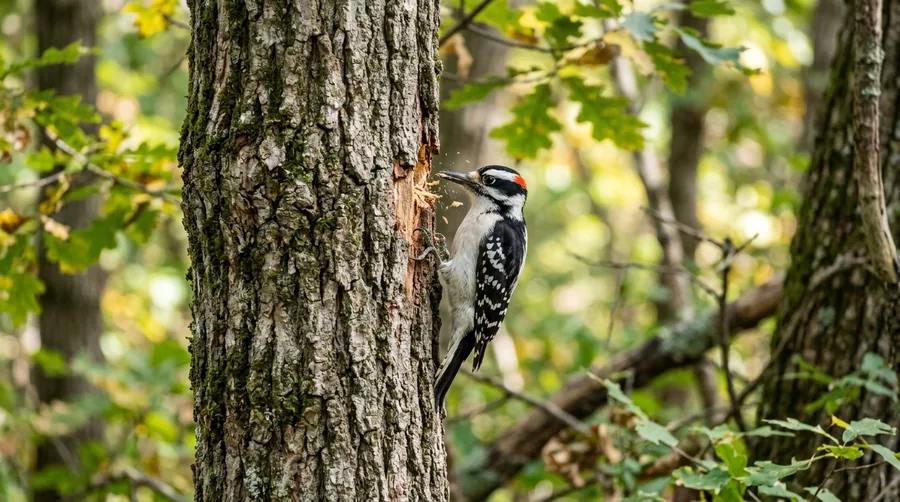
Black and white woodpecker with a red head marking clinging to wooden house siding
Recommended Products



What it does
Woodpeckers cling to vertical surfaces and peck for three main reasons: foraging for insects in wood, excavating a nest or roost cavity, and drumming rapidly on resonant surfaces to claim territory and attract mates. On houses this becomes damage to wood siding, fascia, trim, and even metal gutters and flashing, most intense in spring.
Where it lives
Woodpeckers live nationwide in forests, woodlots, parks, and wooded neighborhoods. They forage on tree trunks and dead limbs, but readily use homes with wood or wood-look siding, especially cedar and stained surfaces near trees. Sapsuckers also drill neat rows of shallow 'sap wells' in landscape and orchard trees.
How it breeds
Most woodpeckers pair in spring and excavate a nest cavity in a tree, snag, or occasionally a structure, raising one brood a year with several eggs. Both parents incubate and feed the young, which fledge in a few weeks. With a single annual brood, populations grow slowly.
What it eats
Woodpeckers eat wood-boring insects, ants, and beetle larvae extracted from wood, along with fruit, nuts, and seeds; many visit suet feeders. Sapsuckers specialize in tree sap and the insects it attracts, drilling the sap wells that can damage ornamental and orchard trees.
Identification
Identification depends on the species, but look for a bird that climbs trunks using stiff tail feathers for support, has a chisel-like bill, and often black, white, and red markings. Common house culprits include flickers, downy and hairy woodpeckers, pileated woodpeckers, and sapsuckers.
Signs of an infestation
- Fresh holes or rows of holes in siding, fascia, or trim
- Loud, rapid drumming on wood, gutters, or flashing
- Wood chips and debris on the ground below the damage
- Rows of small, shallow sap-well holes in tree bark
- A bird repeatedly returning to the same wall or eave
Prevention tips
- Hang visual deterrents such as reflective tape or predator eyes
- Cover targeted areas temporarily with lightweight netting
- Fill existing holes and repaint to remove attractive cues
- Treat underlying wood-boring insect problems in siding
- Offer a suet feeder or nest box away from the house to redirect
Professional solutions
Because damage often ties back to insects in the siding or to territorial drumming, a wildlife or pest professional can identify the cause and install exclusion netting and deterrents correctly. Importantly, all native US woodpeckers are protected under the federal Migratory Bird Treaty Act, so lethal control or nest removal requires a federal depredation permit and is not a DIY option.
Health & safety
Woodpeckers pose essentially no disease or bite risk to people; the concern is property damage and noise rather than health. The key safety and legal point is that native woodpeckers are federally protected, so control must use non-lethal deterrents and exclusion unless you obtain the required permits. Overall risk to people is low.
Relevant Products






Frequently asked questions
How do I stop a woodpecker from pecking my house?
Use non-lethal deterrents: hang reflective tape, spinning reflectors, or predator-eye balloons at the damage site, and cover targeted areas with lightweight netting held off the wall. Fill and repaint existing holes, and treat any wood-boring insects in the siding, since foraging for those insects is a common reason woodpeckers keep returning.
Are woodpeckers protected by law?
Yes. All native US woodpeckers are protected under the federal Migratory Bird Treaty Act, so it is illegal to harm them or destroy an active nest without a federal permit. Control must rely on deterrents and exclusion; a wildlife professional can advise on legal options and permits if damage is severe.
Why is a woodpecker drumming on my gutter?
Rapid drumming on a resonant surface like a metal gutter, flashing, or chimney cap is territorial behavior, not feeding, and it peaks in spring. The bird is advertising for a mate and marking territory. Deadening the surface's resonance and adding visual deterrents usually convinces it to move to a natural drumming spot.
Fact-checked by Morgan Vance, Editorial Director (editorial review, not a professional pest-control or medical sign-off). Last reviewed July 29, 2026. We correct anything a reader shows us is wrong — see our corrections policy.