Nutria
Myocastor coypus · also called coypu, swamp rat, river rat
Quick answer
The nutria (Myocastor coypus) is a large, invasive semi-aquatic rodent with bright orange front teeth, a round rat-like tail, and webbed hind feet. Native to South America, it burrows into pond banks, levees, and canals and devours wetland plants and crops. Its digging erodes shorelines and undermines earthen structures.
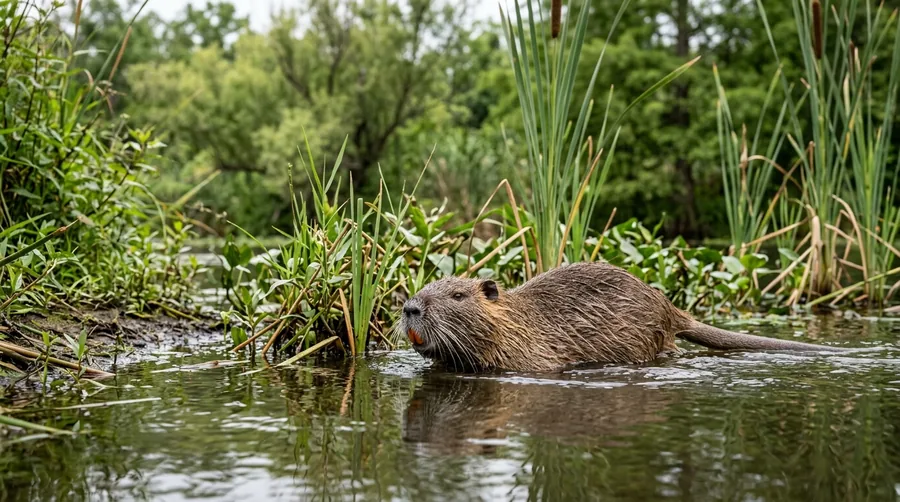
Large brown nutria with orange front teeth and a round rat-like tail at a marshy water's edge
Recommended Products


What it does
Nutria are strong swimmers that feed mostly at dawn, dusk, and night. They dig extensive bank burrows and slides that erode shorelines, weaken levees and dams, and collapse pond edges. By eating the roots of marsh plants they strip vegetation, turning wetlands into open mud and destabilizing the soil.
Where it lives
They live in and along fresh and brackish water: marshes, drainage canals, ponds, bayous, rice fields, and slow rivers. Introduced from South America for fur, they are now established along the Gulf Coast, especially Louisiana, plus the Chesapeake region and Pacific Northwest, and are treated as an invasive species.
How it breeds
Nutria breed year-round and mature quickly. Females can produce two to three litters a year, each averaging four to six young, which are born furred and swim within days. This fast turnover lets a small number expand into a damaging population within a couple of seasons.
What it eats
Nutria are herbivores. They eat the roots, rhizomes, and stems of aquatic and marsh plants and readily raid nearby crops such as rice, sugarcane, corn, and vegetables, often eating far more than they consume by uprooting whole plants.
Identification
A nutria looks like an oversized rat or a tailless-looking beaver. Look for a heavy 15-22 lb body, dark brown fur, prominent orange-yellow incisors, small ears, webbed hind feet, and a long, round, sparsely haired tail, unlike a beaver's flat paddle or a muskrat's flattened tail.
Signs of an infestation
- Round burrow openings and slides in pond banks and levees
- Eroded, collapsing shorelines and undercut banks
- Patches of marsh stripped down to bare mud
- Well-worn trails and floating feeding platforms of cut vegetation
- Large rat-like animals swimming with just the head showing
Prevention tips
- Fence gardens and crops near water with buried wire mesh
- Reduce dense bank vegetation that offers cover and food
- Protect levees and pond banks with riprap or rock armor
- Avoid feeding waterfowl, which also draws nutria
- Report sightings to your state wildlife agency in invasive-species areas
Professional solutions
Because nutria burrows threaten levees, dams, and farmland, control is usually a job for wildlife professionals or agency programs. Trapping and removal are the main tools, and methods and seasons are regulated by state wildlife law. A licensed operator can trap safely, meet legal requirements, and repair damaged banks.
Health & safety
Nutria do not typically bite unless cornered, but they can carry pathogens such as leptospirosis and internal parasites that contaminate water and soil through their droppings and urine. Avoid handling live or dead animals, keep pets away, and wear gloves during any cleanup. Overall risk is moderate and driven mainly by property and crop damage.
Relevant Products


Frequently asked questions
What is the difference between a nutria and a muskrat or beaver?
A nutria has a long, round, rat-like tail, while a muskrat's tail is thin and flattened side to side and a beaver's is broad and paddle-shaped. Nutria are larger than muskrats, smaller than beavers, and have distinctive bright orange front teeth and webbed hind feet.
Are nutria dangerous to people?
Nutria rarely bite unless handled or cornered, so direct danger to people is low. The bigger concerns are the erosion and levee damage from their burrowing, crop losses, and pathogens like leptospirosis they can shed into water. Do not handle them, and keep pets away.
How do you get rid of nutria?
Nutria control centers on trapping and removing animals plus protecting banks and crops, and it is regulated by state wildlife law. Because they damage levees and breed quickly, most property owners work with a licensed wildlife professional or a local invasive-species program rather than treating them alone.
Fact-checked by Morgan Vance, Editorial Director (editorial review, not a professional pest-control or medical sign-off). Last reviewed July 15, 2026. We correct anything a reader shows us is wrong — see our corrections policy.