
Raccoon
Procyon lotor · also called common raccoon, coon, masked bandit
Quick answer
The raccoon (Procyon lotor) is a stocky, gray-brown mammal with a black facial mask and a bushy, ringed tail. This clever, dexterous night forager raids trash and pet food and dens in attics, chimneys, and under decks. Raccoons are a leading rabies carrier and their droppings can carry a dangerous roundworm.
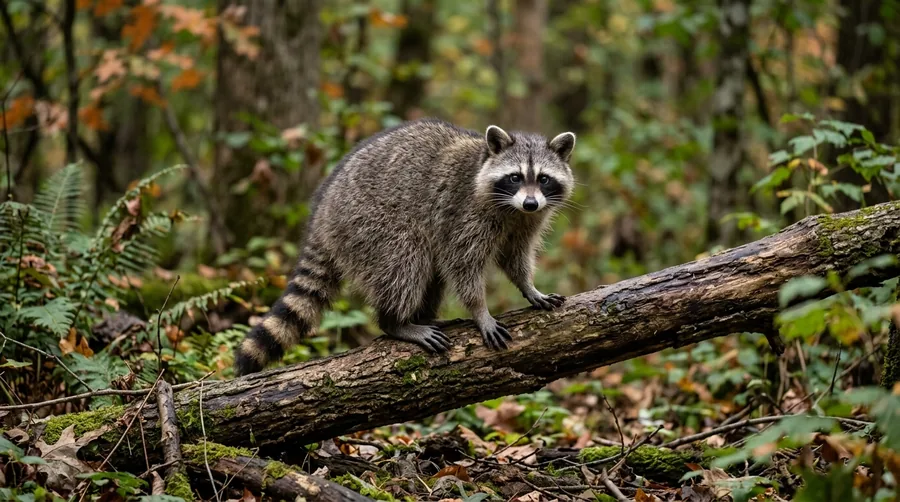
Gray raccoon with a black facial mask and ringed tail peering out of an attic vent at night
Recommended Products



What it does
Raccoons are nocturnal, curious, and highly dexterous, using their nimble front paws to open latches, lids, and containers. They tip trash cans, steal pet food, roll back sod hunting grubs, and tear roof edges, soffits, and vents to den inside. Females denning in an attic can cause heavy insulation and duct damage.
Where it lives
Adaptable and widespread, raccoons live nationwide in forests, wetlands, farms, suburbs, and cities. They den in tree hollows, burrows, storm drains, chimneys, attics, and spaces under decks and sheds, favoring sites near water and reliable food such as gardens, trash, and pet dishes.
How it breeds
Raccoons breed in late winter, and females raise one litter of about three to five kits born in spring. Young stay with the mother through summer and fall before dispersing. They reproduce slowly compared with rodents, but urban food and shelter let local populations stay dense.
What it eats
Raccoons are opportunistic omnivores. They eat fruit, nuts, insects, grubs, eggs, frogs, crayfish, and small animals, and readily exploit garbage, pet food, birdseed, compost, and garden crops around homes.
Identification
Look for a stocky 10-30 lb body, grizzled gray fur, a distinctive black mask across the eyes, and a fluffy tail with four to seven dark rings. Their five-toed, hand-like front tracks and knack for opening containers are also giveaways.
Signs of an infestation
- Tipped trash cans and scattered garbage overnight
- Torn soffits, vents, or shingles at the roofline
- Heavy scratching or thumping sounds in the attic at night
- Latrine piles of droppings on decks, roofs, or in attics
- Rolled-up sod and small dig holes in the lawn
Prevention tips
- Secure trash cans with locking or strapped lids
- Bring pet food indoors and clean up fallen birdseed
- Cap chimneys and screen attic and gable vents
- Trim tree limbs back several feet from the roof
- Install a sturdy fence or barrier under decks and sheds
Professional solutions
Because raccoons are a primary rabies host and their droppings can carry roundworm, denning animals are best handled by a licensed wildlife control professional. Pros humanely trap or use one-way doors, then seal entry points, and safely clean and decontaminate soiled attics. Trapping and relocation are regulated by state wildlife law.
Health & safety
Raccoons are a leading rabies carrier in the US and will bite or scratch if cornered; any bite or scratch needs prompt medical care and a report to your local health department. Their feces can contain Baylisascaris roundworm eggs that are hazardous if inhaled or swallowed, and they can spread leptospirosis. Never handle raccoons, and hire a pro for cleanup. Risk is high.
Relevant Products





Frequently asked questions
How do I get a raccoon out of my attic?
The safest route is a licensed wildlife professional, who can determine whether kits are present, use one-way doors or humane trapping, seal the entry points, and decontaminate the attic. Because raccoons carry rabies and roundworm, avoid direct contact. Trapping and relocation are also regulated by state law.
Are raccoons dangerous?
Raccoons generally avoid people but will bite or scratch if cornered, and they are a top rabies carrier in the US. Their droppings can also carry a roundworm hazardous to humans. They rarely attack unprovoked, but the disease risk makes them a high-concern pest to keep out and never handle.
What attracts raccoons to my yard?
Easy food and shelter. Open trash cans, pet food left outdoors, birdseed, compost, fallen fruit, and garden crops all draw raccoons, and decks, chimneys, and attics offer denning sites. Securing food sources and sealing entry points is the most effective way to make a property less appealing.
Fact-checked by Morgan Vance, Editorial Director (editorial review, not a professional pest-control or medical sign-off). Last reviewed June 19, 2026. We correct anything a reader shows us is wrong — see our corrections policy.