
Coyote
Canis latrans · also called coyote, prairie wolf, brush wolf
Quick answer
The coyote (Canis latrans) is an adaptable, dog-like wild canid, grayish-brown with pointed ears and a bushy, low-hanging tail. Found nationwide, including in cities, it preys on poultry, sheep, and small livestock and occasionally on pets. Coyotes rarely threaten people but can carry rabies, mange, and parasites.
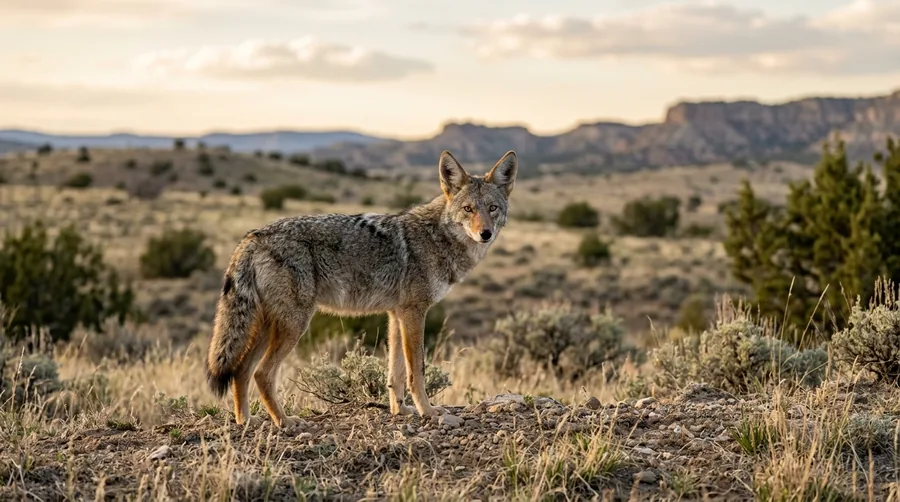
Grayish-brown coyote with pointed ears and a bushy tail standing in a field at dawn
Recommended Products



What it does
Coyotes are intelligent, adaptable hunters active mainly at night and around dawn and dusk, though urban animals may be seen by day. They hunt alone, in pairs, or in family groups and communicate with howls and yips. Around farms they prey on poultry, lambs, and small livestock, and in suburbs they may take unattended small pets.
Where it lives
Coyotes now live nationwide across nearly every habitat, from prairies, deserts, and forests to farmland and dense cities. They den in burrows, brush, culverts, and other sheltered spots to raise pups, and thrive wherever food is available, readily exploiting garbage, pet food, fallen fruit, and rodent populations near people.
How it breeds
Coyotes breed in late winter, and after about a two-month gestation the female bears a litter of roughly four to seven pups in spring. Both parents help raise them, and young disperse by fall or the following year. They raise one litter annually, but their adaptability keeps populations resilient.
What it eats
Coyotes are opportunistic omnivores. They eat rodents, rabbits, birds, insects, fruit, and carrion, and around people they exploit garbage, pet food, and fallen fruit. On farms this diet extends to poultry and young or small livestock, which drives most agricultural conflict.
Identification
Look for a lean, medium-sized canid resembling a slender dog or small wolf, grizzled gray-brown with rusty-tinged legs and ears, a narrow muzzle, upright pointed ears, yellow eyes, and a bushy black-tipped tail carried low when running, unlike a dog's raised tail.
Signs of an infestation
- Nighttime howling, yipping, and group calls
- Poultry or small livestock killed or missing
- Dog-like tracks and scat with hair and berries
- A lean, dog-like animal seen at dawn or dusk
- Den openings in brush, banks, or culverts in spring
Prevention tips
- Secure poultry and livestock in predator-proof enclosures at night
- Use livestock guardian animals or protective fencing
- Never feed coyotes and remove pet food, fallen fruit, and garbage
- Supervise pets outdoors, especially at dawn and dusk
- Haze bold coyotes to keep them wary of people
Professional solutions
Recurring livestock predation or bold, habituated urban coyotes usually call for a wildlife professional or your state wildlife agency. Pros advise on guardian animals, fencing, hazing, and, where warranted, regulated removal. Coyote management and lethal control are governed by state law, and methods vary by state, so a licensed operator will follow local rules.
Health & safety
Coyotes generally avoid people, and attacks on humans are rare, usually linked to animals that have been fed and lost their fear; a bite or scratch needs medical care as a possible rabies exposure. Coyotes can carry rabies, mange, and parasites such as tapeworms transmissible to pets. Keep pets vaccinated and supervised, and never feed coyotes. Overall risk is moderate.
Relevant Products






Frequently asked questions
Are coyotes dangerous to people?
Coyotes almost always avoid people, and attacks on humans are rare and usually tied to animals that have been fed and lost their natural wariness. The bigger risks are predation on unattended pets and small livestock. Never feed coyotes, supervise pets, and haze bold animals so they keep their distance.
How do I protect chickens and livestock from coyotes?
Secure poultry and small livestock in a fully enclosed, predator-proof coop or pen at night, use livestock guardian dogs or donkeys, and install strong or electrified fencing. Removing food attractants and promptly disposing of carcasses also reduces what draws coyotes to a property in the first place.
Should I try to trap or shoot a coyote myself?
Coyote control is regulated by state wildlife law, and methods, seasons, and permits vary widely by state and by whether you are in a city or rural area. For persistent predation or a bold urban coyote, work with a licensed wildlife professional or your state agency rather than acting on your own.
Fact-checked by Morgan Vance, Editorial Director (editorial review, not a professional pest-control or medical sign-off). Last reviewed June 13, 2026. We correct anything a reader shows us is wrong — see our corrections policy.