
Striped Skunk
Mephitis mephitis · also called skunk, polecat
Quick answer
The striped skunk (Mephitis mephitis) is a cat-sized black mammal marked by two white stripes down its back and a bushy tail. Best known for spraying a powerful musk, it dens under decks and sheds, digs lawns for grubs, and raids trash. Skunks are also an important rabies carrier in many regions.
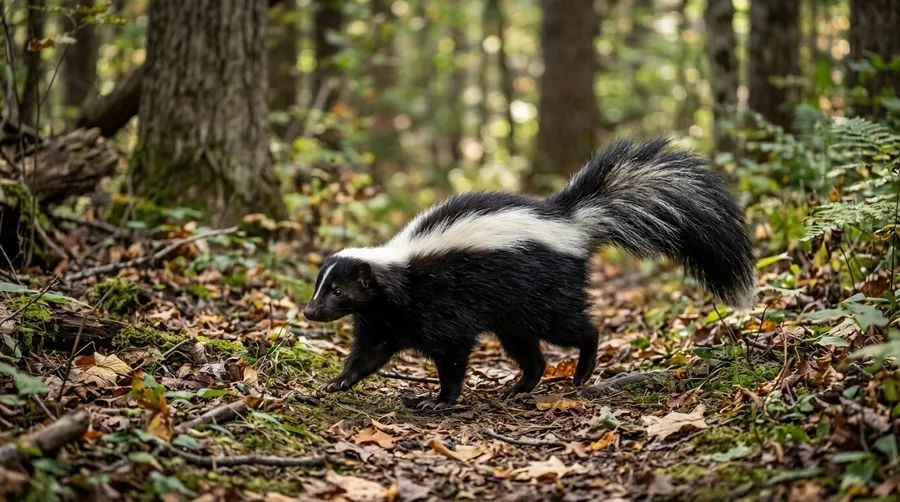
Black striped skunk with two white back stripes and a bushy tail digging in a lawn at dusk
Recommended Products



What it does
Skunks are slow, nocturnal foragers that stamp their feet and raise the tail as a warning before spraying musk from glands under the tail, an accurate defense reaching several feet. They dig small cone-shaped pits in lawns hunting grubs and worms, and readily den in the sheltered space under decks, porches, and sheds.
Where it lives
Striped skunks live nationwide in fields, woodland edges, farmland, and suburbs. They shelter in burrows, brush piles, woodpiles, and hollow logs, and often move under decks, sheds, crawl spaces, and building foundations, especially females seeking a safe spot to raise young in spring.
How it breeds
Skunks mate in late winter, and females raise a single litter of about four to seven kits born in spring. The young follow the mother in a line while foraging and disperse by fall. They breed once a year, so populations grow slowly, but denning females create the most home conflicts.
What it eats
Skunks are omnivores that eat insects, grubs, worms, small rodents, eggs, fruit, and plants. Their grub-hunting drives much of the lawn digging, and around homes they also feed on garbage, pet food, birdseed, and compost.
Identification
Look for a stout, cat-sized black animal with a white blaze on the head that splits into two white stripes along the back, plus a fluffy tail. The unmistakable musky odor and small, cone-shaped lawn digging holes are strong supporting signs.
Signs of an infestation
- A lingering musky skunk odor around the house
- Small, cone-shaped holes dug in the lawn overnight
- A den entrance and matted trail under a deck or shed
- Raided trash, pet food, or birdseed after dark
- A black-and-white animal foraging slowly at dusk
Prevention tips
- Screen or block openings under decks, sheds, and porches
- Secure trash and feed pets indoors
- Treat lawn grubs to reduce a key food source
- Remove woodpiles, brush, and other ground-level cover
- Use motion-activated lights near common denning spots
Professional solutions
Because skunks spray and can carry rabies, denning animals are best left to a licensed wildlife professional who can use one-way doors or careful trapping, then seal the space, all while checking for young. Trapping and relocation are regulated by state wildlife law. Pros also handle safe, low-stress removal that avoids triggering a spray.
Health & safety
Skunks are an important rabies carrier in the central and other US regions; report any bite or scratch to a doctor and your local health department. Their musk is not toxic but causes intense eye and nose irritation. They rarely bite and prefer to spray. Avoid cornering them, keep pets vaccinated, and treat sprayed pets promptly. Risk is moderate.
Relevant Products






Frequently asked questions
How do I get a skunk out from under my deck?
The reliable, low-odor approach is a licensed wildlife professional who can confirm whether young are present, install a one-way door or trap humanely, then seal the space. Because skunks spray and can carry rabies, avoid cornering them yourself. Trapping and relocation are also regulated by state law.
Why is my yard suddenly full of small holes?
Small, cone-shaped holes appearing overnight are a classic sign of a skunk (or raccoon) digging for grubs and worms in the lawn. Treating the lawn for grubs removes a key food source, and it often reduces the nightly digging along with other prevention steps.
Do skunks carry rabies?
Yes, striped skunks are one of the main wildlife rabies carriers in several US regions. They rarely bite and usually spray instead, but any skunk bite or scratch should be treated as a possible rabies exposure. Keep pets vaccinated and never handle a skunk that seems tame or disoriented.
Fact-checked by Morgan Vance, Editorial Director (editorial review, not a professional pest-control or medical sign-off). Last reviewed July 6, 2026. We correct anything a reader shows us is wrong — see our corrections policy.