Virginia Opossum
Didelphis virginiana · also called opossum, possum, North American opossum
Quick answer
The Virginia opossum (Didelphis virginiana) is North America's only marsupial: a cat-sized, grayish-white animal with a pointed pink nose, papery ears, and a long, hairless prehensile tail. This slow, nocturnal scavenger raids trash, pet food, and gardens and shelters under decks. It is docile, rarely aggressive, and seldom carries rabies.
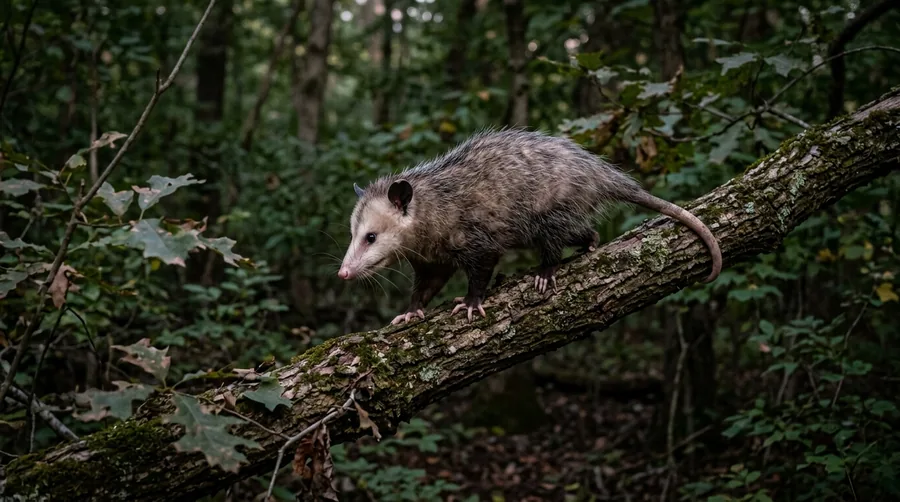
Grayish-white Virginia opossum with a pointed pink nose and bare tail foraging by a fence at night
Recommended Products



What it does
Opossums are slow, solitary night foragers that wander wide territories in search of food. When threatened they hiss, bare their teeth, or involuntarily 'play possum,' going limp as a bluff. They den in existing sheltered spots rather than digging, and often take up temporary residence under decks, sheds, and porches.
Where it lives
Highly adaptable, opossums live across most of the US in woods, fields, farmland, suburbs, and cities, favoring areas near water. They shelter in brush piles, hollow logs, burrows abandoned by other animals, culverts, and dark crawl spaces or gaps beneath buildings, moving dens frequently.
How it breeds
As a marsupial, the female gives birth to tiny, underdeveloped young that crawl into her pouch to finish developing. She may raise one or two litters a year, and many young are born but relatively few survive. Opossums grow fast and typically live only about two years in the wild.
What it eats
Opossums are omnivorous scavengers. They eat insects, snails, worms, carrion, small animals, eggs, fruit, and plants, and around homes they exploit garbage, pet food, compost, and fallen fruit. They also eat some ticks and beetles they encounter while foraging.
Identification
Look for a grayish, cat-sized body, a whitish pointed face, thin leathery ears, and a long, scaly, nearly hairless tail. They have opposable rear 'thumbs' and, when they open their mouth in a threat display, a mouthful of about 50 small teeth, more than any other US land mammal.
Signs of an infestation
- Overturned trash and raided pet-food bowls at night
- A waddling, slow-moving gray animal after dark
- Droppings and disturbed nesting material under a deck or shed
- Fruit, compost, or garden produce gnawed overnight
- An animal lying limp and 'dead' that later revives
Prevention tips
- Secure trash cans and keep lids latched
- Feed pets indoors and remove uneaten food at night
- Screen or block gaps under decks, sheds, and porches
- Pick up fallen fruit and turn compost bins closed
- Clear brush piles and dense cover near the house
Professional solutions
Opossums are usually a manageable nuisance handled with exclusion: seal openings under structures once you are sure no young are inside. For an animal that will not leave or is denning with young, a licensed wildlife professional can use one-way doors or humane trapping. Trapping and relocation are regulated by state wildlife law.
Health & safety
Opossums are docile and rarely bite, and their low body temperature makes rabies uncommon in the species. They can, however, carry leptospirosis and salmonella and host fleas and ticks that may move to pets. Avoid handling them, keep pets vaccinated and treated for parasites, and wash hands after any cleanup. Overall risk is low.
Relevant Products





Frequently asked questions
Are opossums dangerous or aggressive?
Opossums are shy and slow, and their hissing, drooling, and 'playing dead' are bluffs rather than real aggression. They rarely bite unless handled, and their low body temperature makes them poor rabies hosts. They can carry parasites and some bacteria, so avoid contact, but the overall risk is low.
Do opossums really eat ticks?
Opossums groom often and do eat some ticks and insects they encounter, but they are foragers eating a broad diet of carrion, fruit, and small animals, not dedicated tick controllers. Do not rely on them for tick control; standard yard tick management is more effective.
How do I keep opossums away from my house?
Remove the food and shelter that attract them: secure trash, feed pets indoors, clean up fallen fruit and birdseed, and block gaps under decks, sheds, and porches once you have confirmed no animals are inside. These steps usually move a wandering opossum along without trapping.
Fact-checked by Morgan Vance, Editorial Director (editorial review, not a professional pest-control or medical sign-off). Last reviewed May 11, 2026. We correct anything a reader shows us is wrong — see our corrections policy.