
Groundhog (Woodchuck)
Marmota monax · also called woodchuck, whistle-pig, land beaver
Quick answer
The groundhog (Marmota monax), or woodchuck, is a stocky, brown ground squirrel about the size of a large cat. This burrowing herbivore digs extensive tunnel systems that undermine sheds, decks, and foundations, and it devours garden vegetables and crops. Active by day in the warm months, it hibernates through winter.
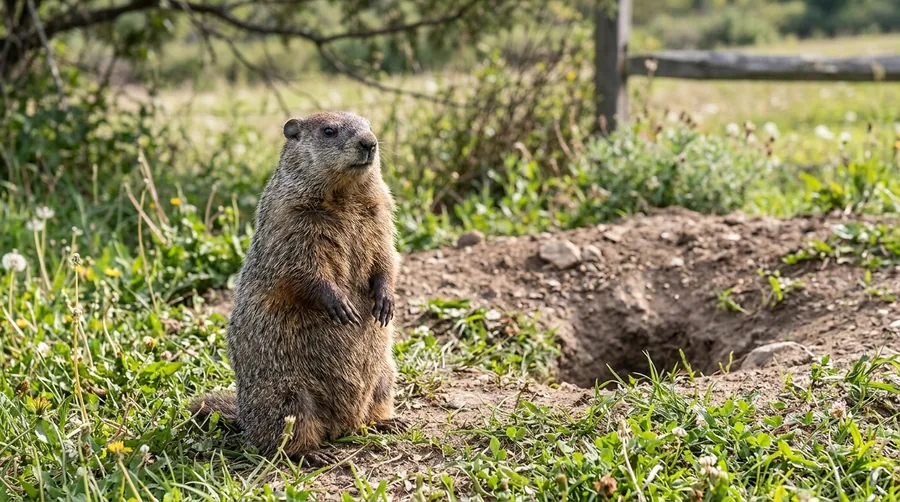
Brown groundhog standing upright at the entrance of a burrow in a grassy yard
Recommended Products



What it does
Groundhogs are diurnal, most active in early morning and late afternoon, and are powerful diggers. Their burrow systems can move a large volume of soil and run 15-40 feet long with multiple entrances, undermining sheds, decks, patios, and foundations. They feed heavily through summer to build fat before hibernating.
Where it lives
Groundhogs favor open and edge habitats: fields, pastures, fencerows, roadsides, gardens, and yards backing onto woods, across the eastern and central US. They dig burrows in well-drained soil, often beside a building, deck, or embankment that provides cover near their food.
How it breeds
After emerging from hibernation, groundhogs mate in early spring. Females raise one litter of about two to six young per year, born in the burrow and weaned within weeks before dispersing by late summer. They breed once a year, so numbers grow slowly, but each animal can do notable digging damage.
What it eats
Groundhogs are herbivores. They graze grasses, clover, and dandelions and eagerly eat garden and farm crops such as beans, peas, lettuce, squash, melons, and young plants, which is the main source of complaints from gardeners and growers.
Identification
Look for a low-slung, heavy-bodied rodent 16-27 inches long with grizzled brown fur, short legs, a bushy short tail, and curved digging claws. Groundhogs are often seen sitting upright near a burrow entrance ringed by a mound of excavated soil.
Signs of an infestation
- Large burrow openings 8-12 inches wide with a dirt mound
- Chewed or flattened garden and crop plants
- Well-worn paths between the burrow and feeding areas
- Gnaw marks on low wood, hoses, or irrigation lines
- A stocky brown animal grazing or sunning by day
Prevention tips
- Install fencing buried 12 inches deep and bent outward at the base
- Add an electric or angled top wire to stop climbing
- Fill and pack abandoned burrows to discourage reuse
- Remove brush piles and debris that provide cover
- Harvest ripe produce promptly and clear fallen crops
Professional solutions
Groundhogs are hard to exclude once burrowed against a structure, so persistent or foundation-threatening activity often warrants a wildlife professional. Pros use humane trapping and exclusion and can assess whether burrows have compromised footings. Trapping and relocation are regulated by state wildlife law, and a licensed operator will follow local rules.
Health & safety
Groundhogs pose little direct disease risk to people and are not a significant rabies carrier, though any wild-mammal bite should be checked by a doctor. The real concern is property damage: burrows can undermine foundations, sheds, and walkways and create trip hazards, and their feeding can destroy gardens and crops. Overall risk is moderate and mostly structural.
Relevant Products






Frequently asked questions
How do I get rid of a groundhog under my shed?
Confirm the burrow is inactive or use a one-way exclusion door, then seal the opening and add buried fencing so it cannot re-dig. For a burrow already undermining a structure, a licensed wildlife professional can trap humanely and assess the damage. Trapping and relocation are regulated by state law.
Are groundhog burrows a problem for buildings?
They can be. A single groundhog can excavate a 15-40 foot tunnel system with several entrances, and burrows dug against a shed, deck, patio, or foundation can undercut footings and create collapse or trip hazards. Filling abandoned burrows and installing buried fencing helps protect structures.
What keeps groundhogs out of a garden?
A fence buried about 12 inches deep, bent outward at the bottom to stop digging and with a wobbly or electrified top to stop climbing, is the most reliable barrier. Removing brush cover, packing old burrows, and harvesting produce promptly make the garden less attractive.
Fact-checked by Morgan Vance, Editorial Director (editorial review, not a professional pest-control or medical sign-off). Last reviewed May 16, 2026. We correct anything a reader shows us is wrong — see our corrections policy.