
Eastern Cottontail Rabbit
Sylvilagus floridanus · also called cottontail, cottontail rabbit, wild rabbit
Quick answer
The eastern cottontail (Sylvilagus floridanus) is a common brown wild rabbit with a fluffy white tail. A prolific breeder, it damages gardens, crops, and young landscape plants by clipping stems and, in winter, gnawing and girdling bark. It is harmless to handle-shy people but can carry tularemia and host ticks.
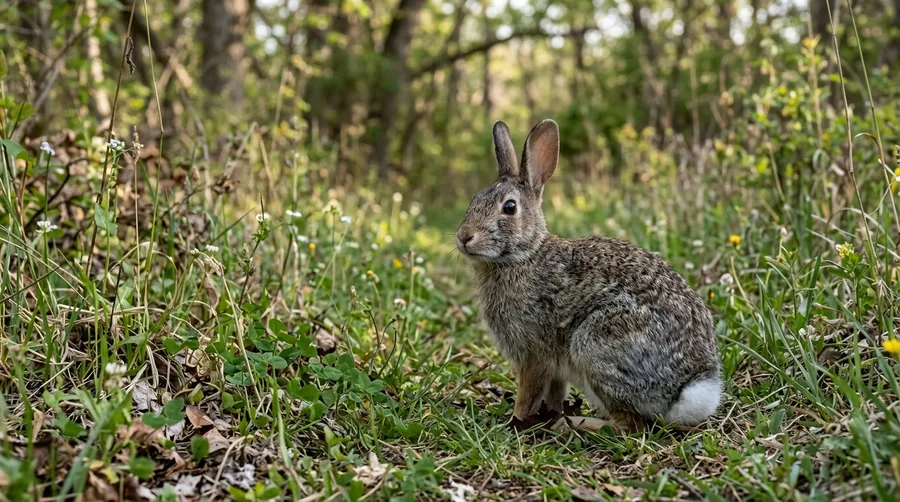
Brown eastern cottontail rabbit with a white cotton-ball tail feeding in a garden
Recommended Products



What it does
Cottontails are most active at dawn and dusk, feeding on tender plants and freezing or bolting when startled. In the growing season they clip garden and crop plants off cleanly at an angle a few inches up. In winter, when green food is scarce, they gnaw and can girdle the bark of young trees and shrubs, killing them.
Where it lives
Eastern cottontails live across the eastern and central US in fields, brushy edges, fencerows, hedgerows, gardens, and suburban yards. They rest in shallow forms and use brush piles, tall grass, and dense shrubs for cover, seldom straying far from a protective hiding spot near their food.
How it breeds
Cottontails are famously prolific. Females can raise several litters a year, each with about three to eight young, in a shallow fur-lined ground nest, and can breed again soon after giving birth. Young leave the nest within a few weeks. High reproduction offsets heavy predation and drives rapid local increases.
What it eats
Cottontails are herbivores. In warm months they eat grasses, clover, and a wide range of garden and crop plants; in winter they switch to twigs, buds, and the bark of young trees and shrubs, which causes the girdling damage that concerns growers and gardeners.
Identification
Look for a small, grizzled-brown rabbit 15-19 inches long with large ears, big dark eyes, and a distinctive puffy white tail underside that flashes when it runs. Clean, angled cuts on plant stems and small, round, pea-sized droppings help confirm rabbit damage over deer or rodents.
Signs of an infestation
- Plants clipped cleanly at an angle a few inches up
- Gnawed and girdled bark on young trees in winter
- Round, pea-sized droppings scattered in the yard
- Shallow, fur-lined nests hidden in the lawn or beds
- Rabbits feeding at dawn and dusk near cover
Prevention tips
- Fence gardens with wire mesh 2 feet high, buried at the base
- Wrap young tree trunks with hardware-cloth guards for winter
- Remove brush piles, tall grass, and dense low cover
- Use repellents on ornamentals, reapplying per the label
- Choose less-palatable plants in rabbit-prone beds
Professional solutions
Cottontails are usually managed by homeowners with fencing, trunk guards, and habitat cleanup. For ongoing crop or nursery losses, a wildlife professional can advise on exclusion and legal options; rabbits are classed as game or protected wildlife in some states, so trapping and removal may be regulated. A pro will follow local wildlife rules.
Health & safety
Cottontails are not aggressive and pose little direct danger, but they can carry tularemia ('rabbit fever'), a bacterial disease that can pass to people who handle infected animals, so never handle sick or dead rabbits with bare hands. They also host fleas and ticks that can move to pets. Wear gloves for any cleanup. Overall risk is low.
Relevant Products






Frequently asked questions
What is the best way to keep rabbits out of a garden?
A fence of one-inch wire mesh about 2 feet tall, with the bottom buried or staked flush so rabbits cannot push under, is the most reliable barrier. Wrapping young tree trunks with hardware-cloth guards protects against winter bark gnawing, and clearing brush cover makes the area less attractive.
How do I tell rabbit damage from deer damage?
Rabbits clip stems cleanly at a sharp 45-degree angle, usually within a couple of feet of the ground, and leave small round droppings. Deer lack upper front teeth, so they tear and leave a ragged, torn edge, and browse higher up. The clean angled cut is the giveaway for rabbits.
Are wild rabbits dangerous to people or pets?
Wild cottontails are shy and not aggressive, so direct danger is low. The main concerns are tularemia, which can pass to people handling infected or dead rabbits, and the fleas and ticks they carry, which can move to pets. Avoid handling wild rabbits and keep pets on parasite prevention.
Fact-checked by Morgan Vance, Editorial Director (editorial review, not a professional pest-control or medical sign-off). Last reviewed July 22, 2026. We correct anything a reader shows us is wrong — see our corrections policy.