
Little Brown Bat
Myotis lucifugus · also called little brown myotis, house bat
Quick answer
The little brown bat (Myotis lucifugus) is a tiny, glossy-brown insect-eating bat weighing only a few grams. Beneficial outdoors, it becomes a problem when colonies roost in attics and barns, leaving guano and odor. It is a rabies risk, its droppings can carry a lung fungus, and it is legally protected.
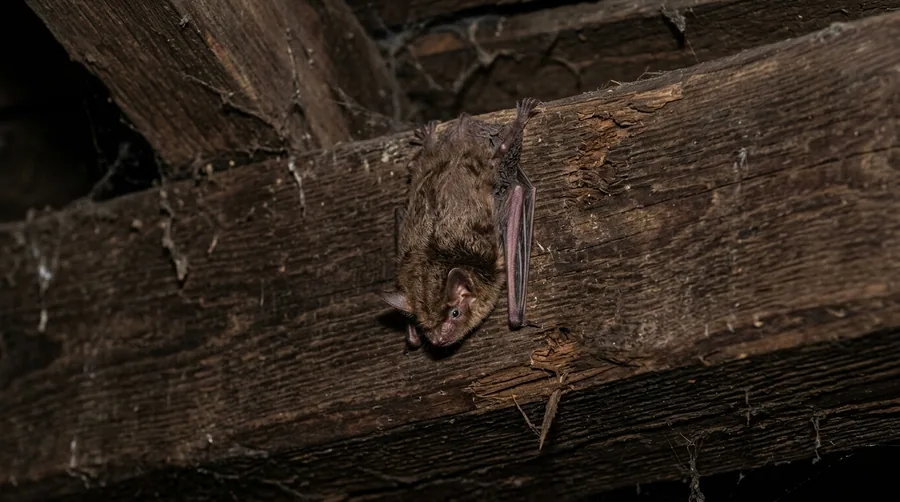
Small glossy brown little brown bat roosting against wood inside an attic
Recommended Products



What it does
Little brown bats are nocturnal insect hunters that emerge at dusk and use echolocation to catch mosquitoes, midges, and moths in flight. They roost communally by day, and females gather in warm maternity colonies to raise young, often choosing attics, barns, and wall voids. Guano and urine then accumulate below the roost.
Where it lives
Widely distributed across the northern and much of the continental US, they roost in summer in attics, barns, tree hollows, and behind shutters, and overwinter in caves and mines. They favor sites near water and open foraging areas, and readily use buildings that offer a warm, sheltered roost.
How it breeds
Little brown bats mate in fall, and females store sperm over winter. Each female typically raises just one pup a year, born in early summer in the maternity colony and flying within a few weeks. This very low birth rate means populations recover slowly from losses.
What it eats
Little brown bats are strictly insectivores. They feed on flying insects such as mosquitoes, midges, moths, and beetles, catching large numbers each night, which makes them valuable natural insect controllers when they live away from occupied buildings.
Identification
Look for a very small bat about 3-3.7 inches long with glossy brown fur, dark wings and ears, and a 8-11 inch wingspan. In homes they are usually detected by droppings and stains rather than sight; a wildlife professional can confirm the species and roost.
Signs of an infestation
- Dark bat droppings piled below an entry point or wall
- Brown grease stains around a gap at the roofline
- Bats seen flying in and out at dusk
- Squeaking or scratching sounds in the attic or walls
- A strong ammonia-like odor from accumulated guano
Prevention tips
- Seal gaps at the roofline, soffits, and chimney (outside maternity season)
- Install screening over vents and louvers
- Cap chimneys and repair torn attic vents
- Add exterior lighting away from entry points to deter roosting
- Have a pro install one-way exclusion devices when needed
Professional solutions
Bats in a building should be handled by a licensed wildlife professional using humane exclusion, one-way devices that let bats leave but not return, followed by sealing. Exclusion is prohibited during the summer maternity season (roughly June through mid-August), when flightless pups would be trapped inside. Pros also safely clean guano. Never poison or seal bats in.
Health & safety
A small percentage of bats carry rabies, and because their bites can be tiny and unnoticed, any direct contact, or a bat found in a room with a sleeping person or child, warrants calling your health department and a doctor. Accumulated guano can grow Histoplasma fungus, which causes a lung infection if spores are inhaled, so leave cleanup to professionals. Bats are legally protected; killing them is often illegal. Risk is moderate.
Relevant Products




Frequently asked questions
Is it legal to remove bats from my attic?
Bats are protected under state and, for some species, federal law, so lethal control is often illegal. The legal, humane method is exclusion using one-way devices, done outside the summer maternity season (about June to mid-August) so flightless pups are not trapped inside. A licensed wildlife professional can do this correctly.
Are bats in the house dangerous?
Most bats are healthy, but a small share carry rabies, and their bites can be too small to feel. If a bat is found in a room with a sleeping person, child, or pet, treat it as a possible exposure and contact your health department. Guano can also carry a lung fungus, so professional cleanup is safest.
Why do bats keep coming into my attic?
Attics offer the warm, sheltered roost that maternity colonies need. Bats return to the same site year after year through gaps at the roofline, soffits, and vents. Professional one-way exclusion followed by sealing every entry point, done outside maternity season, is what finally keeps them out.
Fact-checked by Morgan Vance, Editorial Director (editorial review, not a professional pest-control or medical sign-off). Last reviewed July 25, 2026. We correct anything a reader shows us is wrong — see our corrections policy.