

Why a "wasp bite" is really a sting
Wasps do not bite people the way mosquitoes or ants do. When a wasp injures you, it uses the stinger at the tip of its abdomen. That stinger injects venom into the skin. So a "wasp bite" and a "wasp sting" almost always mean the same thing. This is true whether it came from a yellowjacket/" style="color: var(--pine-700, #1E5B3E); font-weight: 600; text-decoration: underline;">yellowjacket (Vespula) or a paper wasp (Polistes).
Knowing this matters. The marks people search for as a "bite" are really the classic signs of a sting. You might expect the double puncture of a spider or the clustered welts of bed bugs. The single, painful pinpoint of a wasp looks different.
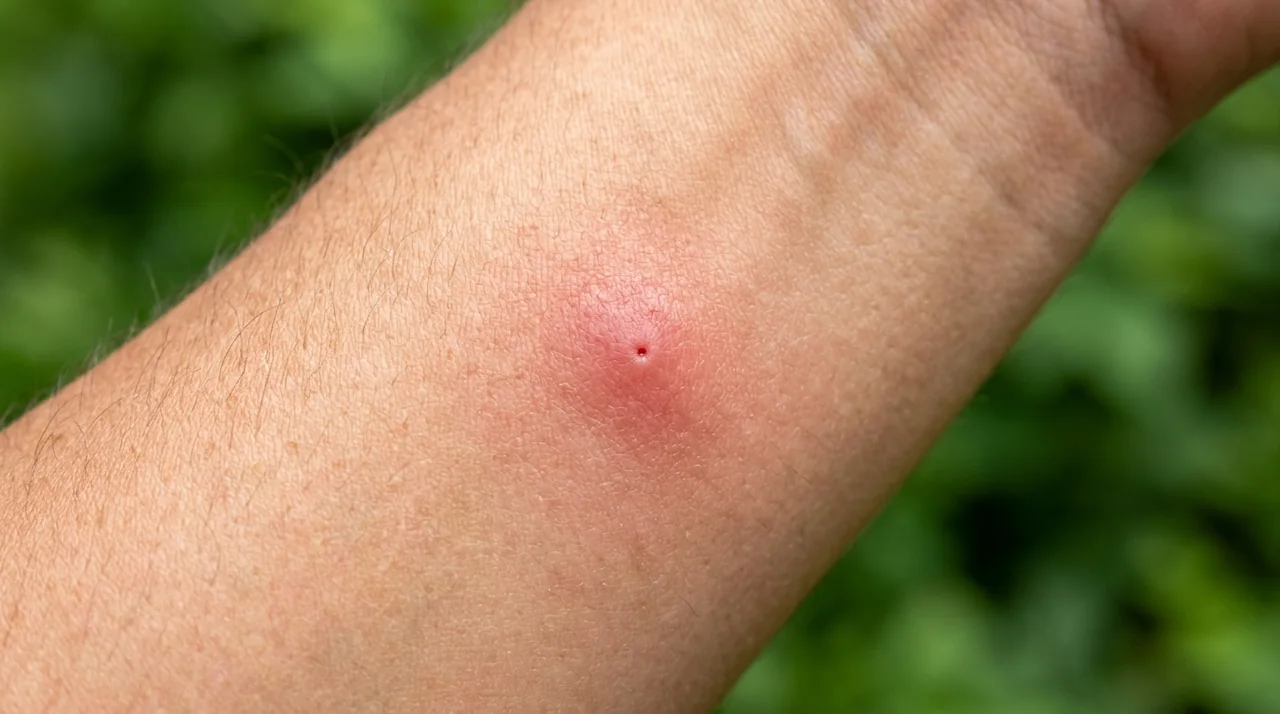
What the mark looks like on the skin
A typical wasp sting produces a fairly recognizable spot:
- A raised, red bump or welt, often with a tiny puncture point in the center
- Localized swelling and warmth around the site
- Sharp, burning pain at first that settles into itching
- Skin that may feel firm or slightly hard to the touch for a day or so
How it changes over the first day or two
Most stings peak within the first few hours, then slowly improve. The redness and swelling often look worst the morning after. They then fade over one to three days. Mild itching as it heals is normal. A small, firm bump can linger a little longer while the skin recovers.
Do wasps ever actually bite?
Wasps do have jaws (mandibles). They use them to chew wood pulp for their nests and to grip prey. A wasp trapped against skin might nip. But that nip does not inject venom, and it is minor compared with a sting. In practice, the venomous sting is what causes the reaction people notice.
How to care for a normal sting
For an ordinary, localized sting in someone without a known allergy, simple home care is usually enough:
- Wash the area with soap and water.
- Apply a cold pack, wrapped in a cloth, to ease pain and swelling.
- Consider an over-the-counter antihistamine or anti-itch cream, following the label directions.
- Try not to scratch, which can break the skin and invite infection.
Warning signs that need urgent care
A small number of people have serious, whole-body allergic reactions. Call 911 right away if, after a sting, you notice:
- Hives or itching spreading well beyond the sting site
- Swelling of the face, lips, tongue, or throat
- Trouble breathing, wheezing, or tightness in the chest
- Dizziness, fainting, or a racing heartbeat
This is general information, not medical advice. For any concerning reaction, seek professional care. For medication or first-aid questions, you can call Poison Control at 1-800-222-1222.
When to deal with the wasps themselves
Sometimes you keep getting stung because a nest sits near a doorway, walkway, or other busy area. The long-term fix is dealing with the nest, not just treating stings. Small, out-of-the-way nests late in the season may fade on their own. But a nest in a high-traffic spot is a repeat hazard. For large or hard-to-reach nests, or if anyone in the home has a sting allergy, a licensed exterminator is the safest option. If you treat a nest yourself, choose an EPA-registered wasp product and follow the label exactly.