


What do cockroaches eat?
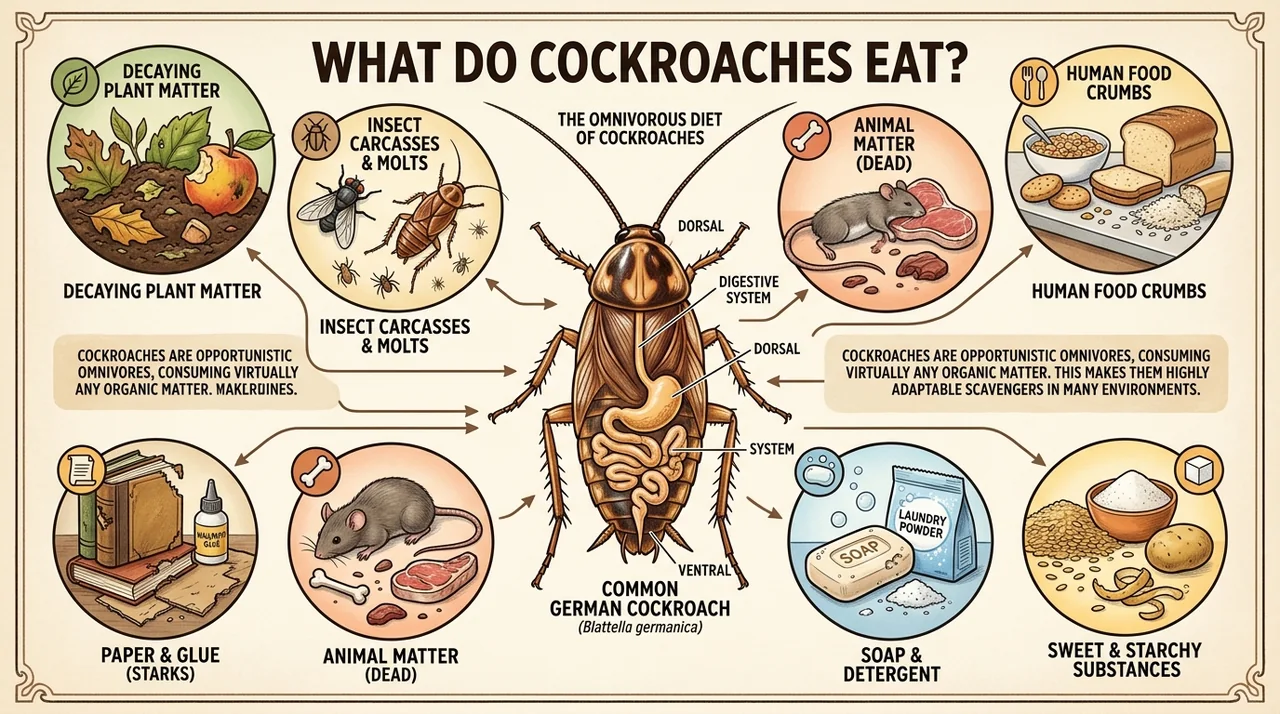
Cockroaches are opportunistic omnivores, which means they eat both plant and animal matter. They are also famously undemanding. Given the choice, the German cockroach (Blattella germanica) and the American cockroach (Periplaneta americana) prefer starchy, sugary, and greasy foods, along with meat. But when those run out, they switch to almost any organic material they can find. That adaptability is exactly why they thrive in kitchens, drains, basements, and wall voids, where scraps and residue collect.
Common cockroach foods include:
- Crumbs, spills, and grease around stoves, counters, and appliances
- Pet food and birdseed left out overnight
- Garbage and decaying organic matter
- Starchy and unusual items like glue, cardboard, book bindings, wallpaper paste, soap, and even hair when other food is scarce
Can cockroaches really survive on glue and paper?
Yes. The starches in glue, paper, and cardboard are digestible fuel for a hungry roach. That is one reason infestations can persist even in rooms with no obvious food. It also explains why stacks of cardboard boxes and paper are cockroach magnets. They offer both food and harborage in one place.
Do cockroaches need water too?
Very much so, and this is a key weakness to exploit. Cockroaches can survive surprisingly long without food, but only a short time without water. That is why they gravitate to sinks, drains, leaky pipes, and condensation behind appliances. Denying them moisture is often as effective as denying them food.
How do I cut off their food supply?
Roaches eat so many things that starving them takes thoroughness, not just a quick wipe-down.
- Store food, including pet food, in sealed containers
- Clean up crumbs and grease promptly, including under and behind the stove and refrigerator
- Do not leave dirty dishes in the sink overnight
- Empty and rinse the trash regularly, and use a lidded can
- Fix leaks, dry out sinks at night, and reduce condensation to remove their water
Do I still need traps or baits?
Usually, yes. Sanitation alone rarely clears an established infestation. Combine a clean, dry kitchen with cockroach baits and traps. The insects feed on these and carry them back to hidden harborages. Always follow the EPA-registered product label for placement and safety. Keep baits away from areas where children or pets could reach them.
When should I call a professional?
Cockroaches are more than a nuisance. They can contaminate food surfaces. Their droppings and shed skins are also a well-documented trigger for allergies and asthma symptoms in some people. A large, spreading, or stubborn infestation often needs a licensed pest professional. That is especially true of German cockroaches, which breed quickly. A professional can treat the source and monitor results over several weeks.
Do cockroaches bite or go after people?
Cockroaches are after food, moisture, and shelter, not people, so they are not looking to bite you. Bites are very rare. They are generally only reported in severe, neglected infestations where food is scarce and roach numbers are high. In everyday situations, you are far more likely to see them scatter from light than approach you. The real concern with roaches is not biting but contamination. Their droppings and shed skins add allergens to indoor air, which is why keeping numbers low through sanitation and treatment matters.