


What attracts cockroaches into a home?
Cockroaches invade homes looking for the same three essentials every pest needs: food, water, and shelter. For the German cockroach (Blattella germanica), the most common indoor species in the US, kitchens and bathrooms are prime targets. They check all three boxes at once. Understanding each attractant is the key to keeping roaches out.
Food sources that draw roaches
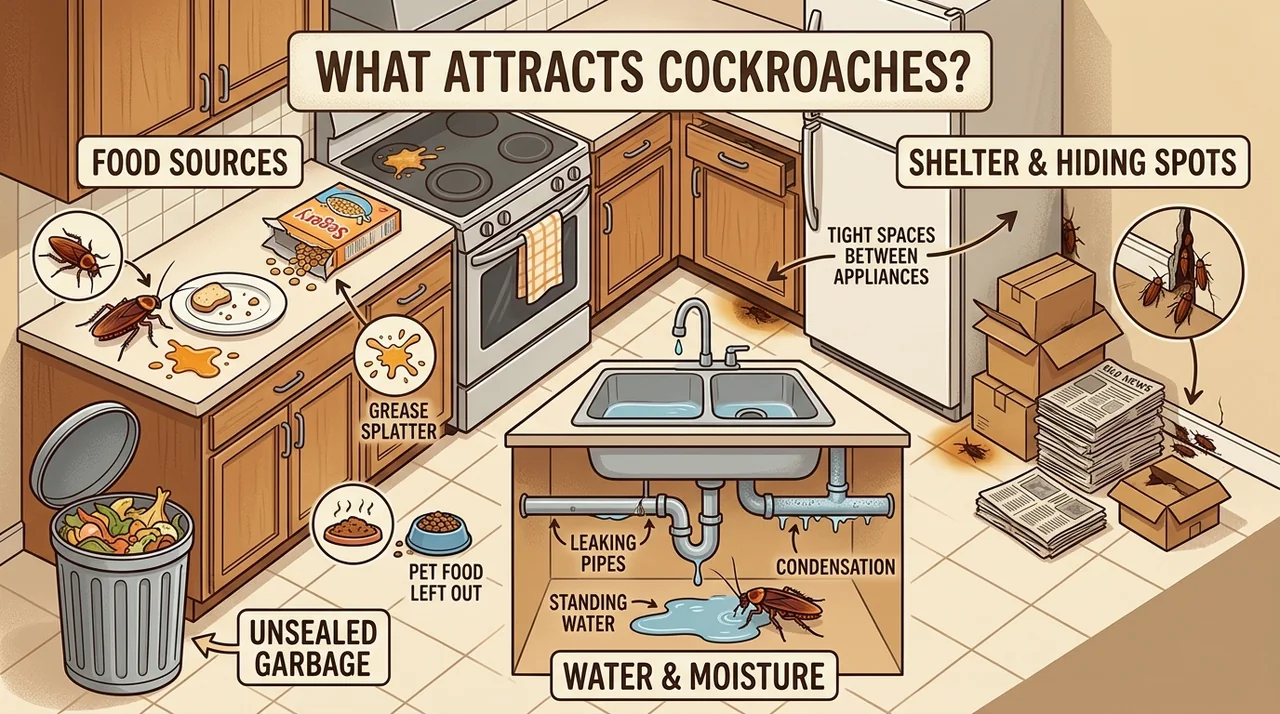
Cockroaches are not picky eaters, which makes them hard to starve out. They are drawn to:
- Crumbs, spills, and grease films on stoves, counters, and floors
- Unsealed pantry items, pet food left out, and garbage
- Surprising "foods" like cardboard, paper, glue, and even soap or toothpaste residue
Why moisture is a magnet
Water may be an even stronger draw than food. Cockroaches can survive weeks without food, but only about a week without water. So reliable moisture is a powerful attractant. Common sources include:
- Leaky pipes and dripping faucets
- Condensation under sinks and around appliances
- Damp drains, pet water bowls, and standing water
Warmth, shelter, and clutter
Cockroaches seek warm, dark, tight spaces. There they can hide during the day and stay close to food and water. Warmth from refrigerator and other appliance motors, gaps behind cabinets, wall voids, and cluttered storage all make ideal harborage. The more cracks, crevices, and piles of boxes or paper a space offers, the more inviting it is.
What attracts roaches to a clean house?
Even spotless homes can get cockroaches, which surprises many people. That is because roaches are excellent hitchhikers. They can arrive in:
- Grocery bags, cardboard boxes, and secondhand appliances or furniture
- Luggage and used items brought home
- Shared walls, plumbing, and utility lines in apartments and condos
Do things bring roaches in from outside?
Yes. Species like the American cockroach (Periplaneta americana) and Oriental cockroach (Blattella orientalis / Blatta orientalis) often live outdoors. They move inside through drains, sewer connections, gaps around pipes, door sweeps, and firewood or mulch piled against the house. Outdoor lighting and damp foundations can also draw them closer.
How do I make my home less inviting?
The most effective approach is to remove the attractants:
- Wipe counters, clean under and behind appliances, and sweep up crumbs regularly.
- Store food and pet food in sealed containers, and avoid leaving dishes out overnight.
- Take out trash often and use bins with tight lids.
- Fix leaks, dry wet areas, and lower humidity.
- Seal cracks and crevices, add door sweeps, and declutter hiding spots.