
Oriental Cockroach
Blatta orientalis · also called water bug, black beetle cockroach, waterbug
Quick answer
The Oriental cockroach (Blatta orientalis) is a large, dark brown to shiny black roach often called a water bug. It prefers cool, damp places like basements, drains, and crawl spaces, gives off a strong musty odor, and moves sluggishly. It cannot fly and contaminates surfaces with bacteria from filthy habitats.
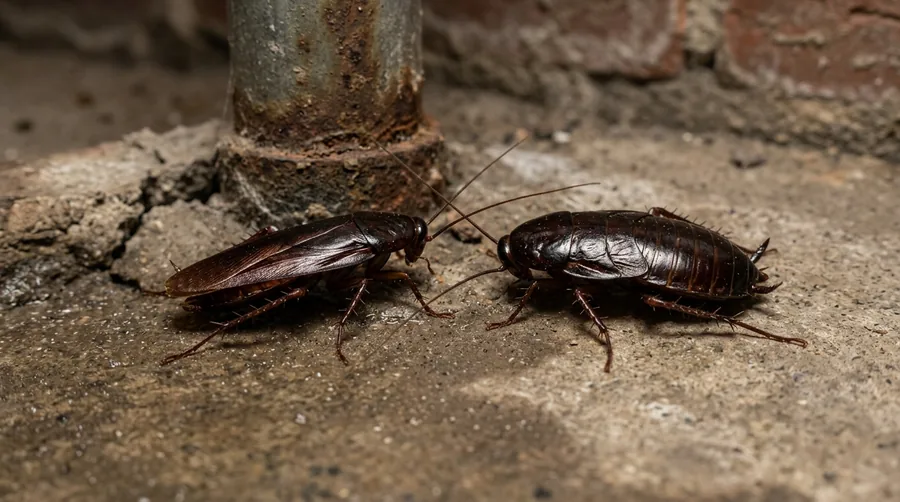
Dark brown to glossy black Oriental cockroach on a damp concrete basement floor
Recommended Products
See the full ranking →


What it does
Oriental cockroaches are slow-moving, ground-dwelling scavengers that cannot fly. They favor cool, damp, dark places and often travel up from sewers, drains, and mulch into buildings. They give off a strong, distinctive musty odor and are most active from spring through summer.
Where it lives
They shelter in cool, moist spots: basements, cellars, crawl spaces, floor drains, sewers, under porches, and in leaf litter, mulch, and window wells outdoors. They move indoors as conditions dry or cool, and are common across the northern US, though found nationwide.
How it breeds
A female produces several dark egg cases, each holding about 16 eggs, dropping them near food and moisture. Nymphs take several months to about a year to mature, and there is often just one generation a year, so populations build gradually.
What it eats
Oriental cockroaches feed on decaying organic matter, garbage, and starchy material, thriving in unsanitary, moist conditions. They will eat food debris and refuse and are often associated with filth and rotting material.
Identification
Adults are about 1 inch and dark brown to glossy black. Females are broader and essentially wingless; males have wings covering about three-quarters of the abdomen but do not fly. Their dark color and sluggish movement distinguish them from other roaches.
Signs of an infestation
- Dark, cylindrical droppings in damp areas
- A strong, persistent musty odor
- Egg cases near drains, basements, and crawl spaces
- Sluggish black roaches seen near drains at night
- Clustering in cool, moist corners and floor drains
Prevention tips
- Reduce moisture and fix leaks in basements and crawl spaces
- Clear leaf litter and mulch away from the foundation
- Screen or cap floor drains and seal drain gaps
- Seal cracks around pipes, foundations, and doors
- Improve ventilation and drainage around the home
Professional solutions
Baits are less attractive to Oriental roaches than to some species, so control combines baiting, residual perimeter treatment, and moisture correction. Because they harbor outdoors and in drains, recurring infestations are best handled by a professional with exclusion and perimeter work. Always read and follow the EPA label.
Health & safety
Oriental cockroaches do not bite, but their habit of living in sewers, drains, and decaying matter makes them efficient mechanical carriers of bacteria onto surfaces. Their droppings and shed skins are also allergens. Overall household risk is moderate, driven by contamination.
Relevant Products




Frequently asked questions
Why do Oriental cockroaches smell so bad?
Oriental cockroaches produce chemicals that create a strong, musty odor, which is more noticeable in heavy infestations and damp, enclosed spaces. The smell, combined with their habit of living in drains and decaying matter, is often one of the first clues people notice.
Can Oriental cockroaches fly?
No. Female Oriental cockroaches are essentially wingless, and although males have short wings, they cannot fly. They move slowly along floors, walls, and pipes, and are often found in damp basements and near drains.
Where do Oriental cockroaches come from?
They commonly live outdoors in mulch, leaf litter, and under debris, and in sewers and drains, then move indoors through gaps as weather cools or dries. Reducing outdoor moisture and sealing entry points helps keep them out.
Fact-checked by Morgan Vance, Editorial Director (editorial review, not a professional pest-control or medical sign-off). Last reviewed August 5, 2026. We correct anything a reader shows us is wrong — see our corrections policy.