


What are jigger fleas?
The jigger flea (Tunga penetrans) is one of the smallest fleas in the world, only about a millimeter long. It lives in warm, sandy or dusty soil in tropical and subtropical regions. Its most striking behavior sets it apart from the common household flea. The pregnant female burrows head-first into the skin of a host, usually a person or animal. She then stays there to feed and lay eggs. The skin condition this causes is known as tungiasis.
What is tungiasis and what does it feel like?
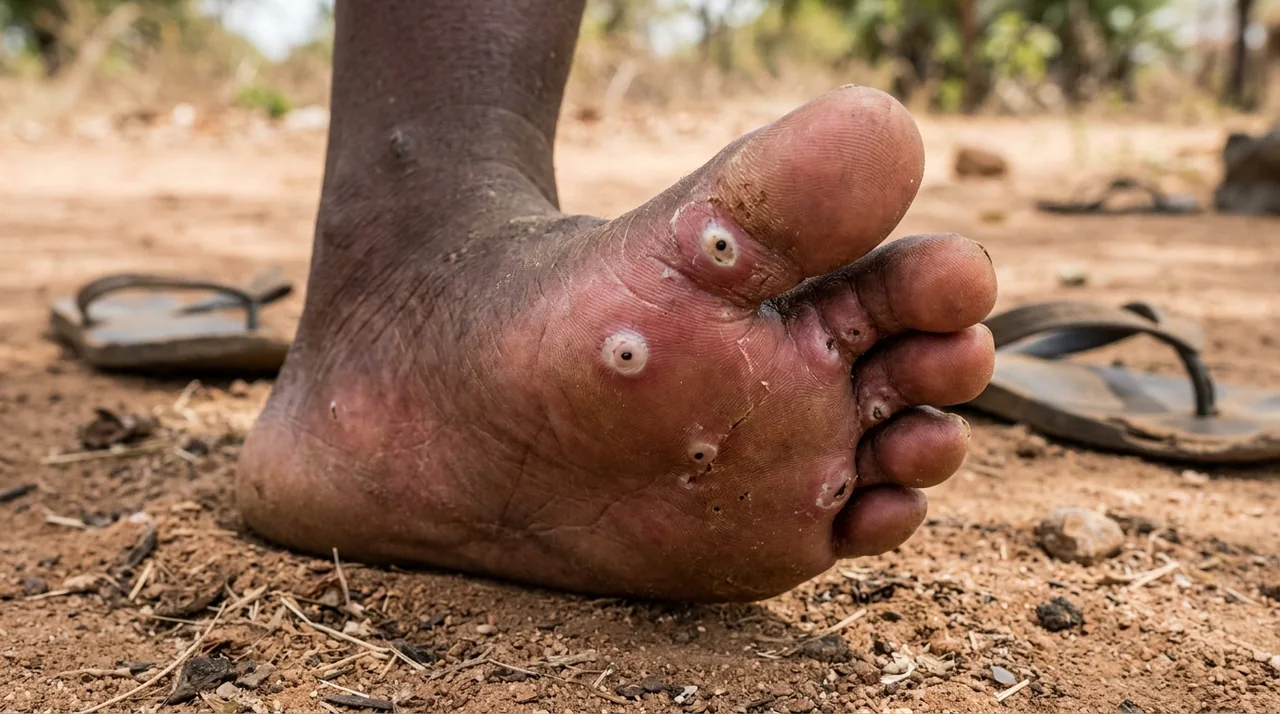
The female usually embeds around the toes, under the toenails, on the soles, or along the heel. There she swells to the size of a small pea as her body fills with eggs. This creates a firm, itchy, and often painful bump with a dark spot at the center. That spot is where the rear of the flea reaches the skin surface. Over a couple of weeks she releases eggs and eventually dies. After that, the lesion can crust over, and without proper care it can become infected.
Common concerns include:
- Pain and itching that make walking uncomfortable.
- Secondary bacterial infection if the lesion is opened or dug at.
- Risk related to tetanus, which is why up-to-date vaccination matters.
Where in the world are jigger fleas found?
Jigger fleas are widespread in parts of sub-Saharan Africa, the Caribbean, and Central and South America. They were also historically present in other tropical zones. They are most common in poorer rural and coastal communities with sandy soil, where people often go barefoot.
Can animals get jigger fleas too?
Yes. Where the flea is established, dogs, cats, pigs, and other domestic and wild animals can be affected. These animals can act as reservoirs that keep the local flea population going. After a female finishes laying, her eggs drop to the sandy ground. There the larvae develop before the next generation of adults emerges to find a host. This soil-based cycle is why barefoot contact with contaminated ground is the main way people are exposed.
Are jigger fleas a risk in the United States?
For people in the US, jigger fleas are a travel-related concern, not a household pest. They are not established in the continental United States. You would typically only meet them while traveling in an affected region. They are also unrelated to the ordinary cat flea or human flea linked with pets and homes, even though the word "flea" connects them. The name "sand flea" adds to the confusion. That term is also used casually for harmless beach crustaceans, which are not fleas at all.
How can travelers prevent and treat them?
Tungiasis involves the skin and carries a real risk of infection. So prevention and medical guidance both matter:
- In affected areas, wear closed shoes, and avoid sitting, standing, or walking barefoot on sandy or dusty ground.
- Do not try to dig or cut out an embedded flea yourself, as this can worsen infection.
- See a healthcare provider or travel clinic for proper sterile removal, wound care, and a check on tetanus protection.