
Human Flea
Pulex irritans · also called human flea, house flea, Pulex irritans
Quick answer
The human flea (Pulex irritans) is a small, dark, laterally flattened insect that jumps and feeds on the blood of people and animals like pigs and dogs. It causes itchy bites and, historically, helped spread plague. Once common, it is now uncommon in US homes, where cat fleas are far more likely.
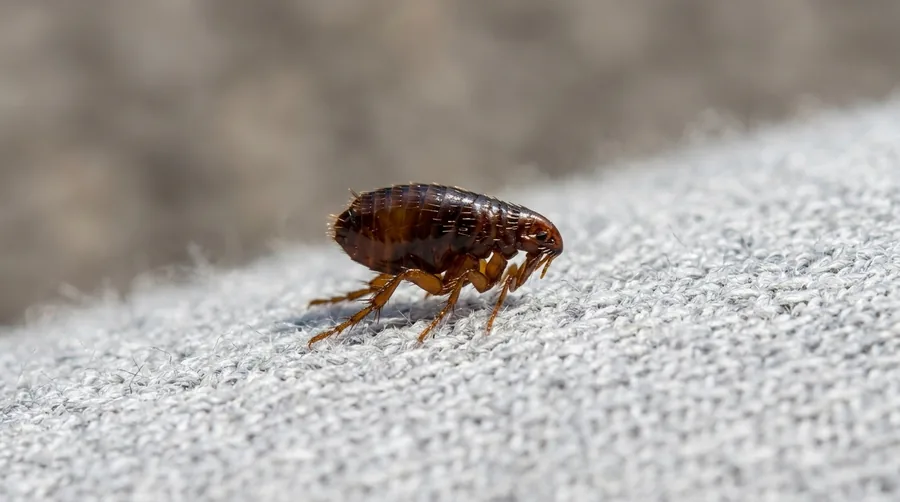
Dark reddish-brown human flea with a flattened jumping body on a light background
Recommended Products
See the full ranking →

What it does
Human fleas are agile jumpers that feed on the blood of a range of mammals, including people, pigs, and dogs. Adults bite to feed, causing small itchy welts, while the immature stages develop off the host in the surrounding environment. Despite the name, they are not restricted to humans and today are uncommon in most US homes.
Where it lives
Adults are found on host animals or in their resting and sleeping areas; eggs and larvae develop in floor cracks, bedding, animal nests, and debris nearby. Historically associated with pigs and human dwellings, the human flea is now infrequent in the US and more likely encountered around livestock, wildlife, or neglected structures. It occurs nationwide but sparsely.
How it breeds
Females lay eggs after blood meals; the eggs drop into the environment, where larvae feed on organic debris and adult flea feces before spinning cocoons to pupate. Pupae can remain dormant until a host is near. The whole cycle takes from a few weeks to several months depending on temperature and humidity.
What it eats
Adult human fleas feed on the blood of people and various mammals such as pigs, dogs, and wildlife. The larvae do not bite; they feed on organic debris and the dried-blood droppings of adult fleas in the environment.
Identification
The human flea is a small, 1.5-4 mm, wingless, side-to-side flattened insect, dark reddish-brown to nearly black, with powerful jumping hind legs. Under magnification it lacks the rows of comb-like spines that cat and dog fleas have on the head and thorax, a key distinguishing feature for specialists.
Signs of an infestation
- Small, itchy bite welts, often on the legs
- Tiny dark insects jumping in bedding or on floors
- Flea dirt (black specks) in sleeping areas
- Bites appearing after contact with animals or nests
- Fleas associated with pigs, livestock, or wildlife
Prevention tips
- Keep pets on a veterinarian-recommended flea preventive
- Wash bedding in hot water and vacuum floors regularly
- Clean up and exclude wildlife and stray-animal nesting sites
- Treat both animals and their resting areas together
- Reduce clutter and debris where larvae can develop
Professional solutions
Human flea infestations are managed much like other fleas: treat host animals, clean and vacuum thoroughly, and apply an EPA-registered home treatment with an insect growth regulator if needed. Persistent infestations, or those tied to wildlife or livestock harborage, may need a professional to treat the structure and address the animal source.
Health & safety
Human flea bites are itchy and can become infected from scratching. Historically Pulex irritans played a role in transmitting plague and can carry tapeworm, but disease transmission from this flea in the modern US is very rare. The main concern today is bite irritation and allergic reaction; see a clinician for infected or severe reactions.
Relevant Products


Frequently asked questions
Are the fleas biting me really human fleas?
Probably not. Despite the name, the human flea is now uncommon in US homes; the cat flea causes the large majority of flea bites on people and pets. Distinguishing them needs magnification. Either way, treatment is the same: treat animals and the home environment together.
Do human fleas spread disease?
Historically Pulex irritans helped spread plague and can carry tapeworm, but disease transmission from this flea in the modern US is very rare. Today the practical concern is itchy bites and the risk of infection from scratching, so keep bites clean and see a clinician if one worsens.
How do I get rid of human fleas in my home?
Treat host animals with a veterinary product, wash bedding in hot water, and vacuum floors and cracks frequently, adding an EPA-registered home treatment with a growth regulator if needed. Because these fleas often tie to livestock or wildlife, removing animal nesting sites is also important.
Fact-checked by Morgan Vance, Editorial Director (editorial review, not a professional pest-control or medical sign-off). Last reviewed June 14, 2026. We correct anything a reader shows us is wrong — see our corrections policy.