

How long can a tick go without feeding?
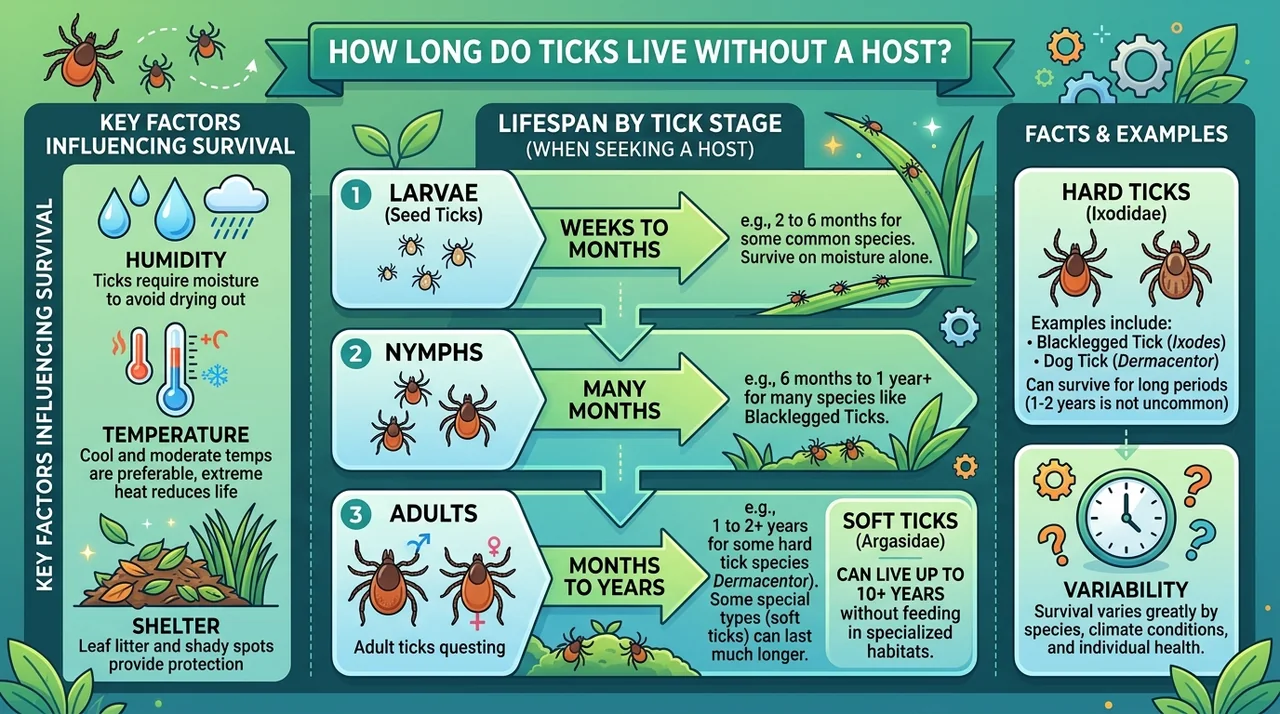
Ticks are built to wait. They feed only a few times in their whole lives, so long gaps between hosts are normal. There is no single number. As a general guide, many ticks can survive several months without a blood meal. Some hard-bodied species and stages last a year or more when the environment stays cool and humid. The blacklegged (deer) tick (Ixodes scapularis) and the American dog tick (Dermacentor variabilis) are two that can persist for long stretches between hosts.
Why does it vary so much?
Survival time changes with three things: the species, the life stage, and the surrounding conditions. A tiny larva has different reserves than a fed adult. Different species are also suited to different climates. Ticks that have already taken a partial meal, or that are waiting to molt to the next stage, may hold out differently than unfed ones.
What role does humidity play?
Humidity is the single biggest factor. Ticks constantly lose water through their bodies. So in hot, dry air they dehydrate and die fairly quickly. To avoid this, they shelter in humid microclimates:
- Leaf litter and layered debris
- Tall grass and dense ground cover
- Shaded soil at the edges of woods and lawns
Can ticks survive the winter?
Yes. Many ticks overwinter as eggs, nymphs, or adults sheltered in leaf litter. They are simply dormant rather than dead. On mild winter days, some adult ticks, including blacklegged ticks, can become active again and seek a host. That is why tick precautions can matter beyond the warm months in many regions.
How long do ticks survive indoors?
Indoors, typical household air is too dry for most ticks. A tick carried inside on clothing or a pet often dies within days to a couple of weeks, because it cannot find the humidity it needs. The important exception is the brown dog tick (Rhipicephalus sanguineus). It is adapted to indoor life and can complete its whole life cycle inside homes and kennels.
What does this mean for tick control at home?
Ticks can wait a long time outdoors. So reducing the damp, sheltered spots they favor helps lower their numbers:
- Keep grass mowed and remove leaf litter and brush.
- Create a dry mulch or gravel barrier between lawn and wooded edges.
- Clear tall vegetation along paths, fences, and play areas.
- Do tick checks on people and pets after time outdoors, and remove attached ticks promptly with fine-tipped tweezers, pulling straight out.