


How long do cockroaches live?
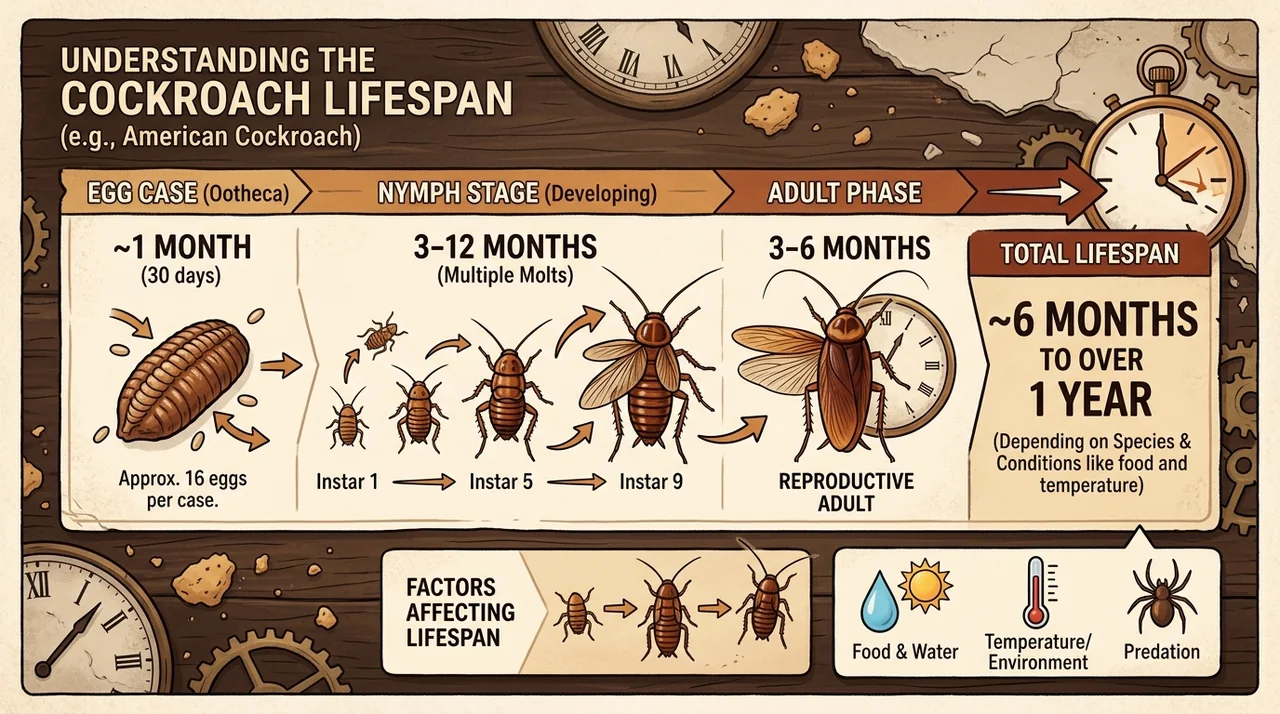
Cockroach lifespan varies a lot by species. Among the roaches that invade homes, the German cockroach is the shortest-lived. Its adults survive only a few months. The larger American cockroach is the marathon runner of household species. It can live around a year or more as an adult. The oriental cockroach falls somewhere in between.
The numbers grow when you count the whole life cycle, not just adulthood. A cockroach passes through three stages: egg, nymph, and adult. So the time from the day an egg is laid to the death of that adult can span a few months to well over a year. It depends on the species and the conditions.
What affects how long a cockroach lives?
Several factors push lifespan up or down:
- Species: genetics set the baseline, and larger species generally live longer.
- Temperature: roaches are cold-blooded, so warmth speeds development while cold slows it.
- Food and water: steady access to both supports a full lifespan.
- Predators and control efforts: most roaches in the wild never reach old age.
How long can a cockroach live without food or water?
This is where roaches earn their reputation. A cockroach can survive a surprisingly long stretch without eating, often several weeks, by slowing its metabolism. Water is the tighter limit. Most roaches can only last about a week without it. That is why leaky pipes, condensation, and pet water bowls matter so much. It is also why drying out a home is a real control tactic.
Can a cockroach really live without its head?
Largely, yes, at least for a while. A cockroach breathes through small openings along its body called spiracles, not through its mouth or nose. Its nervous system is also spread out rather than packed into the head. So a headless roach can survive for a while. It eventually dies, though, because it can no longer drink and it dehydrates. It is a strange bit of biology, not a sign the pest is unkillable.
How fast do cockroaches reproduce?
Longevity is only half the story. What really makes roaches persistent is fast reproduction:
- Females carry egg cases (oothecae) that can each hatch many young.
- German cockroach females produce case after case over their lifetime.
- Nymphs mature into breeding adults in weeks to months, depending on species and warmth.
How do you actually get rid of them?
You cannot outlast a colony, so control combines several steps:
- Remove food and water sources, wipe up grease and crumbs, and fix drips.
- Seal cracks, crevices, and gaps around pipes to cut off hiding spots and entry.
- Use EPA-registered baits and other products strictly according to the label, since roaches carry bait back to hidden areas.
- Reduce clutter, which gives roaches fewer places to hide.
When should you call a professional?
Cockroaches can trigger allergies and asthma symptoms, and they can contaminate food surfaces. So a noticeable infestation is worth addressing promptly rather than ignoring. If roaches keep reappearing despite thorough cleaning and baiting, the source is often a hidden nest you cannot reach. A licensed pest control professional can identify the species and find where they are nesting. They can then apply a targeted plan that breaks the breeding cycle, rather than just knocking down the roaches you happen to see.