

Do carpenter ants bite people?
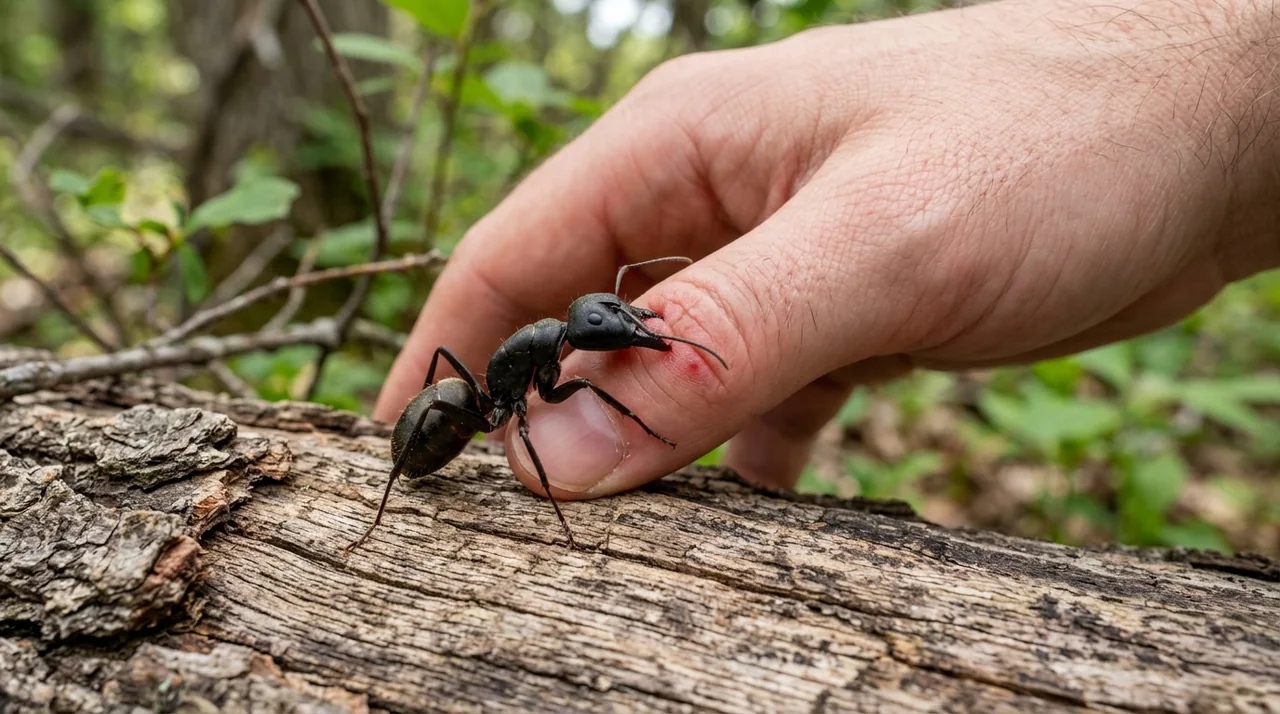
Carpenter ants (Camponotus) are among the largest ants found in and around homes. Their powerful jaws are built for chewing through wood to dig out nests. Those same jaws can deliver a noticeable pinch if an ant is handled roughly or feels the nest is under threat. A big worker can break the skin. The ant may also spray formic acid, a natural defensive chemical, which can add a brief stinging or burning feeling.
That said, carpenter ants are not aggressive toward people, and they do not have a venomous sting. Most people share a yard with them for years and are never bitten. A bite that does happen is usually a minor, short-lived irritation.
What does a carpenter ant bite feel like?
A bite tends to feel like a sharp pinch. It is sometimes followed by a mild sting if formic acid gets into the broken skin. There may be a small red mark or a little swelling that fades on its own. Unlike a bee or wasp, there is no stinger left behind and no injected venom.
Basic first aid is usually enough. Wash the area with soap and water, and use a cold compress if it is sore. Any broken skin can become infected, so keep it clean and watch it. If you notice spreading redness, increasing pain, pus, or other signs of infection, or if you have an unusual or severe reaction, contact a doctor.
Are carpenter ant bites different from fire ant stings?
Yes, and it is worth not confusing them. Carpenter ants bite with their jaws and are essentially harmless to people. Red imported fire ants are different. They both bite to hold on and then sting with venom, producing burning welts and blisters. In some people they cause a serious allergic reaction. If you experience hives, swelling of the face or throat, or difficulty breathing after any insect encounter, treat it as an emergency and call 911.
What is the bigger concern with carpenter ants?
For homeowners, the bite is not really the issue. The wood damage is. Unlike termites, carpenter ants do not eat wood. They tunnel through it to build nests, and they prefer wood that is already damp, softened, or decaying. Over time, an established colony can hollow out and weaken structural timber. Warning signs include:
- Piles of sawdust-like shavings (called frass), often mixed with insect parts, near baseboards, window frames, or crawl spaces.
- A faint rustling sound inside walls on a quiet night.
- Large winged ants appearing indoors, which can signal a mature nest nearby.
- Smooth, clean galleries carved into wood (termite galleries, by contrast, are muddy).
How do you keep carpenter ants away?
Because they favor moisture, prevention centers on keeping wood dry and access limited:
- Fix leaks, improve ventilation, and replace any water-damaged wood.
- Keep gutters clear and direct water away from the foundation.
- Trim tree limbs and shrubs that touch the house, since branches act as bridges.
- Store firewood off the ground and away from the structure.
When to call a professional
Carpenter ant nests are often hidden inside walls or in a damp parent nest outdoors, sometimes with satellite nests inside the home. That makes do-it-yourself treatment hit-or-miss. If you see repeated large ants indoors, find frass, or suspect structural involvement, call a licensed pest control professional. They can locate the nests and treat the colony, which protects your home far more effectively than swatting the occasional wandering ant.