

'White ants' are really termites
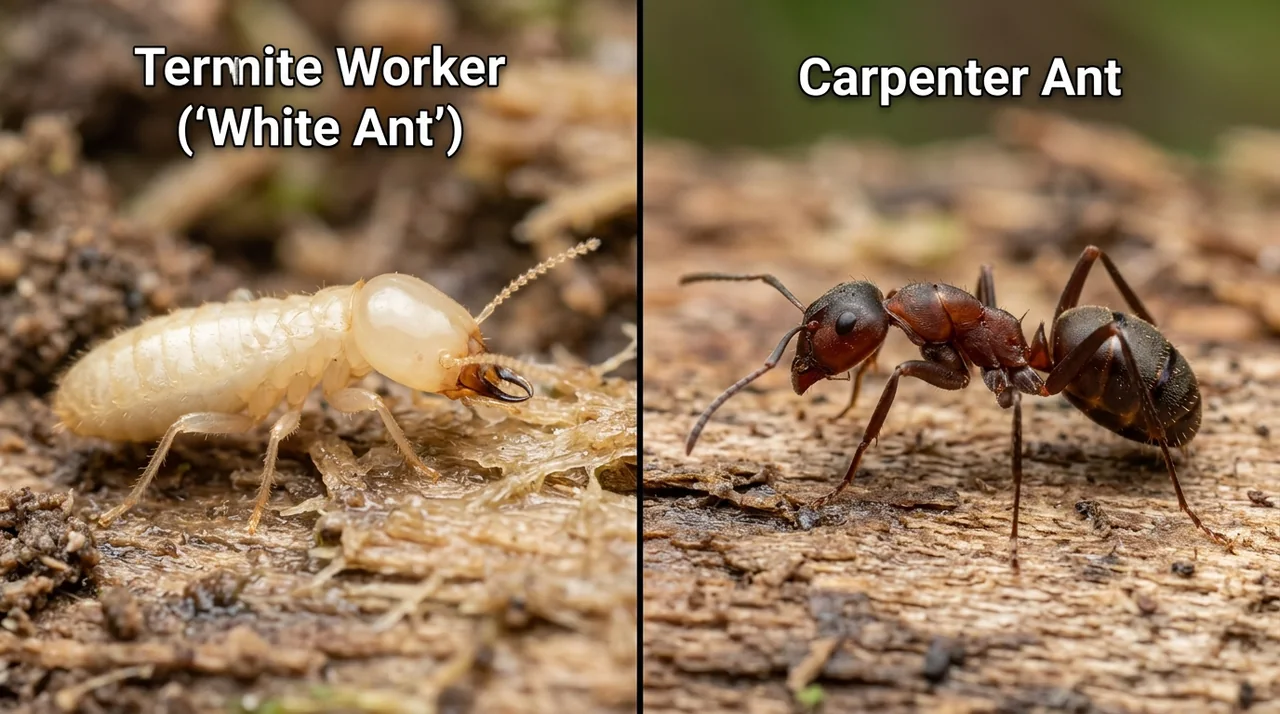
The pale, soft-bodied insects people call white ants are actually termites, and they are not ants at all. Termites are more closely related to cockroaches (they sit in the order Blattodea) than to ants. The nickname stuck because termites are roughly antlike in size and live in large social colonies. Their biology, diet, and behavior, though, are quite different.
Recognizing this matters. The products, prevention, and professional treatments that work on ants are not the same as what controls termites.
Do termites bite people?
Termites can bite, but people almost never experience it. Soldier termites in particular have enlarged, powerful jaws. Those jaws are built for defending the colony against ants and other invaders, not for attacking humans. Termites live hidden inside wood and soil, avoid light, and have no interest in people. A bite to a person is therefore extremely rare. If one did happen, it would be a minor pinch with no venom and no meaningful health risk.
In short, the fear of being bitten by white ants is largely unfounded. The reason to take them seriously is your house, not your skin.
Why is the damage what really matters?
Termites feed on cellulose, the main structural material in wood, paper, and cardboard. A colony of subterranean termites can feed nonstop, quietly eating structural timber from the inside out over months and years. Because they work out of sight, damage is often advanced before it is noticed. Warning signs include:
- Mud tubes: pencil-width tunnels of soil on foundations, walls, or crawl spaces, built by subterranean species.
- Hollow or crumbling wood: timber that sounds hollow when tapped or gives way easily.
- Discarded wings: small piles of shed wings near windowsills or light fixtures after a swarm.
- Bubbling or uneven paint: which can signal moisture and tunneling underneath.
- Frass: dry, pellet-like droppings, a sign associated with drywood termites.
Are all termites the same?
No. Subterranean termites nest in the soil and need moisture, entering structures from the ground up. Aggressive types like the Formosan subterranean termite can build very large colonies. Drywood termites are different. They live inside dry wood and do not need soil contact. Their habits differ, so inspection and treatment differ too. That is one reason correct identification is important.
How do you prevent termite problems?
You cannot make a property immune, but you can make it far less inviting:
- Fix leaks and improve drainage so soil and foundations stay drier.
- Keep wood, mulch, and firewood from touching the soil against the house.
- Maintain ventilation in crawl spaces and reduce excess moisture.
- Keep an eye on the warning signs above and act early.
When to call a professional
Termite control is generally not a do-it-yourself job. The colony is hidden, the stakes (structural damage) are high, and effective treatments require specialized equipment and expertise, including soil treatments, baiting systems, and monitoring. If you see mud tubes, discarded wings, or suspect any termite activity, arrange an inspection with a licensed pest control professional. Catching termites early is far cheaper than repairing structural damage later, so prompt professional evaluation is the smart move.