


Do fleas fly, or do they jump?
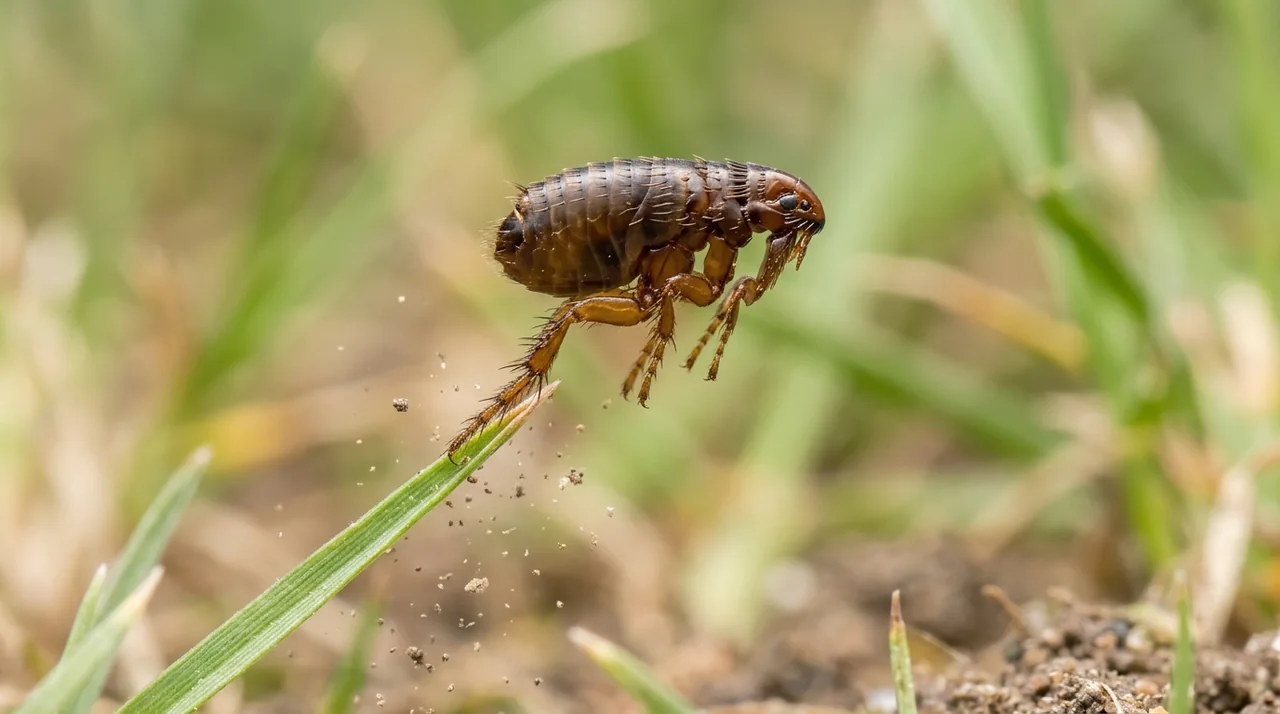
Fleas are wingless insects, so flight is simply not possible for them. What they do instead is jump, and they are astonishing at it. Using spring-loaded back legs, the cat flea (Ctenocephalides felis) can launch itself many times its own body length. That propels it from the floor or carpet onto a passing animal or person. The movement is sudden and darting, appearing on your ankle from nowhere. That is exactly why people sometimes think they saw a flea fly. You can see the species behind most household infestations in the cat flea profile.
How do fleas jump so far without wings?
A flea's jump relies on a clever piece of natural engineering rather than raw muscle. It stores energy in a springy protein in its legs and body. It compresses that protein like a loaded catapult, then releases it all at once. That instant release flings the flea into the air far faster than muscle alone could manage. The trade-off is control. A flea cannot steer in mid-air the way a flying insect can. So a jump is essentially a one-shot leap in a chosen direction, hoping to land on a host.
Why do people think they saw a flea fly?
A few things create the illusion of flight:
- The jump is so fast that the flea seems to simply appear somewhere new.
- Fleas often leap upward from the floor onto ankles and lower legs, which looks like flying up.
- Other small jumping or flying insects, such as fungus gnats or springtails, are sometimes mistaken for fleas.
Why does it matter for flea control that fleas cannot fly?
Because fleas jump rather than fly, they stay concentrated low to the ground. You find them in carpets, pet bedding, floor cracks, and along baseboards. That is exactly where they wait for a host to brush past. This behavior is actually good news for control, because it tells you where to focus:
- Vacuum carpets, rugs, upholstery, and cracks thoroughly and often, then seal and discard the vacuum contents so captured fleas and eggs cannot escape.
- Wash pet bedding in hot water regularly.
- Concentrate any treatment on floor-level areas and pet resting spots rather than up high.
How do I break the flea life cycle?
Adult fleas are only part of the problem. Eggs, larvae, and pupae hidden in the carpet keep the cycle going. To break it:
- Treat pets with a flea-control product recommended by your veterinarian, and never use a dog product on a cat or vice versa without guidance.
- Treat the home environment, using any flea product strictly according to its EPA-registered label.
- Keep up vacuuming and laundering for several weeks, since new fleas continue to emerge from pupae over time.
Do fleas bite people, and are they a health concern?
Fleas prefer furry animals but will bite people. They usually leave itchy welts around the ankles and lower legs. They cannot live or breed on humans, so they will not infest a person. But bites are uncomfortable, and scratching can lead to infection. Fleas can also transmit certain diseases and cause tapeworm in pets. So a persistent infestation should be taken seriously. Much like ticks, which also cannot fly, fleas depend on a host brushing past. Keeping pets protected and the environment treated breaks the chain. If the problem persists, a licensed professional can help.