


Do ants sleep?
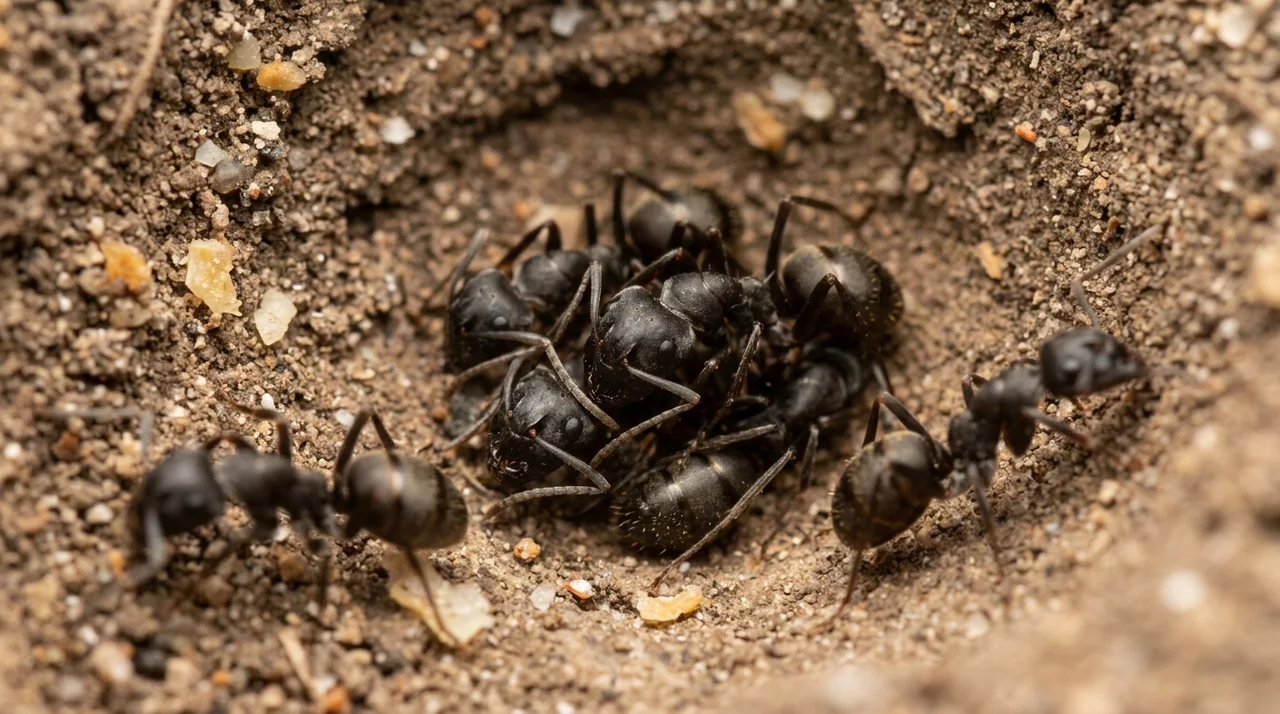
Ants rest, but their version of sleep looks nothing like ours. Rather than sleeping in one long stretch, ants take many very short naps. These are spread across the day and night. Because individual ants stagger their rest, the colony as a whole is always awake and working.
How do scientists know ants rest?
Researchers have studied ant rest by closely watching individual ants. They look for the tell-tale signs of dormancy: stillness, lowered antennae, and reduced responsiveness. That is usually followed by a brief stretch or "waking" movement. Studies like these have found that worker ants doze in many tiny bursts. Each burst lasts only a minute or so, adding up to a modest total of rest over a day. Queens, by contrast, tend to take fewer but longer, deeper rest periods.
Do workers and queens rest differently?
Yes, and the difference is striking:
- Workers take many short naps and rest relatively little overall, which keeps the colony continuously staffed
- Queens rest for longer stretches, a pattern that researchers have linked to their much longer lifespans
- The colony operates around the clock, because there are always some ants awake while others rest
Why does this matter around the home?
Because ant colonies never truly rest as a unit, they can forage at almost any hour. That is why you might spot common household ants like the odorous house ant or the pavement ant on your counter. You may see them in the middle of the day or the middle of the night. This constant activity is part of what makes ants such persistent visitors whenever food or moisture is available. Foraging schedules do vary by species and season. Some ants search mainly at night to avoid daytime heat and predators. Others are busiest during the day. So the trail you see at 2 a.m. and the one you see at noon may well be the same colony working different shifts.
Why does ant rest matter for pest control?
The always-on nature of a colony has a practical lesson. Control works best when it targets the whole colony, not just the ants you happen to see. Slow-acting baits work well for a reason: foraging workers carry the product back to the nest and share it. In time it reaches resting ants, the brood, and the queen. Quick-kill sprays on visible trails often backfire. They kill a few foragers while the hidden colony keeps producing more. Always use baits and any pesticide strictly per the EPA label.
To make your home less appealing in the first place:
- Wipe up crumbs and spills promptly and store food in sealed containers
- Fix leaks and dry out damp areas that provide water
- Seal cracks and gaps around doors, windows, and pipes
A common myth
It is sometimes said that ants "never sleep." That is not quite right. They do rest. They simply do it in a way that keeps the colony continuously active. It works much as a large workplace stays open around the clock by staggering its shifts. As with cockroaches and other kitchen pests, reducing food and moisture does far more than trying to outlast the colony. After all, it is always awake.