

Do jumping spiders bite?
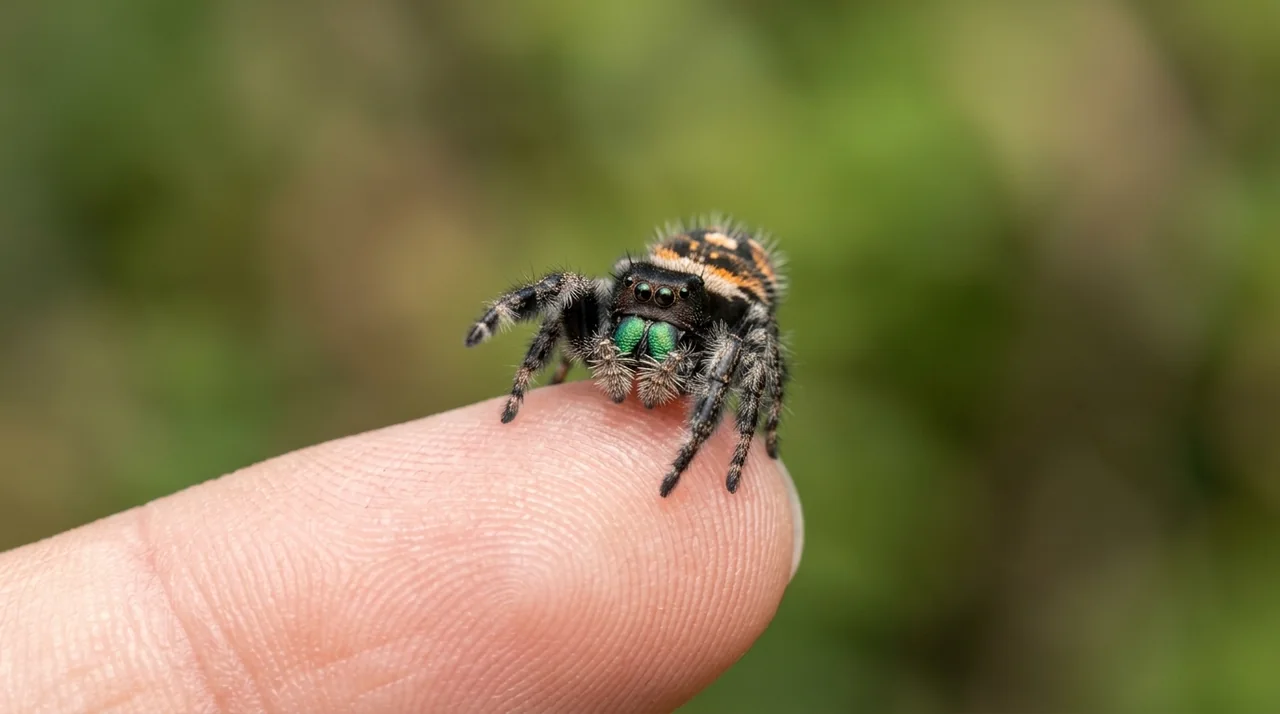
Jumping spiders (family Salticidae) are physically capable of biting. But it is uncommon and not a cause for concern. These small, often colorful spiders are best known for their large forward-facing eyes, sharp vision, and inquisitive behavior. Many will not flee the moment you appear. Instead, they turn to face you and track your movement, which people sometimes read as boldness. In reality, they are cautious. They would far rather jump away than confront something thousands of times their size. A bite generally happens only if one is pressed against skin, caught in clothing, or handled carelessly. You can read more in the jumping spider profile.
What does a jumping spider bite feel like?
If a jumping spider does bite, most people describe it as very minor:
- A mild pinch or the sting of a small bee.
- Slight redness, minor swelling, or a little itching at the spot.
- Symptoms that usually fade within a day.
Why are jumping spiders not aggressive?
Aggression toward something as huge as a human would be a losing strategy for a spider that fits on a fingertip. Jumping spiders rely on stealth and precision to hunt. They stalk prey and pounce from a distance rather than fighting. Toward people, their instinct is avoidance. Their excellent eyesight actually works in your favor. They can see you coming and simply move out of the way. That is why bites are so rare, even though these spiders are common in homes and gardens.
Are jumping spiders helpful to have around?
Yes. Jumping spiders are active daytime hunters. They prey on flies, mosquitoes, gnats, and other small insects around windows, walls, and gardens. A resident jumping spider is quietly reducing the very pests most people would rather not have indoors. They do not build snare webs across walkways, and they are not drawn to human food. So they cause no mess and no contamination. Many people find their curious, head-tilting behavior genuinely likable once they know the spider is harmless.
How should I handle a bite or an unwanted spider?
For a bite, general first-aid care is all that is usually needed:
- Wash the area with soap and water.
- Apply a cool compress if there is swelling.
- Use an over-the-counter anti-itch product as directed.
- Watch for any unusual or worsening reaction and contact a doctor if symptoms escalate.
How do jumping spiders compare with dangerous spiders?
It helps to keep perspective. A jumping spider is a welcome, low-risk pest-controller. That is unlike the small number of medically significant U.S. species, such as the black widow. If you are unsure what you are looking at, our pest library lets you compare features. And a licensed professional can help with a spider you believe is genuinely dangerous. For the everyday jumping spider on your windowsill, though, there is nothing to fear.