


When you have standing water you cannot drain, a larvicide lets you kill mosquito larvae before they become biting adults. The most common home larvicides use Bti, a naturally occurring soil bacterium that targets mosquito larvae specifically. Used correctly, they are a practical complement to dumping out standing water.
What Bti Is and How It Works
Bti stands for Bacillus thuringiensis subspecies israelensis, a bacterium that produces proteins toxic to the larvae of mosquitoes, black flies, and fungus gnats when eaten. Larvae feeding in the water ingest it and stop feeding, then die before they can mature into adults. Bti is selective: it acts on these specific larvae and is widely used in water because of its targeted mode of action. It does not kill adult mosquitoes, so it works alongside source reduction rather than replacing it.
Dunks vs. Granules
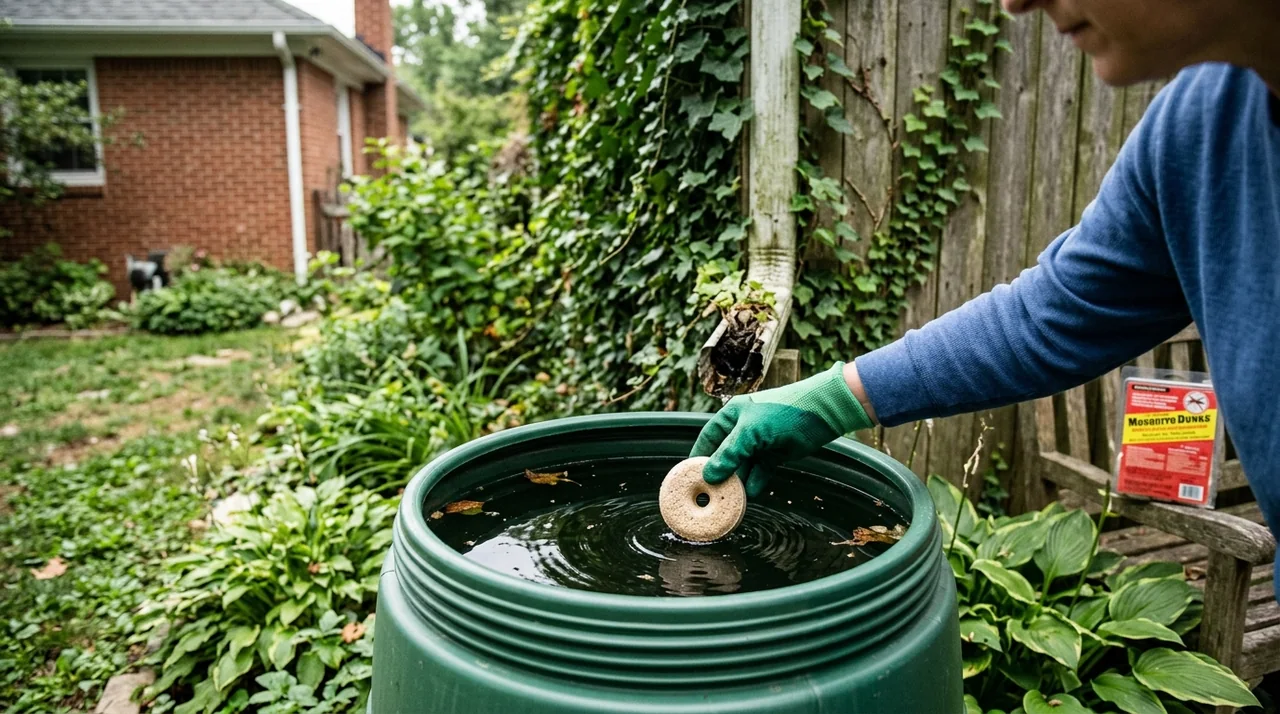
Home Bti products come in two main forms. Dunks are doughnut-shaped floating disks that dissolve slowly, releasing Bti over a period of weeks. They suit standing water bodies like rain barrels, ornamental ponds, unused pools, and water gardens. Granules (often labeled as bits or pellets) release Bti faster and are handy for spot-treating shallow or smaller water, catch basins, tree holes, and areas needing quick coverage. Choose the form that matches your water source and the label's intended use.
Where and How to Use Them
Common labeled sites include rain barrels, birdbaths you cannot empty, ornamental ponds, water gardens, clogged low areas, plant trays, and other standing water that holds for days. Read and follow the EPA product label for the correct dose per volume or surface area of water, how often to reapply, and which sites are allowed. Do not exceed the labeled rate, thinking more is better; it is not, and the label reflects tested effectiveness. Reapply on the schedule the label gives, since dunks and granules lose potency over time and after heavy rain that flushes the water.
Safety and Sensible Expectations
Bti products are generally regarded as low-risk to people, pets, and wildlife when used as directed, which is part of why they are recommended for water settings. Still, follow all label precautions, keep products in their original packaging out of reach of children, and store them dry. If a product is used in water that will be consumed (such as some rain-barrel water intended for edible gardens), check that the label permits that use. If any product is ingested, contact Poison Control at 1-800-222-1222, or your veterinarian for a pet.
Set realistic expectations: larvicide handles the water you treat, but mosquitoes fly in from elsewhere, and any untreated water on your property or a neighbor's keeps producing adults. Mark the containers and low spots you cannot drain so you remember to re-dose them on schedule, and keep treating them all season rather than stopping after the first application. The strongest results come from combining larvicide with weekly source reduction (dumping and covering standing water) and personal protection when outdoors. If mosquito pressure stays heavy despite treating your own property, or you are concerned about mosquito-borne disease in your area, contact your local mosquito control district or a licensed professional for site assessment and broader treatment.