


The single most effective thing you can do about mosquitoes around your home is deny them water to breed in. Mosquitoes lay eggs in or near standing water, and the larvae develop there before emerging as biting adults. Remove that water and you cut off the next generation at the source, which beats swatting adults or fogging the yard.
Why Source Reduction Beats Spraying
Adult mosquitoes are only part of the population; the rest are eggs, larvae, and pupae developing in water. Killing flying adults gives brief relief while new ones keep emerging from breeding sites you have not addressed. Some mosquitoes can complete development from egg to adult in a little over a week in warm weather, and it takes a surprisingly small amount of water, sometimes less than an inch in a container, to raise a batch. That is why walking your property and dumping water works better than any spray.
Hunt Down Standing Water
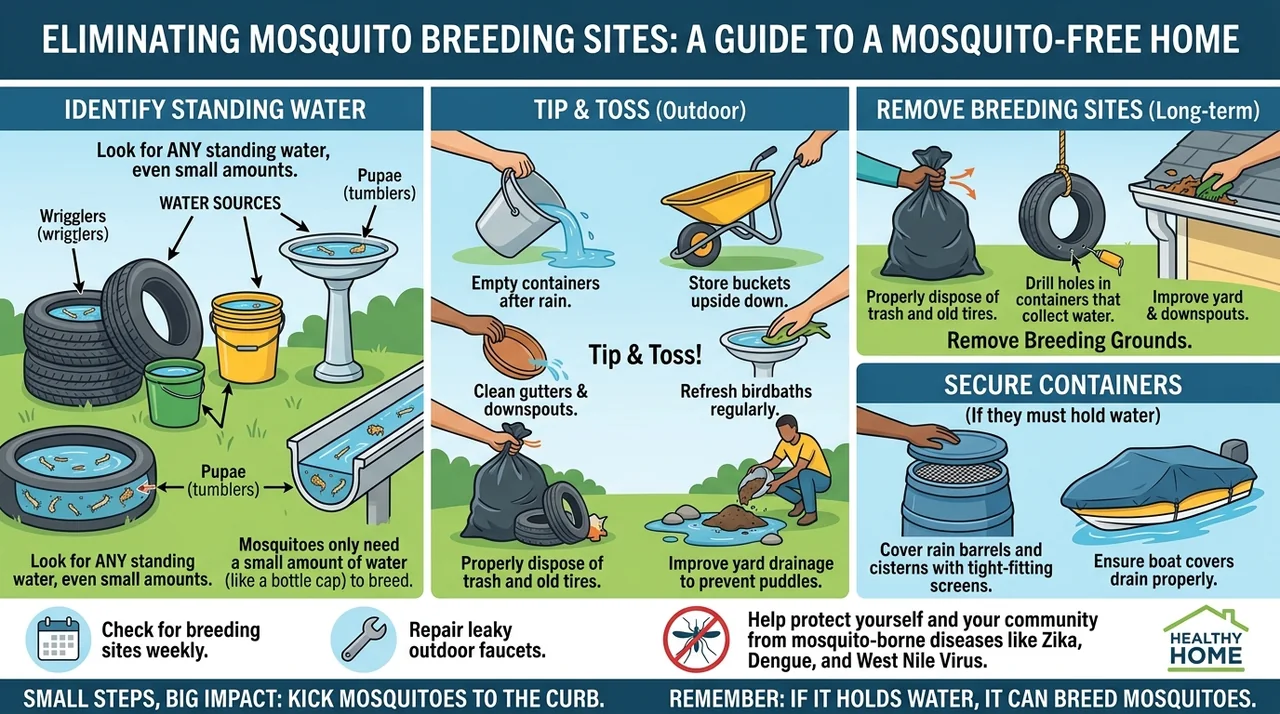
Walk your yard after it rains and look for anything holding water for more than a few days:
- Buckets, planters, plant saucers, and pot bases
- Clogged gutters and downspout splash blocks
- Tarps, trash-can lids, and toys that pool water
- Old tires, wheelbarrows, and unused containers
- Birdbaths, pet water bowls, and fountains
- Corrugated drainpipe, low spots in the lawn, and tree holes
- Kiddie pools, boat covers, and rain barrels without screens
Weekly Maintenance Habits
Source reduction is not one-and-done; it is a weekly rhythm during mosquito season. Dump and scrub birdbaths and pet bowls at least weekly, since eggs cling to container walls. Clean gutters so they drain fully. Change the water in outdoor pet dishes and kiddie pools regularly. Fix low spots and drainage so water does not pool for days. Screen rain barrels and cover cisterns with fine mesh so females cannot lay eggs inside.
Water You Cannot Drain
Some water features cannot simply be emptied: ornamental ponds, rain barrels you rely on, or a persistently wet ditch. For those, you have options. A pond with fish (such as mosquitofish or goldfish, where locally appropriate and legal) has natural predators that eat larvae. Keep water moving with a pump or fountain, since mosquitoes prefer still water. For standing water that cannot be drained or stocked, a larvicide such as a Bti product can be used strictly according to its label; read and follow the EPA product label for the site and dose.
Working With Neighbors
Mosquitoes travel, so a diligent yard next to a neglected one still gets bites. Talk with neighbors about shared sources like clogged communal drains or an abandoned pool. If you have persistent breeding in a source you cannot control, or standing water on public property, your local mosquito control or public health district can often help. For heavy or disease-carrying mosquito pressure, a licensed professional can assess breeding sites and treat appropriately.