


If your pet picks up fleas outdoors, treating the house without addressing the yard leaves a reservoir that keeps re-infesting your home. The good news is that fleas do not thrive everywhere in a yard; they concentrate in specific microhabitats, so a focused approach beats blanketing the whole property.
Fleas Live in Shady, Protected Spots
Outdoor flea larvae are vulnerable to heat and dryness and cannot survive in open, sun-baked lawn. They develop in cool, shaded, humid spots where pets and wildlife rest: under decks and porches, in shrubbery and dense ground cover, along fence lines, in shaded garden beds, under low bushes, and in pet resting areas and doghouses. Focusing your effort on these "flea zones" is far more effective and uses far less product than treating the entire yard.
Reduce the Habitat First
Before reaching for any product, make the yard less flea-friendly. Mow the lawn and keep grass trimmed so sunlight reaches the soil, since fleas avoid dry, sunny ground. Rake up leaf litter, grass clippings, and organic debris where larvae shelter, especially in shaded beds and along fences. Clear brush and trim overgrown shrubs to open the canopy and let areas dry out. Restrict pet access to the worst shaded harborages if practical. Discouraging wildlife (like feral cats, raccoons, opossums, and rodents) that carry fleas in also cuts the source; secure trash and remove food attractants.
Targeted Treatment Where Needed
Where habitat reduction is not enough, treat the flea zones specifically rather than the whole yard. EPA-registered outdoor flea products are available, and those containing an insect growth regulator (IGR) are especially useful because they stop eggs and larvae from developing into biting adults. Apply only to the shaded, protected areas where fleas actually live. Read and follow the EPA product label exactly for the target site, dose, and any restrictions, and observe the label's directions on keeping pets and children off treated areas until it is safe.
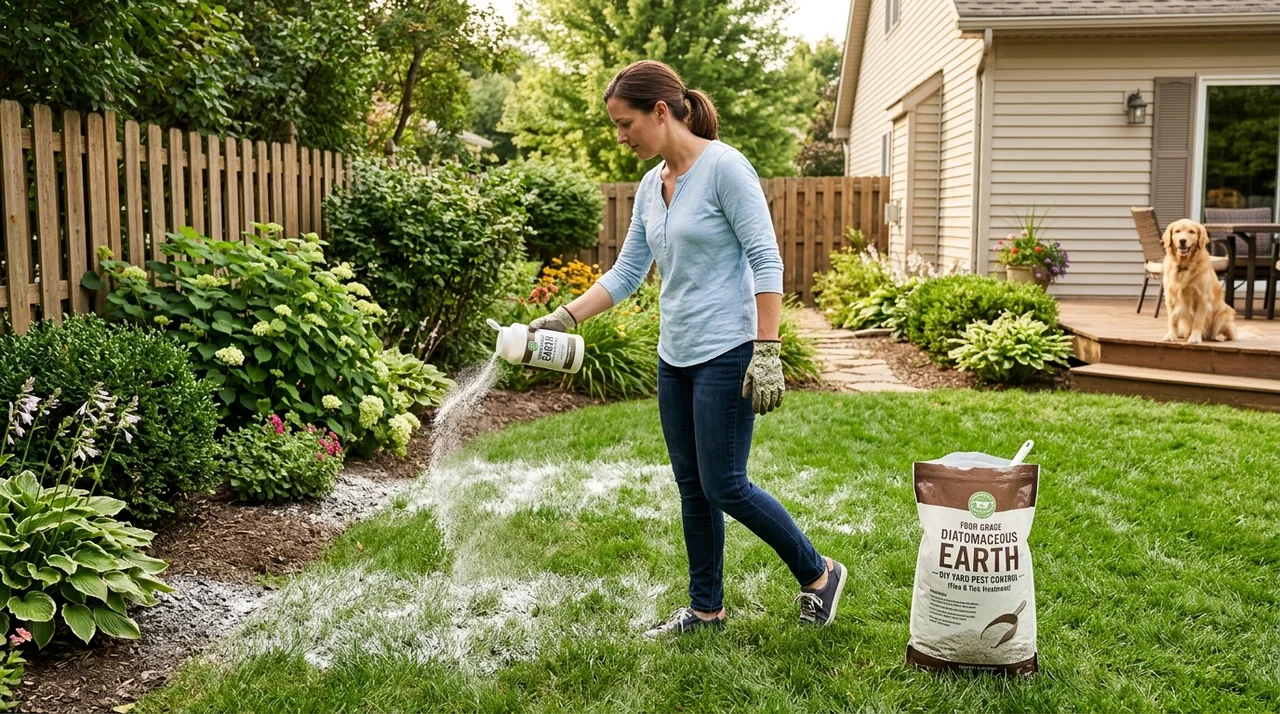
Some people ask about products like diatomaceous earth for outdoor flea control; results are limited and it loses effect when wet, so do not rely on it as a primary yard treatment, and if you use any product, follow its label.
Coordinate Yard, Home, and Pet
Yard treatment is one leg of a three-legged stool. It only works when combined with treating the home (vacuuming, washing bedding, indoor treatment) and keeping the pet on a veterinarian-recommended flea product so it does not keep importing fleas. Skip any one of these and fleas persist.
Because the pupal stage keeps producing adults for weeks, plan to repeat habitat maintenance and, if needed, targeted treatment over the season, and monitor whether your pet is still picking up fleas outside. A quick way to check a suspected flea zone is to walk through it slowly wearing white socks; fleas that jump aboard are easy to spot against the light fabric, telling you where to concentrate your effort. If fleas persist despite treating yard, home, and pet, if you have a large or hard-to-access harborage like a deep crawlspace under a deck, or if wildlife is continually reintroducing fleas, a licensed pest professional can treat the yard more effectively and safely.