
Woolly Aphid
Eriosoma spp. · also called woolly aphids, woolly apple aphid, American blight
Quick answer
Woolly aphids (Eriosoma species) are small sap-sucking insects cloaked in white, cottony wax that makes colonies look like tufts of fluff on twigs, branches, and roots. They feed on trees such as apple, elm, and hawthorn, excreting sticky honeydew. They harm plants, not people, and rarely need urgent control.
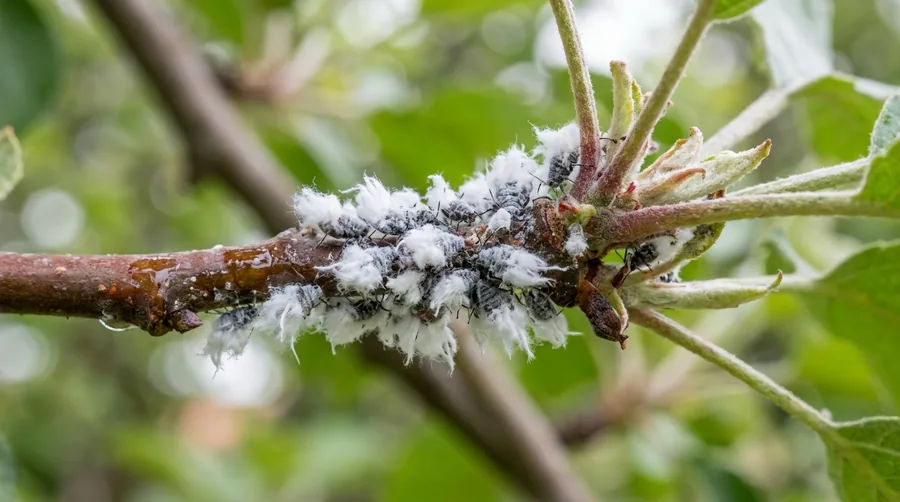
White woolly aphids covered in fluffy wax clustered on an apple tree branch
Recommended Products


What it does
Woolly aphids pierce bark, twigs, and roots to suck sap, secreting a fluffy white wax and sticky honeydew. Colonies cluster on branches or underground roots. Heavy feeding can cause twig galls, cankers, and stunted growth, and the honeydew fosters black sooty mold on leaves below.
Where it lives
They live on woody host plants: woolly apple aphid infests apple, crabapple, and hawthorn at the roots and above-ground wounds, while other species favor elm, ash, alder, or beech. Many alternate between two host plants across the season, and they occur across most of the US.
How it breeds
Woolly aphids reproduce rapidly. Through the season, wingless females give live birth to clones without mating, producing many overlapping generations, and a winged generation disperses to new plants. They typically overwinter as eggs or as immature nymphs on roots and bark.
What it eats
They feed only on plant sap from the bark, twigs, leaves, and roots of their woody hosts. They do not feed on household items and pose no threat to stored food.
Identification
Individual aphids are tiny (2-3 mm), soft, and bluish-black, but colonies hide under a mass of white, cottony wax, so the pest usually looks like a patch of fluff. Crushed insects and sticky honeydew help distinguish them from mealybugs and from harmless plant molds.
Signs of an infestation
- Fluffy white waxy patches on twigs, branches, or trunk wounds
- Sticky honeydew and black sooty mold on leaves below
- Swollen twig galls or knotty growths (woolly apple aphid)
- Curled or yellowing leaves near colonies
- Ants trailing to and from the colonies
Prevention tips
- Inspect new nursery stock before planting
- Encourage natural enemies like lady beetles and lacewings
- Prune out and destroy galled or heavily infested twigs
- Avoid excess nitrogen fertilizer that spurs soft new growth
- Wash light colonies off with a strong stream of water
Professional solutions
Most woolly aphid problems on landscape plants are cosmetic and controlled by natural predators, pruning, or horticultural oil and insecticidal soap. For valuable fruit trees with root-galling woolly apple aphid or persistent colonies, an arborist or extension-guided systemic treatment applied per label may be warranted.
Health & safety
Woolly aphids do not bite, sting, or spread disease to people or pets; the white fluff is only plant wax. The concern is plant health and the nuisance of honeydew and sooty mold. Risk to humans is essentially none.
Relevant Products


Frequently asked questions
What is the white fuzzy stuff on my tree branches?
Fluffy white patches on twigs and branches are usually woolly aphids, sap-sucking insects that coat themselves in cottony wax. If you part the fluff you will find tiny bluish-black insects and sticky honeydew, which tells them apart from harmless plant fungus.
Are woolly aphids harmful to humans?
No. Woolly aphids do not bite, sting, or carry human disease. They only feed on plant sap. The main problems are cosmetic damage to trees and shrubs, sticky honeydew, and the black sooty mold that grows on it.
How do I get rid of woolly aphids?
Start by hosing off light colonies and pruning heavily infested twigs. Natural predators like lady beetles often keep them in check. For stubborn infestations, horticultural oil or insecticidal soap applied per label directions works well; valuable fruit trees may need professional advice.
Fact-checked by Morgan Vance, Editorial Director (editorial review, not a professional pest-control or medical sign-off). Last reviewed June 17, 2026. We correct anything a reader shows us is wrong — see our corrections policy.