Oleander Aphid
Aphis nerii · also called oleander aphid, milkweed aphid
Quick answer
The oleander aphid (Aphis nerii) is a bright yellow, black-legged aphid that swarms oleander and milkweed in dense clusters, sucking sap and coating plants in sticky honeydew. Distinctive and easy to spot, it stunts growth and blackens leaves with sooty mold. It harms plants only and never bites people, though it feeds on toxic host plants.
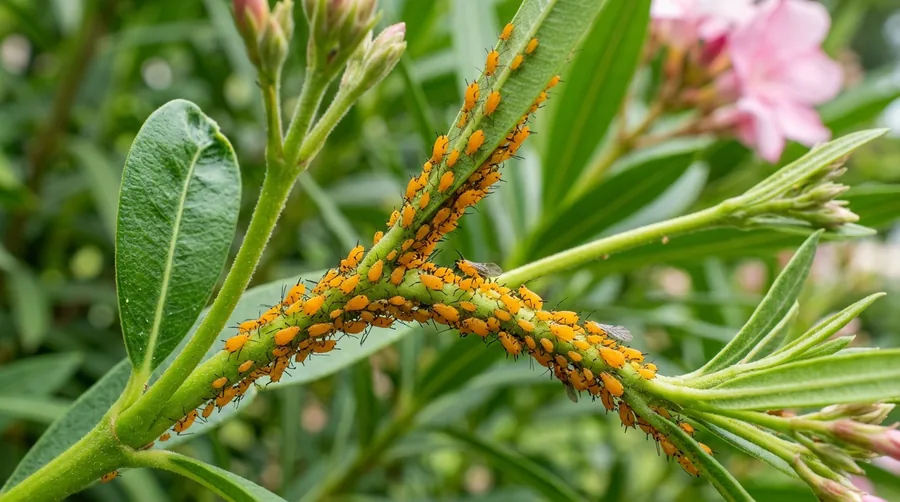
Bright yellow oleander aphids with black legs clustered densely on a milkweed stem
Recommended Products


What it does
Oleander aphids form crowded, bright yellow colonies on new shoots, stems, flower buds, and seed pods, piercing them to feed on sap. Heavy feeding stunts and distorts growth and can drop buds, while their abundant sticky honeydew coats leaves and grows black sooty mold. Ants often tend the colonies for the honeydew.
Where it lives
It feeds mainly on oleander and milkweed, plus related plants like butterfly weed and vinca, in gardens and landscapes. It thrives in warm regions, the South, Gulf Coast, Southwest, and California, and can persist year-round where winters are mild, concentrating on the tender growing tips and pods.
How it breeds
Populations are all-female and reproduce without mating, with wingless females giving live birth to clones, so colonies explode in warm weather. Winged forms develop to colonize new plants. In mild climates it breeds continuously year-round; in cooler areas it dies back and recolonizes each season.
What it eats
Oleander aphids feed only on the sap of oleander, milkweed, and a few related plants. Feeding on toxic milkweed and oleander, they store the plants' compounds, but they do not feed on people, animals, or household items.
Identification
They are unmistakable: bright lemon-yellow, soft-bodied aphids about 2 mm with black legs, antennae, and cornicles, packed in dense clusters on stems and buds. The vivid yellow color on oleander or milkweed, plus shiny honeydew and ants, distinguishes them from green or pink aphids.
Signs of an infestation
- Dense clusters of bright yellow, black-legged aphids on shoots
- Sticky, shiny honeydew on leaves and stems
- Black sooty mold on honeydew-coated foliage
- Curled, stunted new growth and dropped buds
- Ants trailing to and from the colonies
Prevention tips
- Hose colonies off with a firm spray of water
- Encourage lady beetles, lacewings, and parasitic wasps
- Tolerate aphids on milkweed grown for monarch butterflies
- Prune out and bag heavily infested shoot tips
- Avoid excess nitrogen fertilizer that spurs soft growth
Professional solutions
Oleander aphids are easy to manage and rarely need a professional. Water sprays, natural predators, and insecticidal soap or horticultural oil per label control them. On milkweed planted for monarchs, avoid insecticides that harm caterpillars and rely on hosing and beneficial insects instead.
Health & safety
Oleander aphids do not bite, sting, or spread disease to people or pets. While their host plants (oleander and milkweed) are poisonous if eaten, the aphids themselves pose no contact hazard. Their impact is limited to plant health and honeydew nuisance.
Relevant Products


Frequently asked questions
What are the bright yellow bugs on my milkweed or oleander?
Dense clusters of vivid lemon-yellow aphids with black legs on milkweed or oleander are oleander aphids. They suck sap and leave sticky honeydew. Their bright color and habit of packing onto shoot tips and pods make them easy to identify.
Should I kill oleander aphids on milkweed I grow for monarchs?
Go gently. Insecticides that kill aphids can also harm monarch eggs and caterpillars. On butterfly milkweed, most gardeners just hose the aphids off with water and let lady beetles and lacewings help, rather than spraying.
Are oleander aphids dangerous to touch?
No. They do not bite or sting and carry no human disease, so touching them is harmless. Their host plants, oleander and milkweed, are toxic if eaten, but the aphids themselves pose no contact risk to people or pets.
Fact-checked by Morgan Vance, Editorial Director (editorial review, not a professional pest-control or medical sign-off). Last reviewed May 14, 2026. We correct anything a reader shows us is wrong — see our corrections policy.