Rose Aphid
Macrosiphum rosae · also called rose aphid
Quick answer
The rose aphid (Macrosiphum rosae) is a soft, pear-shaped insect, green or pinkish, that clusters on rose buds and tender new shoots to suck sap. Heavy colonies stunt and distort growth, coat the plant in sticky honeydew, and invite sooty mold and ants. Common but easy to manage, it harms roses only and never bites people or pets.
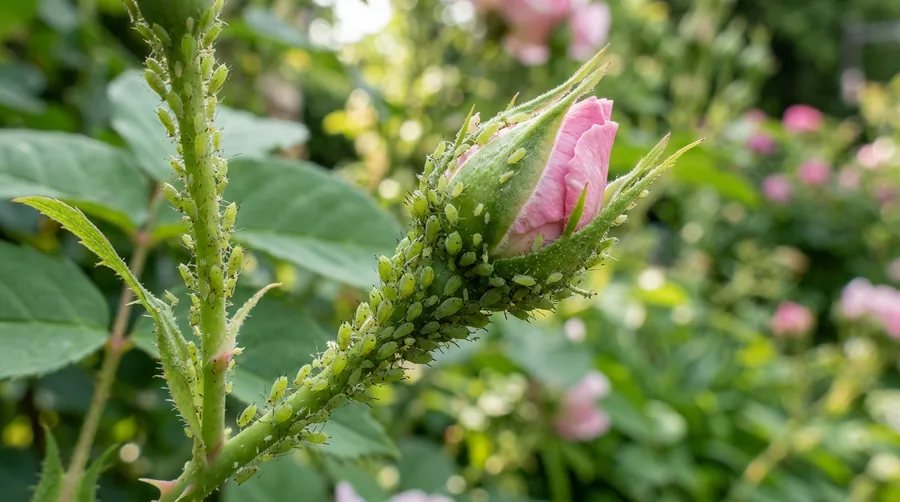
Cluster of green and pink rose aphids on a rose bud and new shoot
Recommended Products


What it does
Rose aphids gather in dense colonies on flower buds, stems, and the undersides of new leaves, piercing the tissue to feed on sap. Their feeding stunts and curls new growth and can keep buds from opening well. They excrete sticky honeydew that coats foliage, fostering black sooty mold and attracting ants that tend and protect them.
Where it lives
The rose aphid feeds on roses, in home gardens, landscapes, and nurseries wherever roses grow, and can move to a few related plants. It concentrates on the most succulent new growth, especially in spring, and is found across the US, thriving in the mild weather of spring and fall.
How it breeds
Aphids reproduce very fast. Through the growing season, wingless females give live birth to clones without mating, so colonies swell quickly, and winged forms develop to spread to new plants. In cold climates it overwinters as eggs on rose canes, hatching in spring to restart the cycle.
What it eats
Rose aphids feed only on plant sap, drawn mainly from rose buds, tender shoots, and new leaves. They do not feed on people, animals, or anything in the home.
Identification
They are soft, pear-shaped insects about 2-3.5 mm, green or pinkish, with two tube-like projections (cornicles) at the rear and often dark legs and antennae. Dense clusters on rose buds and new shoots, plus shiny sticky honeydew and ants, make them easy to recognize.
Signs of an infestation
- Clusters of green or pink insects on buds and new shoots
- Sticky, shiny honeydew on leaves and stems
- Black sooty mold on honeydew-coated foliage
- Curled, stunted, or distorted new growth
- Ants trailing up canes to tend the aphids
Prevention tips
- Blast colonies off with a firm spray of water
- Encourage lady beetles, lacewings, and parasitic wasps
- Avoid excess nitrogen fertilizer that fuels soft growth
- Pinch out and destroy heavily infested buds and tips
- Inspect new roses before planting them near others
Professional solutions
Rose aphids are among the easiest garden pests to manage and seldom need a professional. Water sprays, natural predators, and insecticidal soap or horticultural oil per label usually suffice. Only large or persistent infestations on prized roses might warrant a labeled systemic, and broad sprays that kill predators are best avoided.
Health & safety
Rose aphids do not bite, sting, or transmit disease to people or pets, and they do not come indoors. The sticky honeydew and sooty mold are cosmetic plant issues. There is no human health risk, just the health and beauty of the roses.
Relevant Products


Frequently asked questions
What are the little green or pink bugs on my rose buds?
Soft, pear-shaped insects clustering on rose buds and new shoots, green or pinkish with two tiny tailpipe-like projections, are rose aphids. They suck sap and leave sticky honeydew. Ants trailing up the canes to tend them are a common accompanying sign.
How do I get rid of rose aphids naturally?
A firm spray of water knocks colonies off, and natural predators like lady beetles and lacewings often finish the job. Avoiding excess nitrogen and pinching out heavily infested tips helps. Insecticidal soap or horticultural oil per label handles stubborn clusters.
Are rose aphids harmful beyond the plant?
No. They do not bite or sting people or pets and carry no human disease. Their damage is limited to roses: stunted growth, poor buds, and sticky honeydew with sooty mold. They are common and usually easy to control.
Fact-checked by Morgan Vance, Editorial Director (editorial review, not a professional pest-control or medical sign-off). Last reviewed July 12, 2026. We correct anything a reader shows us is wrong — see our corrections policy.