Rose Midge
Dasineura rhodophaga · also called rose midge
Quick answer
The rose midge (Dasineura rhodophaga) is a nearly invisible fly, under 1 mm, whose maggots feed inside rose buds and shoot tips. Their feeding blackens and kills the buds, so an infested bush stops blooming and shows charred, crooked tips. The adults never bite people; the tiny larvae simply ruin the flowers, harming plants only.
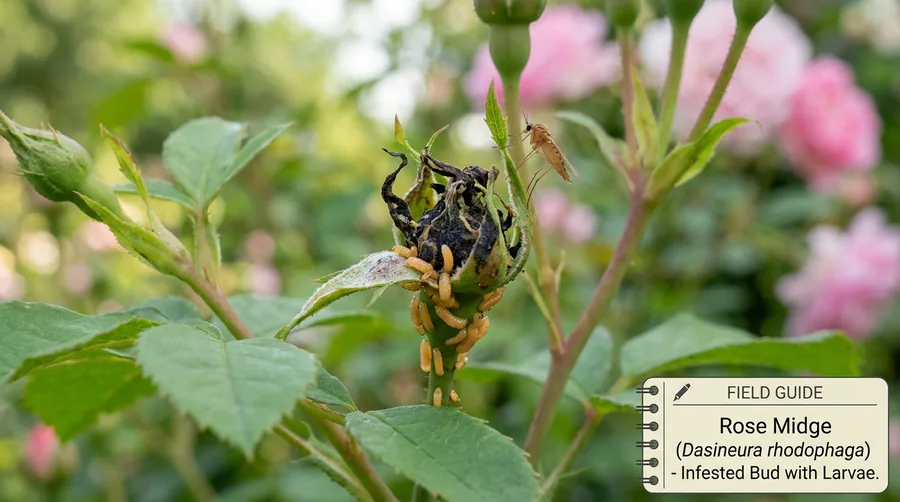
Blackened, deformed rose buds and shoot tips damaged by tiny rose midge larvae
Recommended Products


What it does
Adult midges lay eggs in developing rose buds and the tips of new shoots. The tiny maggots rasp and feed on the soft tissue, killing the bud and blackening the shoot tip so it looks scorched and bends over. Because generations turn over fast, damage can escalate quickly and stop a bush from flowering.
Where it lives
The rose midge lives on roses, in home gardens, landscapes, and nurseries, wherever roses are grown. Larvae drop to the soil beneath the plant to pupate, so the surface soil under infested roses is part of its habitat. It occurs across the US, favoring the warm months.
How it breeds
The midge completes a generation in as little as one to two weeks, so many overlapping generations occur through the growing season. Eggs hatch in buds and tips, larvae feed briefly, then drop to pupate in the soil. It overwinters as pupae in the soil and resumes in spring as roses push new growth.
What it eats
Larvae feed only on the tender tissue of rose buds and new shoot tips. The short-lived adults feed little if at all, and the insect never feeds on household items or people.
Identification
The adults are so tiny they are rarely seen. Diagnosis is by damage: flower buds that blacken, shrivel, and fail to open, and new shoot tips that turn brown-black and crook over as if burned. Splitting a damaged bud may reveal minute white-to-orange maggots. It is often mistaken for disease or frost.
Signs of an infestation
- Flower buds that blacken and die before opening
- Shoot tips that curl and look scorched or burned
- A rose bush that suddenly stops blooming
- Deformed, stunted new growth at the tips
- Tiny maggots visible inside dissected buds
Prevention tips
- Prune off and destroy blackened buds and tips to remove larvae
- Clean up and dispose of fallen debris beneath the bush
- Cultivate or mulch the soil surface to disrupt pupae
- Monitor new growth closely during warm months
- Isolate and inspect new rose plants before adding them
Professional solutions
Rose midge is hard to control because the larvae are hidden and generations overlap. Persistent removal of infested tips helps; where that fails, professionals may combine a foliar insecticide with a soil treatment aimed at pupae, following labels. A rosarian or extension office can advise on timing.
Health & safety
Rose midge does not bite, sting, or spread any disease to people or pets, and it does not come indoors. It only damages roses. The scorched look it causes is a plant problem, so there is no human health risk at all.
Relevant Products


Frequently asked questions
Why did my rose buds turn black and stop blooming?
Rose buds that blacken and die before opening, along with scorched, crooked shoot tips, are classic rose midge damage. The tiny maggots feed inside the buds and tips. It is often mistaken for frost or disease, but splitting a bud may reveal minute larvae.
How do I get rid of rose midge?
Repeatedly prune off and destroy blackened buds and tips to remove the hidden larvae, and clean up debris beneath the bush. Because larvae pupate in the soil, disturbing or mulching the surface helps. Severe cases may need combined foliar and soil treatments per label.
Are rose midges harmful to people?
Not at all. The adults are under a millimeter long, do not bite or sting, and carry no human disease. They only damage roses. The concern is losing blooms and healthy new growth, not any risk to you, your family, or pets.
Fact-checked by Morgan Vance, Editorial Director (editorial review, not a professional pest-control or medical sign-off). Last reviewed May 9, 2026. We correct anything a reader shows us is wrong — see our corrections policy.