
Gladiolus Thrips
Thrips simplex · also called gladiolus thrips
Quick answer
The gladiolus thrips (Thrips simplex) is a slender, dark insect under 2 mm that rasps sap from gladiolus and iris leaves, flowers, and stored corms. Its feeding causes silvery streaks, flecking, and browned, distorted blooms, and it continues damaging corms in storage. Harmless to people, it is a concern only to gardeners and their flowers.
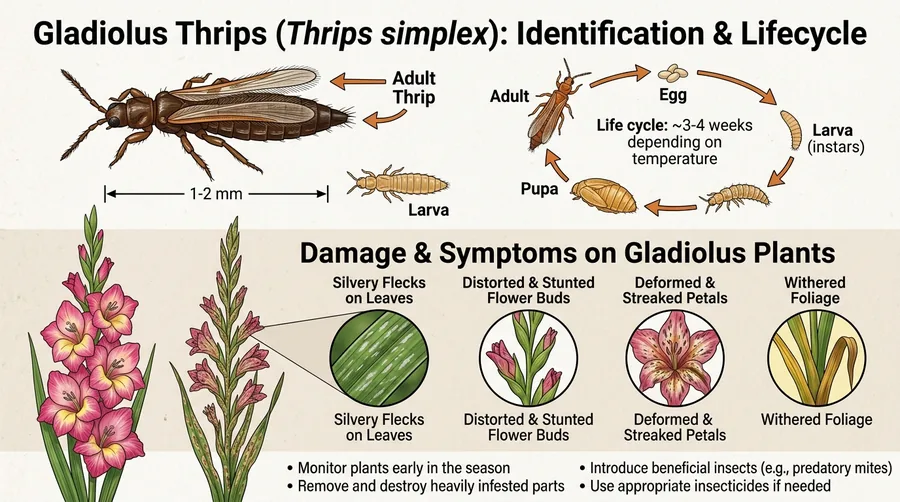
Silvery-streaked, flecked gladiolus leaves and flowers damaged by tiny dark gladiolus thrips
Recommended Products


What it does
Gladiolus thrips scrape open plant cells and suck the sap from leaves, flower buds, and open blooms, leaving silvery streaks and pale flecks that later turn brown. Feeding on developing flowers causes them to discolor, streak, and fail to open properly. The thrips also feed on corms, and infestations continue on corms held in storage.
Where it lives
It lives on gladiolus above all, plus iris, freesia, and related plants, in gardens and cut-flower plantings during warm months. On stored gladiolus corms it remains active in sheltered, warmer storage. Found across the US, it overwinters mainly on corms rather than surviving cold outdoors.
How it breeds
In warm conditions a generation takes only a couple of weeks, so several overlapping generations build through the growing season. Females insert eggs into plant tissue; larvae feed and then pupate in the soil or leaf litter before emerging as winged adults. It survives winter on stored corms and re-infests new plantings.
What it eats
Gladiolus thrips feed only on plant sap and cell contents from the leaves, flowers, and corms of gladiolus and related plants. They do not feed on people, animals, or household food.
Identification
Adults are tiny (1-2 mm), slender, and dark brown to black, with narrow fringed wings; larvae are pale yellow. They are hard to see, so the damage is the giveaway: silvery streaking and dark specks (excrement) on leaves and flowers, and browned, distorted blooms. Corms may look russeted and sticky.
Signs of an infestation
- Silvery streaks and pale flecking on leaves and flowers
- Tiny dark specks of excrement on foliage and blooms
- Flowers that discolor, streak, and fail to open
- Roughened, russeted, sticky corms in storage
- Slender dark insects when blooms are shaken over paper
Prevention tips
- Inspect corms before planting and discard infested ones
- Treat or heat-cure corms and store them cool and dry
- Remove and destroy spent flower spikes and plant debris
- Rotate planting sites and avoid reusing infested corms
- Monitor blooms with the shake-over-paper test through summer
Professional solutions
Good corm sanitation and cool, dry storage prevent most gladiolus thrips problems, so professionals are rarely required. For heavy garden infestations, labeled insecticides or insecticidal soap applied per directions during active feeding can help. An extension office can advise on corm treatment and storage temperatures.
Health & safety
Gladiolus thrips do not bite, sting, or transmit any disease to people or pets. They feed strictly on plants. The only impact is streaked foliage, ruined flowers, and damaged corms, so there is no human health risk.
Relevant Products


Frequently asked questions
Why are my gladiolus flowers streaked and failing to open?
Silvery streaking and pale flecking on gladiolus leaves and blooms, along with flowers that discolor and fail to open, are typical gladiolus thrips damage. The insects are tiny and dark; shake a bloom over white paper to see them crawl.
Do gladiolus thrips survive winter?
They mainly overwinter on stored gladiolus corms rather than outdoors in cold regions. That is why inspecting and treating corms before storage and again before planting is the most important step to prevent them re-infesting next year's flowers.
How do I control gladiolus thrips?
Focus on the corms: inspect and discard infested ones, cure or treat them, and store cool and dry. Remove spent flower spikes and debris. For heavy garden infestations, labeled insecticides or insecticidal soap applied during active feeding can reduce damage.
Fact-checked by Morgan Vance, Editorial Director (editorial review, not a professional pest-control or medical sign-off). Last reviewed May 20, 2026. We correct anything a reader shows us is wrong — see our corrections policy.