
Onion Maggot
Delia antiqua · also called onion root maggot, onion fly
Quick answer
The onion maggot (Delia antiqua) is the larva of a small gray fly that bores into onion, garlic, and leek bulbs and roots. Feeding kills young seedlings, rots developing bulbs, and opens the door to bacterial soft rot. It is a damaging cool-season pest of northern onion gardens and farms.
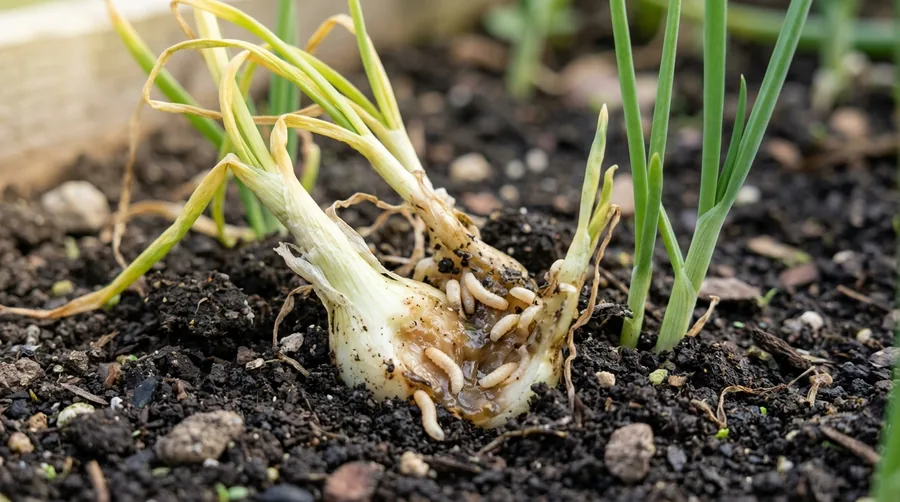
White legless onion maggots tunneling inside a cut onion bulb showing rot
Recommended Products


What it does
Onion maggots damage crops as larvae. The white maggots burrow into onion seedlings, roots, and developing bulbs, killing young plants and hollowing out bulbs. Several maggots often attack one plant, and their wounds open the way for bacterial soft rot that can spread through bulbs in storage.
Where it lives
The onion maggot is a cool-climate pest of onion-growing regions across the northern US, the Great Lakes, the Northeast, and the Pacific Northwest. Larvae live in the soil among onion roots and bulbs, while adult flies rest on plants and soil nearby. Cool, moist conditions and continuous onion plantings favor it.
How it breeds
Adult flies emerge in spring and lay eggs at the base of onion plants or in the soil nearby. Maggots hatch and feed for two to three weeks before pupating in the soil. There are usually two to three generations a year, and the spring generation is the most destructive to seedlings.
What it eats
The maggots feed on the roots, stems, and bulbs of onion-family plants, including onions, garlic, leeks, shallots, and chives. The adult flies feed on nectar and other liquids rather than on the crop.
Identification
The larvae are white, legless maggots up to about 1/3 inch, tapered toward the head, found inside roots and bulbs. Adults are slender gray flies a little smaller than a house fly, with a humped back and long legs. The below-ground damage is usually noticed before the flies are seen.
Signs of an infestation
- Young onion seedlings wilting, yellowing, and dying
- White maggots tunneling in roots, stems, and bulbs
- Soft, rotting bulbs with a foul smell
- Gaps in the row where seedlings have collapsed
- Distorted or stunted growth of affected plants
Prevention tips
- Cover the crop with floating row covers before flies lay eggs
- Rotate onions away from beds used the previous year
- Remove and destroy cull onions and volunteers
- Avoid continuous or overlapping onion plantings nearby
- Practice good field sanitation to reduce overwintering pupae
Professional solutions
As with other root maggots, prevention through row covers, rotation, and sanitation is the main defense, since larvae inside bulbs are protected. Beneficial nematodes can help in the soil. For recurring commercial losses, a farm advisor or extension agent can recommend soil or seed treatments with EPA-registered products used strictly per the label.
Health & safety
Onion maggots do not bite, sting, or spread disease to people, so they present no direct human health risk. They are a crop pest: larvae kill seedlings and destroy bulbs, and the damage invites bacterial soft rot that can rot stored onions. Damaged, rotting bulbs should be discarded.
Relevant Products


Frequently asked questions
What is killing my onion seedlings and rotting the bulbs?
Onion maggots are a common cause in cool weather. The larvae tunnel into roots and bulbs, so seedlings wilt and die and bulbs turn soft and foul-smelling. You may find small white maggots inside the damaged tissue.
How can I prevent onion maggots?
Cover the crop with floating row covers before the flies lay eggs, rotate onions away from last year's beds, and remove cull onions and volunteers that harbor the pest. Avoiding continuous onion plantings nearby reduces build-up over the season.
Are onion maggots harmful to people?
No. They do not bite or carry human disease. Their harm is to the crop below ground; badly tunneled and soft-rotted bulbs should be thrown out rather than eaten or stored, since the rot can spread to healthy bulbs.
Fact-checked by Morgan Vance, Editorial Director (editorial review, not a professional pest-control or medical sign-off). Last reviewed August 2, 2026. We correct anything a reader shows us is wrong — see our corrections policy.