
Cabbage Maggot
Delia radicum · also called cabbage root maggot, cabbage root fly, root maggot
Quick answer
The cabbage maggot (Delia radicum) is the larva of a small gray fly that tunnels into the roots of cabbage, broccoli, radish, and other cole crops. Damaged seedlings wilt, stunt, and often die, and the wounds can invite soft rot. It is a cool-season pest of northern gardens and farms.
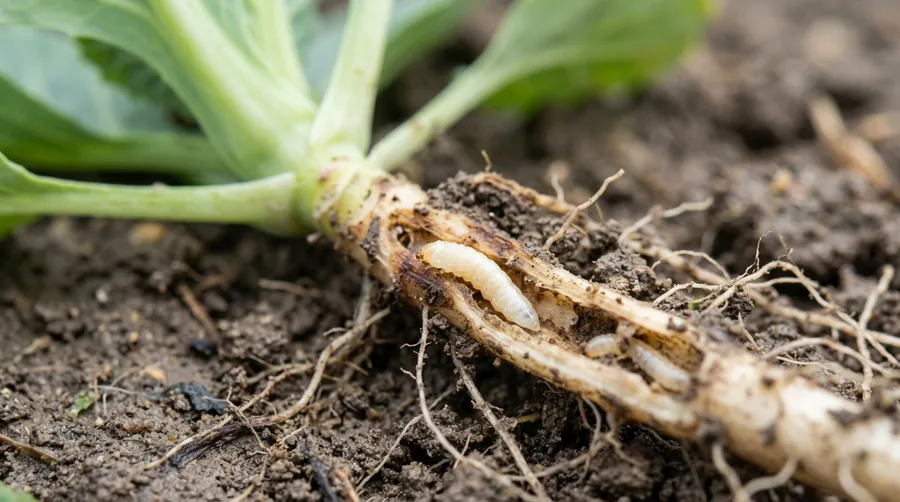
White legless cabbage maggots feeding in the tunneled root of a cabbage seedling
Recommended Products


What it does
Cabbage maggots damage plants in their larval stage. The white, legless maggots tunnel into and feed on the roots and lower stems of cole crops, cutting off water and nutrients. Seedlings and transplants are hit hardest, wilting and dying, while the feeding wounds can let in soft-rot organisms.
Where it lives
This is a cool-climate pest of gardens and farms across the northern US, the Pacific Northwest, and Canada. The maggots live in the soil around the roots of host plants; the adult flies rest on nearby plants and soil. Damp, cool spring and fall conditions favor them.
How it breeds
Adult flies emerge in spring and lay eggs at the base of host plants, in the soil near the stem. Maggots hatch, feed on roots for a few weeks, then pupate in the soil. There are usually two to four generations a year, with the first spring generation the most damaging to seedlings.
What it eats
The maggots feed on the roots, root hairs, and lower stems of cole crops and related plants, including cabbage, broccoli, cauliflower, Brussels sprouts, turnips, radishes, and rutabaga. The adult flies feed on nectar and other liquids, not on the crop.
Identification
The larvae are small, white, legless maggots up to about 1/3 inch, tapered at the head, found tunneling in roots and lower stems. Adults are delicate gray flies about 1/5 inch long, resembling small house flies with dark stripes and bristles. Damage below ground is usually noticed before the flies.
Signs of an infestation
- Seedlings and transplants wilting, yellowing, or stunted
- Plants that pull up easily with chewed, tunneled roots
- White, legless maggots in roots and lower stems
- Soft, rotting root tissue where maggots have fed
- Sudden collapse of young cole-crop plants
Prevention tips
- Cover seedlings with floating row covers before flies lay eggs
- Place cardboard or foam collars around transplant stems
- Rotate cole crops away from last year's beds
- Delay planting past the first spring egg-laying peak
- Remove and destroy crop residue and cull roots after harvest
Professional solutions
Prevention through row covers, collars, and crop rotation is the core strategy, since once maggots are inside roots little can reach them. Beneficial nematodes applied to the soil can help suppress larvae. For repeated commercial losses, a farm advisor or extension agent can recommend soil-applied, EPA-registered products and correct timing per the label.
Health & safety
Cabbage maggots do not bite, sting, or spread disease to people, so they pose no direct human health risk. They are a crop pest: root feeding kills seedlings and stunts plants, and the wounds can invite bacterial soft rot that ruins roots in the garden and in storage.
Relevant Products


Frequently asked questions
Why did my broccoli and cabbage seedlings suddenly wilt and die?
Cabbage maggots are a likely cause in cool weather. The larvae tunnel into the roots and lower stems, so affected plants wilt, yellow, and pull up easily with chewed, rotting roots. You may find small white maggots in the damaged tissue.
How do I prevent cabbage maggots?
Exclusion is the most reliable approach: cover seedlings with floating row covers before the flies lay eggs, fit collars around transplant stems, and rotate cole crops away from last year's beds. Delaying planting past the first spring flight also helps.
Are cabbage maggots dangerous to people?
They are not a human health threat and do not bite or spread human disease. They damage the crop below ground; badly infested roots and any soft-rotted tissue should simply be discarded rather than eaten.
Fact-checked by Morgan Vance, Editorial Director (editorial review, not a professional pest-control or medical sign-off). Last reviewed July 31, 2026. We correct anything a reader shows us is wrong — see our corrections policy.