
Flea Beetle
Chrysomelidae (Phyllotreta, Epitrix, and others) · also called flea beetles
Quick answer
Flea beetles are tiny, dark, jumping beetles that chew small round 'shot-hole' pits in the leaves of many vegetables. Named for the way they spring away like fleas, they can quickly damage seedlings and, in some species, spread plant diseases like Stewart's wilt in corn. They are a common crop pest but harmless to people.
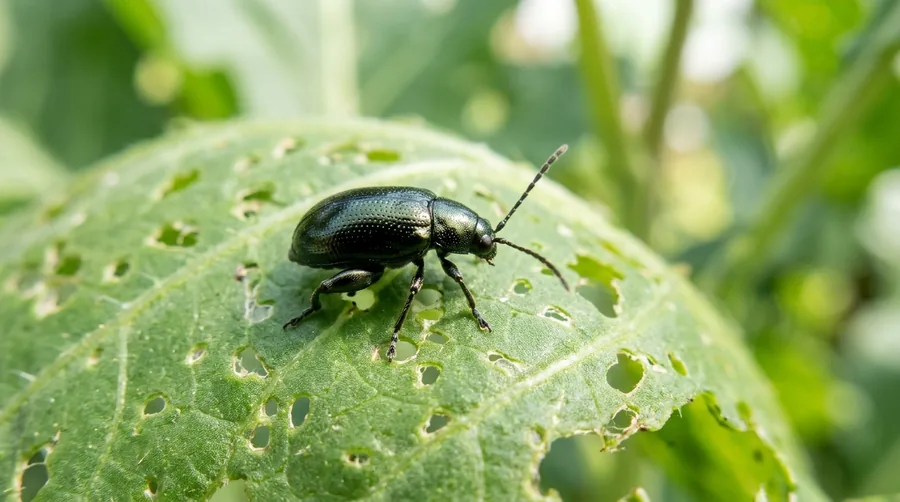
Tiny dark flea beetle on a leaf riddled with small round shot-hole feeding pits
Recommended Products


What it does
Adults chew countless tiny round holes and pits in leaves, giving foliage a peppered, shot-hole look. Their enlarged hind legs let them jump away instantly when disturbed. Seedlings are most at risk, since a swarm of beetles can riddle and kill young plants; larger plants usually tolerate the cosmetic damage.
Where it lives
Many species occur nationwide, each favoring particular crops, crucifers (cabbage, broccoli, radish), potatoes and eggplant, corn, spinach, and more. Adults overwinter in soil, leaf litter, and field edges, then emerge in spring to attack emerging seedlings and transplants, which is when they do the most harm.
How it breeds
Overwintered adults feed and lay eggs in the soil near host plants. The pale larvae feed on roots for two to several weeks, then pupate in the soil and emerge as new adults. Most species have one to two, sometimes more, generations a year, with the first spring generation the most damaging.
What it eats
Flea beetles feed on the leaves of many vegetables and field crops; specific hosts vary by species and include crucifers, potato, eggplant, tomato, corn, spinach, and beets.
Identification
Adults are very small, about 1/16 to 1/8 inch, and shiny black, bronze, bluish, or striped, depending on species, with noticeably thickened hind legs for jumping. The tiny 'shot-hole' feeding pattern on leaves is often noticed before the beetles themselves.
Signs of an infestation
- Numerous tiny round holes or pits across leaves
- A shot-hole, peppered look to foliage
- Stunted or killed seedlings in spring
- Small beetles that jump away when the plant is disturbed
- Wilting corn from flea-beetle-spread Stewart's wilt
Prevention tips
- Use floating row covers to protect seedlings and transplants
- Delay planting until seedlings can grow past the vulnerable stage
- Keep beds weed-free and remove crop debris
- Use yellow or white sticky traps to monitor adults
- Keep transplants vigorous with good water and fertility
Professional solutions
Protecting seedlings is the goal; row covers and healthy, fast-growing plants usually suffice in a garden. For field crops, especially where flea beetles spread Stewart's wilt in corn, a local extension agent or agronomist can advise on scouting, resistant hybrids, and labeled seed treatments or sprays timed to seedling emergence.
Health & safety
Flea beetles do not bite, sting, or carry any disease affecting people or pets, so they pose no household health risk. Their disease role is agricultural: some species spread plant pathogens such as Stewart's bacterial wilt in corn, which harms the crop rather than humans.
Relevant Products



Frequently asked questions
What is making tiny round holes in my vegetable leaves?
Flea beetles are the usual cause of countless tiny round pits and shot-holes in leaves, especially on young crucifers, eggplant, and potatoes. Disturb the plant and you will often see the small dark beetles jump away like fleas.
Are flea beetles a serious problem?
They are mostly a threat to seedlings, which they can riddle and kill, and to corn, where some species spread Stewart's wilt. Established, vigorous plants usually shrug off the cosmetic shot-hole damage, so protecting young plants is the priority.
Fact-checked by Morgan Vance, Editorial Director (editorial review, not a professional pest-control or medical sign-off). Last reviewed August 7, 2026. We correct anything a reader shows us is wrong — see our corrections policy.