
Striped Cucumber Beetle
Acalymma vittatum · also called cucumber beetle, striped cucumber beetles
Quick answer
The striped cucumber beetle (Acalymma vittatum) is a small yellow beetle with three black stripes that attacks cucumbers, melons, and squash. Beyond chewing leaves and flowers, it spreads bacterial wilt, a plant disease that kills vines, making it one of the most damaging cucurbit pests. It does not harm people.
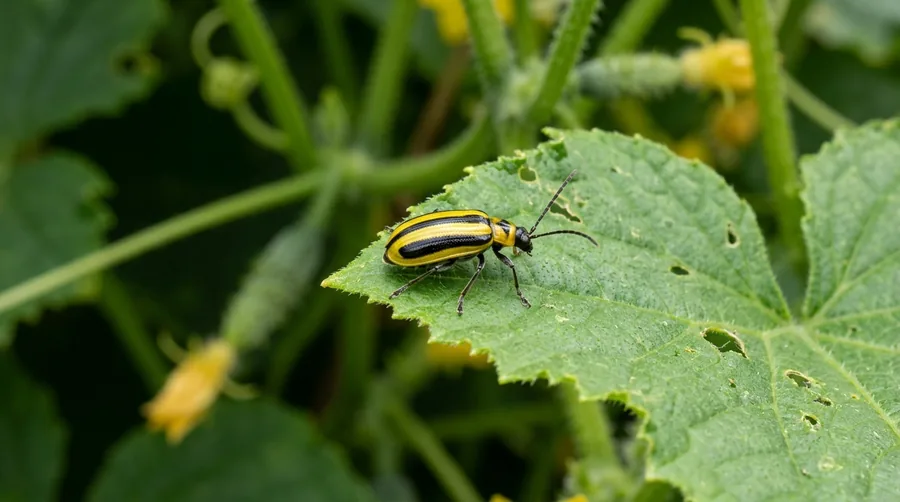
Small yellow striped cucumber beetle with three black stripes on a cucumber leaf
Recommended Products


What it does
Adults chew leaves, flowers, and young fruit, and swarm seedlings in spring, sometimes killing them outright. Their most serious damage is indirect: as they feed, they transmit the bacterium that causes cucurbit bacterial wilt, which can kill an otherwise healthy vine. The root-feeding larvae add further stress underground.
Where it lives
A pest of cucumbers, melons, squash, pumpkins, and gourds, it is common in gardens and farms across the eastern and central US. Adults overwinter in leaf litter and field edges, then move to cucurbit seedlings as they emerge in late spring, concentrating on the youngest, most vulnerable plants.
How it breeds
Overwintered adults lay eggs at the base of host plants in early summer. Larvae feed on roots for two to four weeks, then pupate in the soil and emerge as new adults. There are one to two, sometimes more, generations a year depending on region and season length.
What it eats
Adults feed on the leaves, flowers, and fruit of cucurbits (cucumber, melon, squash, pumpkin, gourd); larvae feed on the roots of the same plants.
Identification
Adults are about 1/5 inch, elongated, and yellow with three bold black stripes running down the back and a black head. The similar spotted cucumber beetle has black spots instead of stripes. Larvae are slender, whitish, and found in the soil around roots.
Signs of an infestation
- Small yellow striped beetles on leaves and blossoms
- Chewed, ragged leaves and scarred young fruit
- Swarms of beetles on emerging seedlings
- Sudden wilting of vines from bacterial wilt
- Seedlings killed or badly stunted in spring
Prevention tips
- Use floating row covers on seedlings, removing them at flowering for pollination
- Delay planting until beetle numbers drop, or use transplants
- Remove crop debris and overwintering sites near beds
- Use yellow sticky traps to detect and reduce adults
- Choose wilt-tolerant cucurbit varieties where available
Professional solutions
Protecting seedlings is the priority because of the wilt risk. Home gardeners rely on row covers and sanitation; for field-scale plantings, a local extension agent or agronomist can advise on scouting and labeled insecticides timed to protect young plants and reduce bacterial-wilt spread, applied to avoid harming pollinators.
Health & safety
Striped cucumber beetles do not bite, sting, or carry any disease that affects people or pets, so they pose no household health risk. Their disease role is agricultural: they spread cucurbit bacterial wilt and cucumber mosaic virus between plants, which damages crops, not humans.
Relevant Products


Frequently asked questions
Why do my cucumber vines wilt even without borers?
Striped cucumber beetles spread bacterial wilt as they feed. Infected vines wilt and die even though the plant looks intact, because the bacteria clog the water-conducting tissue. Controlling the beetles early is the main way to prevent it.
How do I protect cucumber seedlings from these beetles?
Cover seedlings with floating row covers from planting until they flower, then remove the covers so bees can pollinate. Row covers block the beetles during the most vulnerable stage and greatly reduce both feeding damage and wilt.
Fact-checked by Morgan Vance, Editorial Director (editorial review, not a professional pest-control or medical sign-off). Last reviewed June 6, 2026. We correct anything a reader shows us is wrong — see our corrections policy.