
Mexican Bean Beetle
Epilachna varivestis · also called bean beetle, mexican bean beetles
Quick answer
The Mexican bean beetle (Epilachna varivestis) is a copper-colored, spotted relative of the ladybug, but unlike helpful ladybugs it eats plants. Adults and spiny yellow larvae skeletonize bean leaves from the underside, leaving a lacy look. A common pest of snap and lima beans in the eastern US, it is harmless to people.
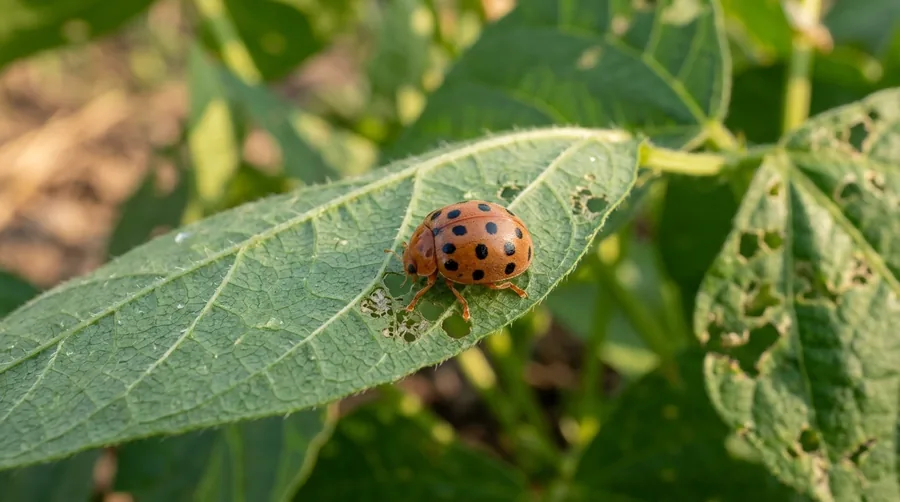
Copper-colored Mexican bean beetle with black spots beside a lacy skeletonized bean leaf
Recommended Products


What it does
Both the adults and the spiny yellow larvae feed on the undersides of bean leaves, scraping away the tissue between the veins and leaving a characteristic lacy, skeletonized pattern. Heavy feeding can reduce yield and, in bad infestations, defoliate plants and damage pods. They often feed in groups.
Where it lives
A pest of beans, snap, lima, cowpea, and sometimes soybean, it is most common in the eastern US and parts of the Southwest. Adults overwinter in leaf litter, hedgerows, and field debris, then move into bean plantings in early summer to feed and lay eggs.
How it breeds
Overwintered adults lay clusters of yellow eggs on the undersides of bean leaves. The spiny larvae feed for two to five weeks, then attach and pupate on the leaves. There are one to three generations a year, with populations peaking in mid to late summer in warmer regions.
What it eats
Mexican bean beetles feed on bean-family plants, especially snap beans, lima beans, cowpeas, and soybeans.
Identification
Adults look like a large, rounded ladybug but are copper to tan-yellow with 16 black spots arranged in three rows across the wing covers. The larvae are bright yellow and covered in branched spines. Yellow egg clusters sit on leaf undersides.
Signs of an infestation
- Copper, spotted, ladybug-like beetles on bean plants
- Spiny yellow larvae on leaf undersides
- Lacy, skeletonized leaves with veins left intact
- Clusters of yellow eggs under the leaves
- Chewed pods and reduced bean yield
Prevention tips
- Handpick adults, larvae, and egg masses regularly
- Remove and destroy bean debris after harvest
- Plant early-maturing varieties to dodge peak populations
- Use row covers on young plants until flowering
- Encourage the parasitic wasp that attacks the larvae
Professional solutions
Small bean plantings respond well to hand-picking, sanitation, and row covers. For larger infestations, a local extension agent or agronomist can advise on scouting and labeled insecticides applied to leaf undersides where the pest feeds, and on releasing the parasitic wasp Pediobius foveolatus used for biological control in some regions.
Health & safety
Mexican bean beetles do not bite, sting, or carry any disease that affects people or pets, so they are harmless to handle. The damage is limited to plants, skeletonized bean foliage and reduced pods, which lowers yield but poses no risk to the household.
Relevant Products


Frequently asked questions
Is the Mexican bean beetle a type of ladybug?
It belongs to the same beetle family as ladybugs but is one of the few plant-eating members. Unlike beneficial ladybugs that eat aphids, the Mexican bean beetle feeds on bean leaves, so its copper color and 16 spots help tell it apart.
What makes bean leaves look lacy?
Mexican bean beetle adults and larvae feed on the underside of leaves, scraping away the soft tissue but leaving the veins, which produces a lacy, skeletonized appearance. Checking leaf undersides usually reveals the spiny yellow larvae responsible.
Fact-checked by Morgan Vance, Editorial Director (editorial review, not a professional pest-control or medical sign-off). Last reviewed June 22, 2026. We correct anything a reader shows us is wrong — see our corrections policy.