
Cabbage Aphid
Brevicoryne brassicae · also called cabbage aphids
Quick answer
The cabbage aphid (Brevicoryne brassicae) is a small gray-green aphid coated in waxy powder that infests cole crops like cabbage, broccoli, and kale. It forms dense colonies on leaf undersides and in developing heads, sucking sap and spreading plant viruses. It harms crops, not people, and its waxy coating makes sprays less effective.
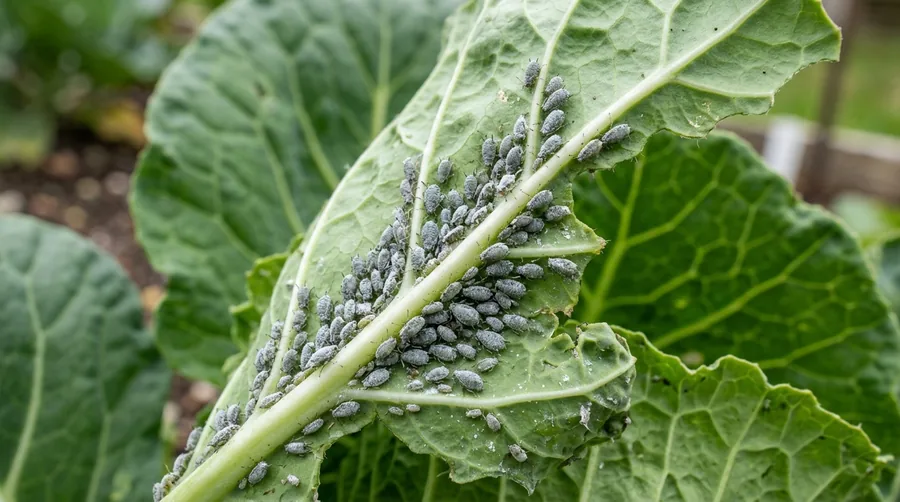
Gray-green cabbage aphids with a waxy powdery coating clustered on a cabbage leaf
Recommended Products


What it does
Cabbage aphids cluster in tight colonies on the undersides of leaves and deep in the heads of cole crops, piercing tissue to drink sap. Heavy feeding yellows and distorts leaves, stunts plants, and can contaminate harvested heads, making them unmarketable and unpleasant to clean.
Where it lives
A pest of cultivated brassicas (cabbage, broccoli, cauliflower, Brussels sprouts, kale, and related weeds), it is found in gardens and fields nationwide. It prefers cool spring and fall weather. In mild climates it persists on living plants year-round; in cold regions it overwinters as eggs on crop debris.
How it breeds
Through most of the year, wingless females reproduce asexually and give live birth, so colonies build rapidly with many overlapping generations. Winged forms develop when colonies get crowded and disperse to new plants. In cold climates, a fall sexual generation lays overwintering eggs.
What it eats
Cabbage aphids feed only on plants in the cabbage (brassica) family, including cabbage, broccoli, cauliflower, kale, mustard, and related weeds.
Identification
Adults are 2-2.5 mm, gray-green, and dusted with a distinctive grayish-white waxy powder that dull-coats the whole colony. Short dark cornicles sit at the rear. The powdery, mealy look separates them from the shinier, green cabbage-crop pests.
Signs of an infestation
- Dense gray-green, powdery aphid colonies on leaf undersides
- Yellowing, curling, or cupped leaves
- Aphids hidden deep inside cabbage or broccoli heads
- Sticky honeydew and black sooty mold
- Stunted or distorted plant growth
Prevention tips
- Inspect leaf undersides and heads early and often
- Remove and destroy crop residue after harvest to cut overwintering eggs
- Encourage lady beetles, lacewings, and parasitic wasps
- Hose off small colonies with a strong spray of water
- Control brassica weeds that harbor the aphid
Professional solutions
Home gardeners can often manage cabbage aphids with insecticidal soap or horticultural oil, applied to thoroughly wet the waxy colonies on leaf undersides. For persistent field infestations, a local extension agent or agronomist can confirm the pest and advise on labeled products, since the waxy coating and hidden colonies reduce spray effectiveness.
Health & safety
Cabbage aphids do not bite, sting, or carry any human disease, so they pose no health risk to people or pets. Their disease role is agricultural: they can transmit plant viruses such as turnip mosaic and cauliflower mosaic virus between brassica crops.
Relevant Products


Frequently asked questions
Are aphids in my cabbage safe to eat around?
Cabbage aphids are not a human health hazard, but heavily infested heads are unpleasant. Soak heads in cold salted water and rinse well to dislodge aphids, or trim affected outer leaves. They spread plant viruses, not human illness.
Why are cabbage aphids hard to spray?
They are coated in a waxy powder and hide deep in leaf undersides and heads, so sprays bead off and miss them. Insecticidal soap or horticultural oil applied to fully wet the colony works better than a light surface spray.
Fact-checked by Morgan Vance, Editorial Director (editorial review, not a professional pest-control or medical sign-off). Last reviewed June 24, 2026. We correct anything a reader shows us is wrong — see our corrections policy.