Horse Fly
Tabanus spp. (Tabanidae) · also called horse flies, gadfly, breeze fly
Quick answer
Horse flies (Tabanus species) are large, stout, fast-flying flies with big iridescent eyes. Only females bite, slicing the skin with blade-like mouthparts to feed on blood, and their bite is sharply painful. They are strong daytime fliers near livestock, ponds, and wooded edges, most active in warm summer months.
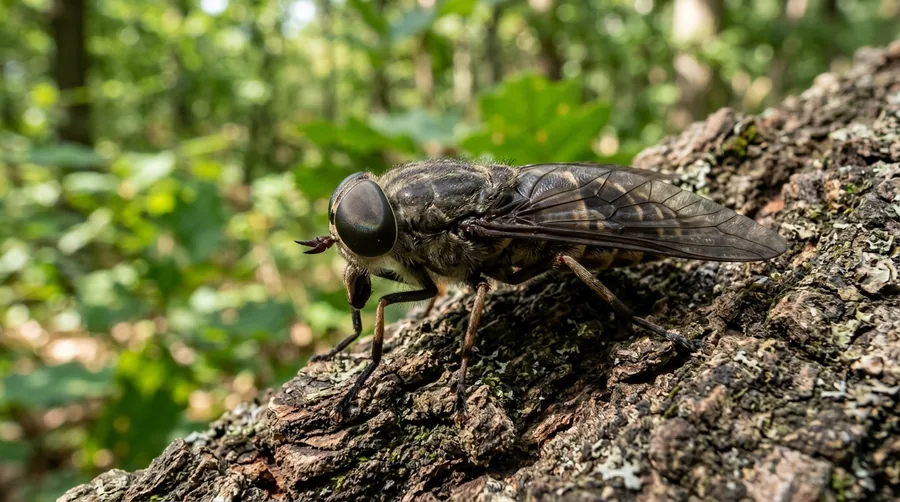
Large dark horse fly with big iridescent eyes resting on a wooden surface
Recommended Products


What it does
Only female horse flies bite; they need blood to develop eggs, while males feed on nectar. Females are persistent, strong daytime fliers that circle a host and cut the skin with scissor-like mouthparts, causing a painful bite that often bleeds. They are attracted to movement, warmth, dark colors, and carbon dioxide.
Where it lives
Horse flies breed in wet soil and shallow water at the edges of ponds, marshes, streams, and irrigated pasture. Adults range widely over fields, trails, beaches, and around livestock. They are found throughout the US, with heavy populations near wetlands and coastal marshes such as the Southeast and Gulf Coast.
How it breeds
Females lay egg masses on vegetation over water or wet soil. Larvae drop into moist mud, where they develop over months, often overwintering, before pupating. Most species produce a single generation per year, so populations build slowly and peak during the warm summer months.
What it eats
Adult females feed on the blood of horses, cattle, deer, other mammals, and people. Males and non-biting females feed on nectar and plant juices. The predatory larvae feed on small organisms in wet soil and mud.
Identification
Horse flies are large, 10-28 mm, robust flies with very large, often iridescent green or purple eyes that nearly meet on top of the head. They hold their wings out to the sides at rest. They are much larger than house flies and fly with a loud buzz.
Signs of an infestation
- Large flies persistently circling people or animals
- Sudden sharp, painful bites during the day outdoors
- Bites that bleed and swell on exposed skin
- Restless, tail-swishing livestock during summer
- Many big flies near ponds, marshes, or pasture
Prevention tips
- Wear light-colored, long-sleeved clothing outdoors
- Apply an EPA-registered repellent to exposed skin
- Avoid marshy areas during peak midday activity
- Use fans and stabling to protect livestock
- Reduce standing water and wet muck where possible
Professional solutions
Horse flies are hard to control because they breed over large wetland areas and fly in from a distance, so consumer sprays rarely reduce numbers. Management focuses on personal protection, physical traps, and protecting animals. On farms, an extension agent or livestock specialist can advise on trapping and herd protection.
Health & safety
The main issue is the painful bite, which can bleed, swell, and occasionally trigger an allergic reaction. Horse flies can mechanically carry pathogens between animals and, rarely, transmit disease agents to livestock, but human disease transmission in the US is uncommon. Clean bites and watch for infection; seek care for severe reactions.
Relevant Products


Frequently asked questions
Why are horse fly bites so painful?
Female horse flies feed by cutting the skin with blade-like mouthparts rather than piercing it neatly, then lapping the blood that pools. This tearing action, plus their saliva, causes an immediate sharp pain, bleeding, and swelling that is far more noticeable than a mosquito bite.
How do I keep horse flies away?
Because they breed over large wetland areas, the practical approach is personal protection: wear light-colored long sleeves, apply an EPA-registered repellent, avoid marshy areas at midday, and use fans or traps around patios and livestock. Sprays rarely reduce the overall population.
Do horse flies spread disease?
Horse flies can mechanically carry pathogens between animals and rarely transmit certain livestock diseases, but disease transmission to people in the US is uncommon. The main concern is the painful bite and the small risk of infection or allergic reaction, so keep bites clean.
Fact-checked by Morgan Vance, Editorial Director (editorial review, not a professional pest-control or medical sign-off). Last reviewed July 13, 2026. We correct anything a reader shows us is wrong — see our corrections policy.