
Stable Fly
Stomoxys calcitrans · also called stable flies, biting house fly, dog fly
Quick answer
Stable flies (Stomoxys calcitrans) look much like house flies but carry a bayonet-like mouthpart and bite. Both sexes feed on blood, usually attacking the legs and ankles of livestock, pets, and people. They breed in wet, rotting hay, manure, and grass clippings and are a major biting pest around farms and stables.
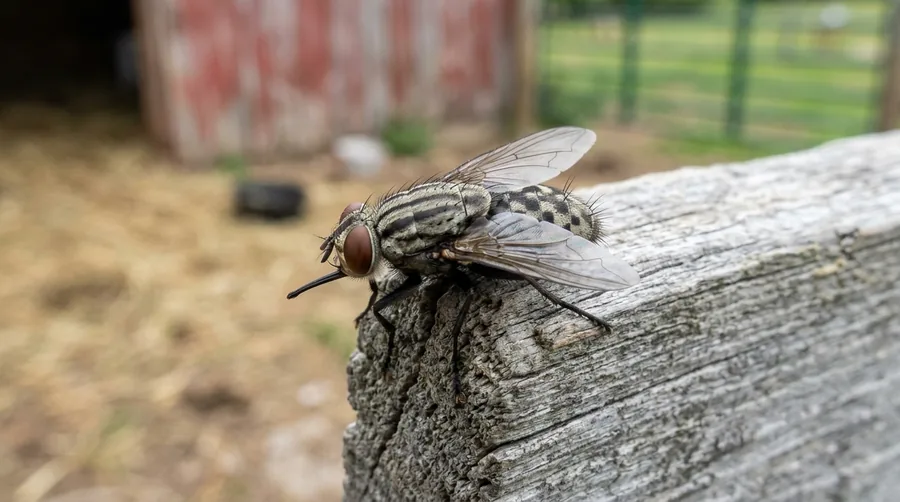
Gray stable fly resembling a house fly with a needle-like biting mouthpart pointing forward
Recommended Products



What it does
Unlike house flies, both male and female stable flies bite, jabbing a rigid, forward-pointing mouthpart into skin to feed on blood. They typically attack the lower legs and ankles of cattle, horses, dogs, and people, usually in daylight. A few quick bites and they leave, but persistent attacks stress livestock heavily.
Where it lives
Stable flies breed in wet, decaying plant matter mixed with manure: soiled hay and straw, spilled feed, silage, grass clippings, and compost around barns, stables, and feedlots. Adults rest on sunny walls and fences nearby. They occur across the US and are a serious pest of livestock and coastal recreation areas.
How it breeds
Females lay eggs in moist, rotting organic material. Maggots develop in the fermenting muck, then pupate in drier areas. In warm weather the cycle from egg to biting adult takes about three to four weeks, so several overlapping generations build large populations by late summer.
What it eats
Both sexes feed on the blood of cattle, horses, dogs, and people. When not feeding on blood, adults also take nectar and plant sugars. The larvae feed on decaying, manure-laden plant material.
Identification
Stable flies are 6-7 mm and closely resemble house flies in gray color and checkered thorax, but they have a distinctive slender, needle-like mouthpart projecting forward from the head and dark spots on the abdomen. They often rest head-up on sunlit surfaces.
Signs of an infestation
- House-fly-looking flies that bite the ankles and legs
- Painful daytime bites on people or pets outdoors
- Livestock stamping, bunching, or with bloody leg bites
- Flies resting on sunny barn and fence surfaces
- Breeding in wet, spoiled hay or grass clippings
Prevention tips
- Remove wet, decaying hay, straw, and grass clippings
- Clean up spilled feed and manure around barns weekly
- Spread or compost manure so it dries out fast
- Keep drainage good to prevent soggy organic piles
- Use fly traps and protect animals with labeled products
Professional solutions
Stable fly control on farms relies on sanitation to eliminate wet breeding material, supported by traps and labeled residual sprays on resting surfaces. Heavy or ongoing livestock infestations are best managed with guidance from a veterinarian or extension livestock specialist, since breeding sources are often extensive and off-site.
Health & safety
Stable fly bites are sharply painful and can cause welts and allergic reactions, but the flies are not considered important disease vectors of people in the US. For livestock, heavy biting reduces weight gain and milk production and can cause anemia. Manage bites by cleaning them and reducing exposure during peak activity.
Relevant Products


Frequently asked questions
Why does a house fly seem to be biting me?
It is probably a stable fly, which looks almost identical to a house fly but has a needle-like mouthpart and bites, usually on the ankles and legs in daylight. House flies cannot bite. Stable flies breed in wet, rotting hay and manure around farms and yards.
How do I get rid of stable flies?
Sanitation is the key: remove wet, decaying hay, grass clippings, spilled feed, and manure where they breed, keep those areas dry, and add fly traps. On farms, labeled residual sprays on resting surfaces and animal protection help, ideally with extension or veterinary guidance.
Do stable flies spread disease?
Stable flies are not considered significant disease carriers of people in the US; the main issue is their painful bite. For cattle and horses, though, heavy biting causes stress, blood loss, and lost weight and milk production, so livestock control is economically important.
Fact-checked by Morgan Vance, Editorial Director (editorial review, not a professional pest-control or medical sign-off). Last reviewed June 27, 2026. We correct anything a reader shows us is wrong — see our corrections policy.