
Face Fly
Musca autumnalis · also called face flies, autumn house fly
Quick answer
Face flies (Musca autumnalis) resemble house flies and gather around the eyes, nose, and mouth of cattle and horses to feed on secretions. They do not bite but spread pinkeye and eyeworm among livestock. In fall, adults enter homes to overwinter in attics and wall voids, becoming a cluster-fly-like nuisance.
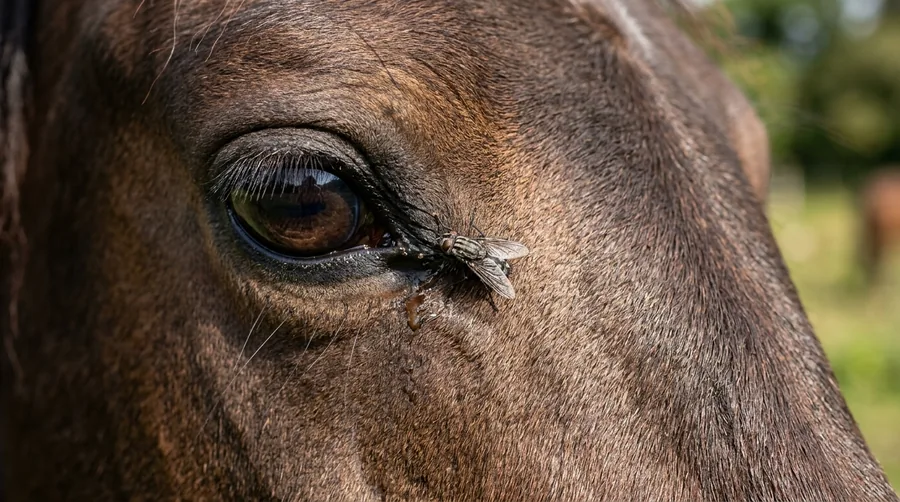
Face flies gathered around the eyes and nose of a cow feeding on secretions
Recommended Products


What it does
Face flies cluster around the faces of cattle and horses, feeding on tears, saliva, and mucus with sponging mouthparts rather than biting. They irritate animals and interfere with grazing. In autumn, adults seek sheltered voids to overwinter and often enter homes, gathering at sunny windows much like cluster flies.
Where it lives
In the warm months face flies live outdoors on pastured cattle and horses and breed in fresh cattle manure. As temperatures drop they move into protected spaces, including attics, wall voids, and window frames of nearby buildings, to overwinter. They occur across much of the US where cattle graze.
How it breeds
Females lay eggs in fresh cattle manure pats. Larvae develop in the dung and pupate in soil, producing several generations through spring and summer. The final fall generation of adults overwinters in sheltered sites and emerges in spring to resume the cycle on livestock.
What it eats
Adults feed on secretions around the eyes, nose, and mouth of cattle and horses, plus nectar and other liquids; only females visit animal faces heavily. The larvae feed and develop within fresh cattle manure.
Identification
Face flies look very much like house flies, 6-8 mm and dark gray with a striped thorax, but are slightly larger and darker. They are best recognized by behavior, feeding on the faces of livestock in summer and clustering at windows and in attics of buildings in fall.
Signs of an infestation
- Flies clustering on the faces of cattle or horses
- Watery eyes and pinkeye outbreaks in a herd
- House-fly-like flies swarming sunny windows in fall
- Flies overwintering in attics and wall voids
- Animals bunching or seeking shade to avoid flies
Prevention tips
- Use labeled face-fly control products and dust bags on cattle
- Provide oilers and insecticide ear tags for the herd
- Seal attic, soffit, and window gaps before fall
- Screen vents and repair torn window screens
- Break up manure pats to reduce breeding sites
Professional solutions
On farms, face flies are managed with the same tools as other pasture flies: ear tags, dust bags, and face-application products, guided by a veterinarian or extension specialist, especially where pinkeye is a concern. Indoors, overwintering adults are handled by exclusion and vacuuming, occasionally with professional attic treatment.
Health & safety
Face flies do not bite people. Their significance is to livestock: by feeding on eye secretions they spread the bacteria that cause bovine pinkeye and can transmit eyeworm, harming animal health and production. Indoors they are only a nuisance at windows during fall and winter, with no health risk to people.
Relevant Products


Frequently asked questions
Why are house flies gathering at my windows in the fall?
They may be face flies or cluster flies seeking a sheltered place to overwinter. Face flies spend summer on livestock and move into attics and wall voids as it cools, then gather at warm, sunny windows. They are a nuisance indoors but do not bite or damage the home.
Are face flies harmful?
Face flies do not bite people and pose no human health risk. For cattle and horses they matter because they feed on eye secretions and spread pinkeye and eyeworm, affecting animal health. Indoors, overwintering adults are only a nuisance.
How do I keep face flies out of my house?
Exclusion is the best approach: seal gaps around soffits, attic vents, windows, and utility lines before fall, and repair screens. Once inside, vacuum up the flies at windows. For the summer livestock problem, use labeled cattle products with veterinary guidance.
Fact-checked by Morgan Vance, Editorial Director (editorial review, not a professional pest-control or medical sign-off). Last reviewed July 23, 2026. We correct anything a reader shows us is wrong — see our corrections policy.