
Cluster Fly
Pollenia spp. · also called cluster flies, attic fly, grass fly
Quick answer
The cluster fly (Pollenia species) is a sluggish, dark-gray fly slightly larger than a house fly, with golden hairs on its thorax. Its larvae parasitize earthworms outdoors, and adults gather in wall voids and attics to overwinter, emerging on warm days. They do not breed indoors, bite, or spread disease; they are a seasonal nuisance.
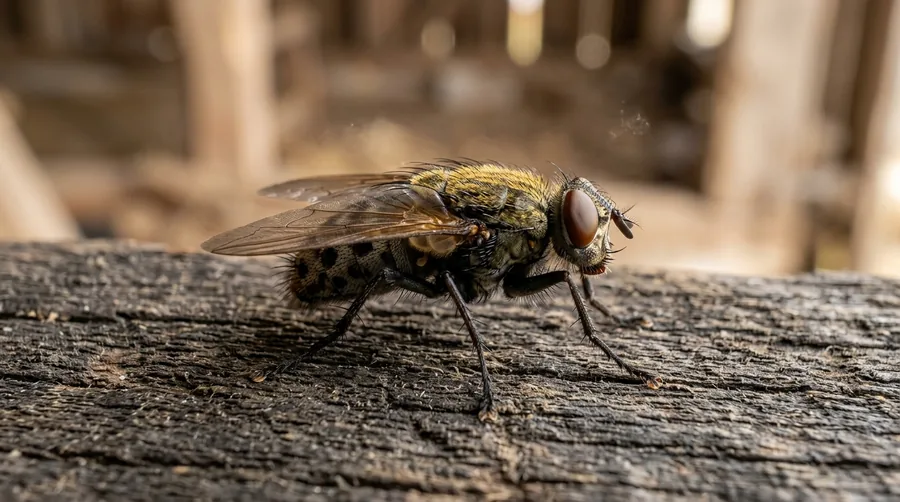
Sluggish dark-gray cluster fly with golden thorax hairs on a sunny window frame
Recommended Products
See the full ranking →


What it does
Cluster flies are named for their habit of gathering in large clusters to overwinter in sheltered spaces. In fall they seek warm, sunny building walls and slip inside through gaps to hibernate in attics and wall voids. On warm days, including in winter, they rouse and cluster at windows trying to get back outside, which is when people notice them indoors.
Where it lives
Larvae live outdoors as parasites inside earthworms in lawns and fields, so cluster flies are tied to grassy, worm-rich ground. Adults overwinter in attics, wall voids, and around window and door frames of homes, especially in cooler northern regions. They do not breed or develop indoors; the indoor phase is strictly overwintering.
How it breeds
Outdoors, females lay eggs in soil, and the larvae seek out and develop inside earthworms, producing one to several generations over the warm season. The final generation overwinters as adults in sheltered spots, including buildings, then emerges in spring to resume the outdoor, earthworm-based cycle.
What it eats
Adults feed outdoors on nectar and other plant fluids and do not feed on human food or filth indoors. The larvae are internal parasites of earthworms. Because the indoor adults are simply overwintering, they are not feeding or reproducing while inside.
Identification
Adults are about 3/8 inch, a bit larger and darker than a house fly, dark gray with distinctive golden or yellowish hairs on the thorax and wings that overlap over the back at rest. Their slow, sluggish movement and tendency to cluster at windows and in attics help distinguish them from house flies.
Signs of an infestation
- Sluggish dark flies clustering at sunny windows
- Groups of flies in attics or wall voids in fall and spring
- Flies appearing indoors on warm winter days
- Golden-haired flies larger and slower than house flies
- Dark spots (fly excrement) near overwintering sites
Prevention tips
- Seal gaps around windows, doors, eaves, and utility lines before fall
- Screen vents, soffits, and attic openings
- Repair torn window and door screens
- Vacuum up flies that appear indoors and empty the bag
- Address entry points in late summer before they move in
Professional solutions
Because cluster flies overwinter inside walls and attics, the durable fix is exclusion, sealing the gaps they use, ideally done in late summer. A professional can treat exterior surfaces and harborage before the fall influx and help seal hard-to-reach entry points; indoors, vacuuming is the main day-to-day remedy.
Health & safety
Cluster flies do not bite, sting, or spread disease, and they do not contaminate food or breed indoors, so they pose essentially no health risk. They are a seasonal nuisance. When large numbers die in wall voids, the accumulation can occasionally attract secondary scavenger pests such as dermestid beetles.
Relevant Products




Frequently asked questions
Why do cluster flies appear in my house in winter?
Cluster flies enter buildings in fall to overwinter in attics and wall voids. On warm days, including sunny winter afternoons, they wake up and gather at windows trying to get back outside, which is when they seem to appear indoors even though they entered months earlier.
Do cluster flies breed inside the house?
No. Their larvae develop outdoors as parasites of earthworms, so cluster flies do not breed, feed, or lay eggs indoors. The flies inside are simply overwintering adults, which is why sealing entry points is more effective than trying to treat an indoor breeding source.
How do I keep cluster flies out?
The lasting fix is exclusion: seal gaps around windows, doors, eaves, soffits, and utility lines, and screen attic and vent openings, ideally in late summer before they move in. Indoors, vacuuming up the flies that appear is the simplest ongoing remedy.
Fact-checked by Morgan Vance, Editorial Director (editorial review, not a professional pest-control or medical sign-off). Last reviewed June 18, 2026. We correct anything a reader shows us is wrong — see our corrections policy.