


What are the three survival essentials?
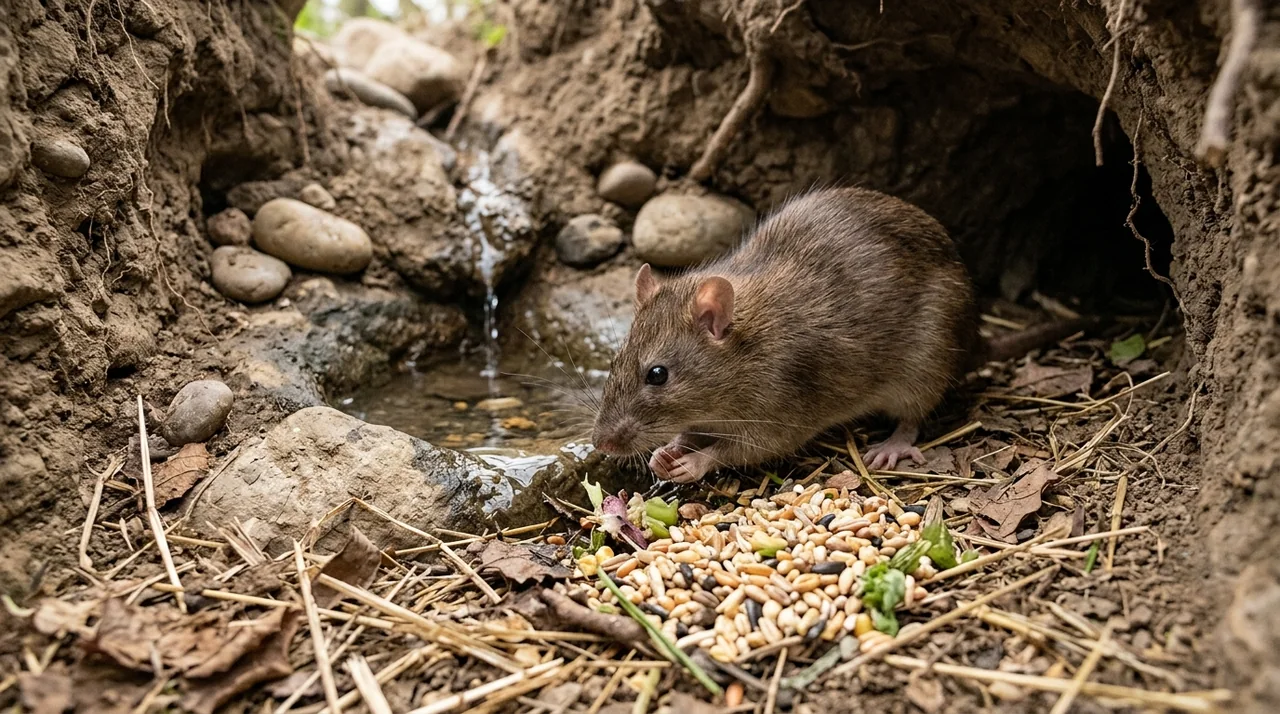
Rats are survivors because their needs are simple and easy to meet around people. The Norway rat (Rattus norvegicus) and roof rat (Rattus rattus) both rely on three things:
- Food: As omnivores, rats eat grains, produce, meat, garbage, pet food, and scraps. Almost any unsecured food will do.
- Water: Rats need to drink regularly. Leaky pipes, pet bowls, condensation, and puddles all supply it, though roof rats get some moisture from fruit.
- Shelter (harborage): They nest in warm, protected, hidden places: wall voids, burrows, clutter, woodpiles, and dense vegetation, usually near food and water.
Why is shelter (harborage) so important?
Of the three, harborage is the piece homeowners most often overlook. Rats are prey animals, so they crave safe, hidden spots with quick escape routes. Norway rats dig burrows along foundations, under slabs, and beneath dense ground cover. Roof rats climb to attics, wall voids, and trees. Overgrown vegetation, cluttered garages, stacked firewood, and abandoned equipment all offer ready-made shelter. Take away the hiding places, and rats feel too exposed to stay, even if food is nearby.
How little space do rats really need?
Rats need surprisingly little room, and a surprisingly small opening. An adult rat can squeeze through a gap about a half-inch wide, roughly the size of a quarter. Rats are also strong climbers, gnawers, and swimmers. A cluttered corner, a gap under a shed, or a hole where a pipe enters the wall can be all the shelter and access a colony needs.
How far do rats travel for what they need?
Rats are creatures of habit that stay close to home. Both species tend to forage within a modest range of their nest. They follow the same routes each night between shelter and a food source. This is actually useful for control. Because a rat will not travel far, active droppings, greasy rub marks, and gnaw damage usually point you toward a nearby nest and food source. It also means the food, water, and shelter fueling the problem are almost always on or right beside your own property.
How does understanding their needs change control?
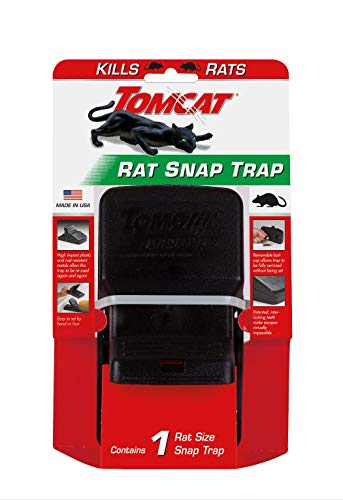
Effective, lasting rat control removes these essentials rather than only trapping individuals. Trapping alone is like bailing water without plugging the leak. As long as food, water, and shelter remain, new rats move in. The durable fix is to make the environment unable to support them.
How do I take away what rats need?
- Seal food in rigid containers and secure trash and compost with tight lids.
- Fix leaks, cover standing water, and eliminate easy drinking spots.
- Clear clutter, trim overgrowth, and stack firewood off the ground and away from the house.
- Seal gaps and holes rats could use to reach nesting areas.